Nicholas Fluhart

June 26, 2010

Engineer Boots

Filed under: Uncategorized — Nicholas Fluhart @ 10:28 pm

As an intermittent post, I thought I’d share one of my hobby interests which is collecting boots……but not just any boots: high-end engineer boots. It might sound silly (ok, it probably is a little silly), but it can be very profitable; and I’ve found it to be moderately enjoyable because I get to wear a variety of high quality boots in the process.

What is an engineer boot? Well, there is a Wikipedia article, although slightly disappointing in overall content, that explains the basics. Prices range from $175.00 for a decent quality pair to $800.00 and up for hand-stitched, custom fitted. I’ve even seen a used pair of 1960’s vintage bring $685.00 on auction. Many people confuse engineer boots with harness boots. They are both great boots, but don’t confuse the two; engineer boots and harness boots are two totally different animals with different histories. Some say engineer boots got their name from land surveyors who used them around or before the depression era at which time Sears had an add in their catalog that depicted such a use of the boots. Others contend the boots got their name from locomotive engineers. I’m not sure anyone knows for sure, but I would be very interested to learn the true history if such exists.

Why did I start wearing engineer boots? The first time I saw Fonzie kick start his bike wearing engineer boots I knew I had to have them. At the age of 17 I bought my first big street bike and my first pair of engineer boots, and I haven’t looked back. I was hooked from the first pair on, and no other type of boot has touched my foot since. I have pairs for dress, casual, work, riding, etc. in both black and brown depending on what belt or shirt I’m wearing. Engineer boots go far beyond the motorcycle. They are a great work boot, they are functional, adjustable, expensive, and lets face it, they are the best looking boot God ever placed on the face of this earth. Now that my personal bias has been exposed, we’ll move on…

I’ve had a great deal of success buying and selling engineer boots. The hobby started when I bought a pair of vintage engineers on eBay, and when I received them they did not fit. I decided to relist them and was happy to see that they auctioned for almost twice what I paid for them. From that point on, I have frequently bought and sold boots on eBay. Sometimes I score big, and sometimes I loose my can.

Below you’ll see one of the first pairs I flipped. They are Harley Davidson engineers, and this particular model is no longer in production. Brown engineers have become more common, but at that time they were much more rare. I purchased this like-new pair for $70.00. I wore them sparingly for about a year or so. They are an excellent looking boot, but the fit wasn’t quite to my liking. I listed them on auction and sold them for $120.00. Not bad…

Auctions are a gamble, and I don’t always come out so well on the profit margin, however. Below is a pair of Frye Goucho’s that were brand new. The MSRP is $210.00. I purchased them online for $125.00 intending to keep them to wear. However, they were a little loose. I auctioned them in hopes of breaking even, but they only brought $75.00 the second time around. Someone got an exceptional deal. I haven’t seen a new pair bring less than $125.00 since.

But on the whole, I have consistently come out on top. Below is a pair of tall, black, steel toes. There was no maker’s mark on these, but the vintage quality was evident. These were great boots. I wore them when riding my off-road dirt bikes. The high uppers protected me from the hot engine. The steel shank made kick starting my bikes a breeze. The right boot had a knife sheath and the left boot had a small utility pocket, great for a small tool or pistol. I bought them on eBay for $80.00. The only drawback is that they were tight in the ankles which made them heck to get on and off. When I finished with them, they auctioned for $185.00 and I shipped them to a buyer in England.

Then there are my work boots. These see very rough service, so I typically buy them for rugged durability over cosmetic appeal. For dress and casual, I typically prefer a Frye, but most of my true work boots tend to be Chippewa. It’s widely believed that Chippewa is the original engineer maker. Below is a pair of my black Chippewa steel-toe work boots that I retired after 5 years of service where they saw automotive shops, mud, water, woods, lots of oil, motorcycles, sharp objects, heavy machinery, and who knows what else. The fact that they are still intact speaks volumes.

Engineers are a timeless classic, but make no mistake, I don’t consider any engineer boot to be a “Nick-Pick” simply because it has a buckle and a strap. I require a look into the inner quality as well as the symmetry of its features, the placement of the buckles, the angle of the straps, the heel-toe ratio, the height and cut of the heel, the roundness of the toe, and the stitching. To find all of these qualities in adequate proportions in a single package, to me, represents the perfect boot.
June 19, 2010

More to come…

Filed under: Uncategorized — Nicholas Fluhart @ 11:19 pm

I’ve gotten a few inquiries about new posts, so I just wanted to say that I haven’t forgotten about the blog, there’s just been a few things that have had me tied up. Although I haven’t made any new posts lately, I have been working behind the scenes. I’ve been replacing and resizing pictures which has taken an exceptional amount of time (still only about half finished). We also had a server crash at my office where I store most of my pictures, and although we were able to recover everything, my pictures were placed in no particular order in my storage folders. So I’ve been working to properly arrange the thousands of photos I have that will soon find their way into blog posts. Furthermore, the first part of the year is always the busiest for my business, and since I’ve been shorthanded, I haven’t had as much time for things like blogs and such.

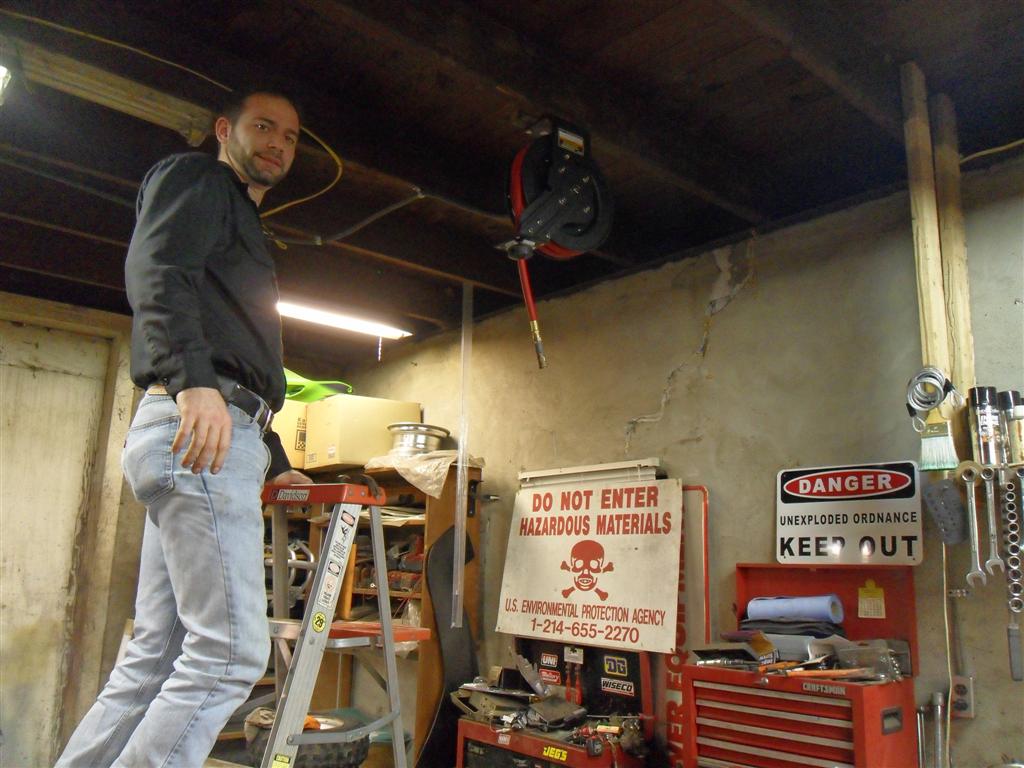
To keep up with the extra work load I had to perform several facility upgrades, especially out at the shop where I wired in some lighting and receptacles for an outside work station as well as installed more air receptacles and hose reels.

Cleaning up some wiring.

Hanging/Plumbing a Hose Reel

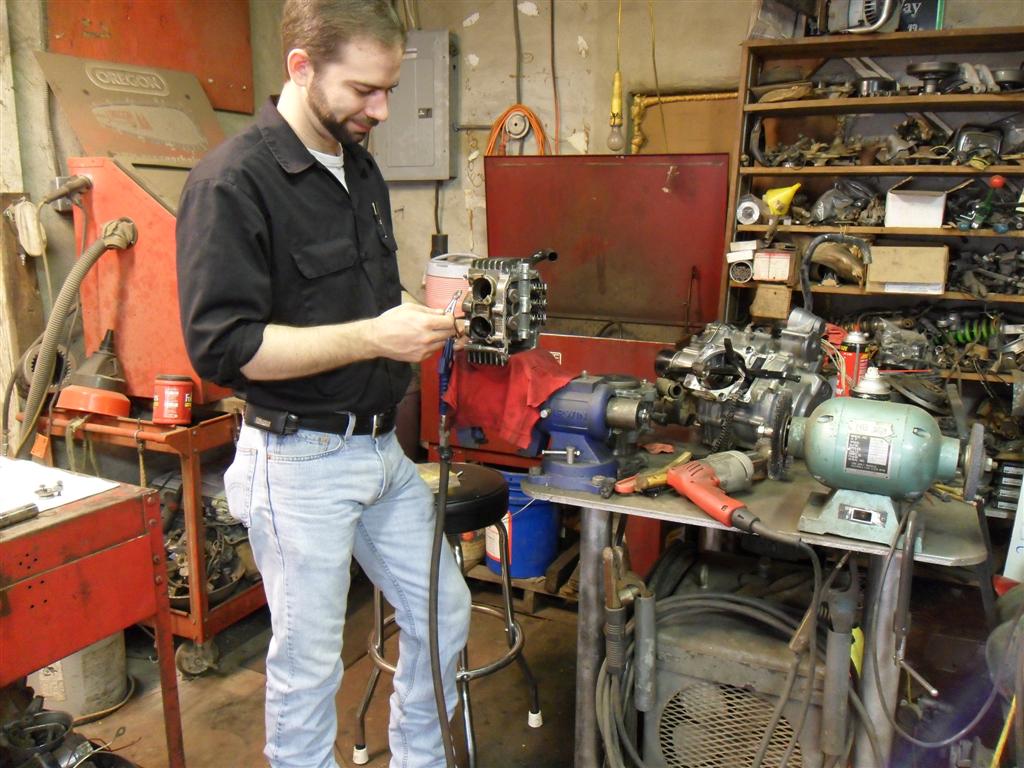
I’ve also had to keep up with a lot of day-to-day work, such as tearing down machines and processing parts as shown below.

Disassembling an ATV

Reworking a cylinder head.

Then of course there is the unexpected.

Broken Water Pipe

Broken Phone Line

So that’s what I’ve been up to. Anyway, there are some really great posts to come. I’ve completed a few projects and I’ve got a lot to write about. So check back soon…

February 28, 2010

Tire Change: Dirt Devil XT on the Foreman

Filed under: Project: 475 Foreman — Nicholas Fluhart @ 10:27 pm

A few years back, I acquired an old Yamaha Big Bear 350 4×4 that had a nice set of GBC Dirt Devil XT’s on it. The XT is basically a more aggressive version of the standard Dirt Devil, but unfortunately GBC no longer has them listed in their product lineup. They caught my eye because they were very aggressive, yet the tread pattern was arranged in such a way that would offer a fairly smooth ride. I bought the bike to part out, but I set aside the tires in hopes of one day trying them out on whatever ATV I happen to have.

Fast forward four years…

I finally got around to trying out the 26″ Dirt Devil XT’s. As seen in my Foreman post, I’ve been running 25″ tires on my ATV, Gators on the rear and standard Dirt Devils on the front. This was an excellent performing combination as I discussed in the Foreman post. However, the ATV is geared so low I think a taller tire would help the performance while also providing additional ground clearance. So when my dad needed a set of good tires for 12″ rims I volunteered the tires on my Foreman and decided to install the Dirt Devil XT’s. Since I recently rigged up my tire changer, we were able to do the tire work at my shop.

While I had it down, I took the opportunity to clean and paint the rear axle housing, hubs, and repaint the rims.

Pros:

So far I’m pleased with the performance of these tires. Having the extra height has improved the driveablity by slightly raising the gear ratio. As for traction, they are absolutely awesome in the mud. I have gone through some unbelievable stuff with these. The added ground clearance has also proved to be helpful when climbing over large logs.

Cons:

They don’t seem to do that great in wet sand such as that found in creek bottoms, but no aggressive tires do. I’ve found that factory type tires tend to do the best in the wet sand of creek banks. Another thing is the ride quality is not quite as good as with the other setup. Also the machine is not as nimble with these big tires, but that’s to be expected since these tires are heavy and mounted on steel rims. Overall, these issues are relatively minor.

I think my next tire/wheel experiment will be a set of factory type tires on aluminum rims. It should offer a very smooth ride and make for good driving performance as a result of the lighter weight. However, I’ll be giving up some in the mud, but maybe I’ll get a gain in the sandy creeks. That’s if I ever get around to it…

UDATE: See the next tire experiment here>

February 25, 2010

Multi-Purpose Motorcycle/ATV Trailer

Filed under: Trailers — Nicholas Fluhart @ 7:45 pm

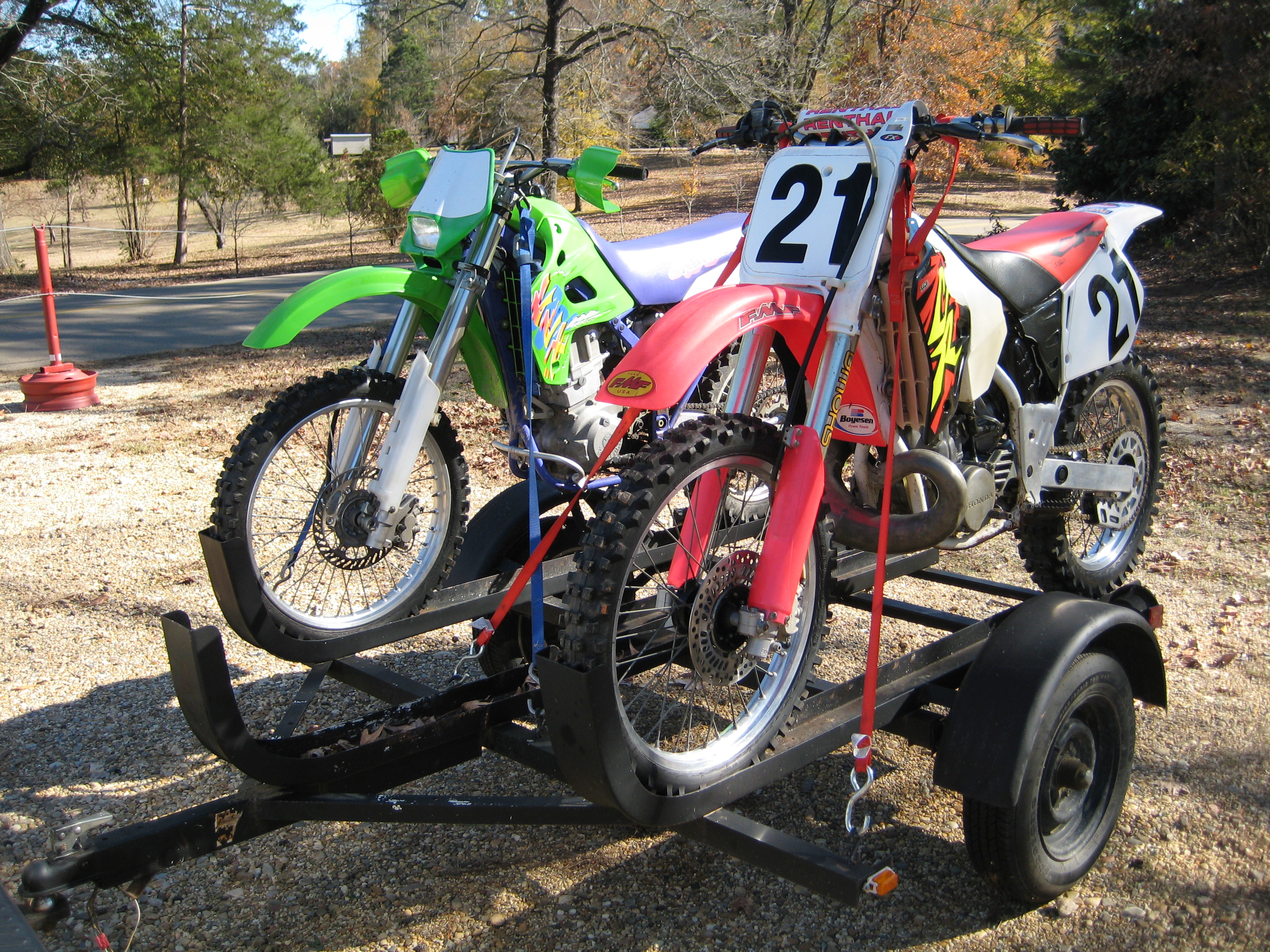
When you do a lot of hauling and moving materials and equipment, you learn fast that the bed of a pickup truck isn’t always adequate. For that reason, I use a variety of different types of trailers. Since I stay involved with dirt bikes and ATV’s, I found myself needing the ability to haul both my machines and my equipment, tools, and supporting materials. However, if your bike is in the back of the truck you are limited on space for other things. This is where a trailer comes in handy, and what better than a trailer that will haul a dirt bike? A trailer that will haul two dirt bikes or an ATV.

My bike hauler appears to have been built back in the 70’s, but it’s a really good little trailer. I traded a set of motorcycle forks for this trailer and an antique Westinghouse AC arc welder. I couldn’t be happier. Both the trailer and the welder work great.

The things I had to do to this trailer for it to meet my specifications were as follows:

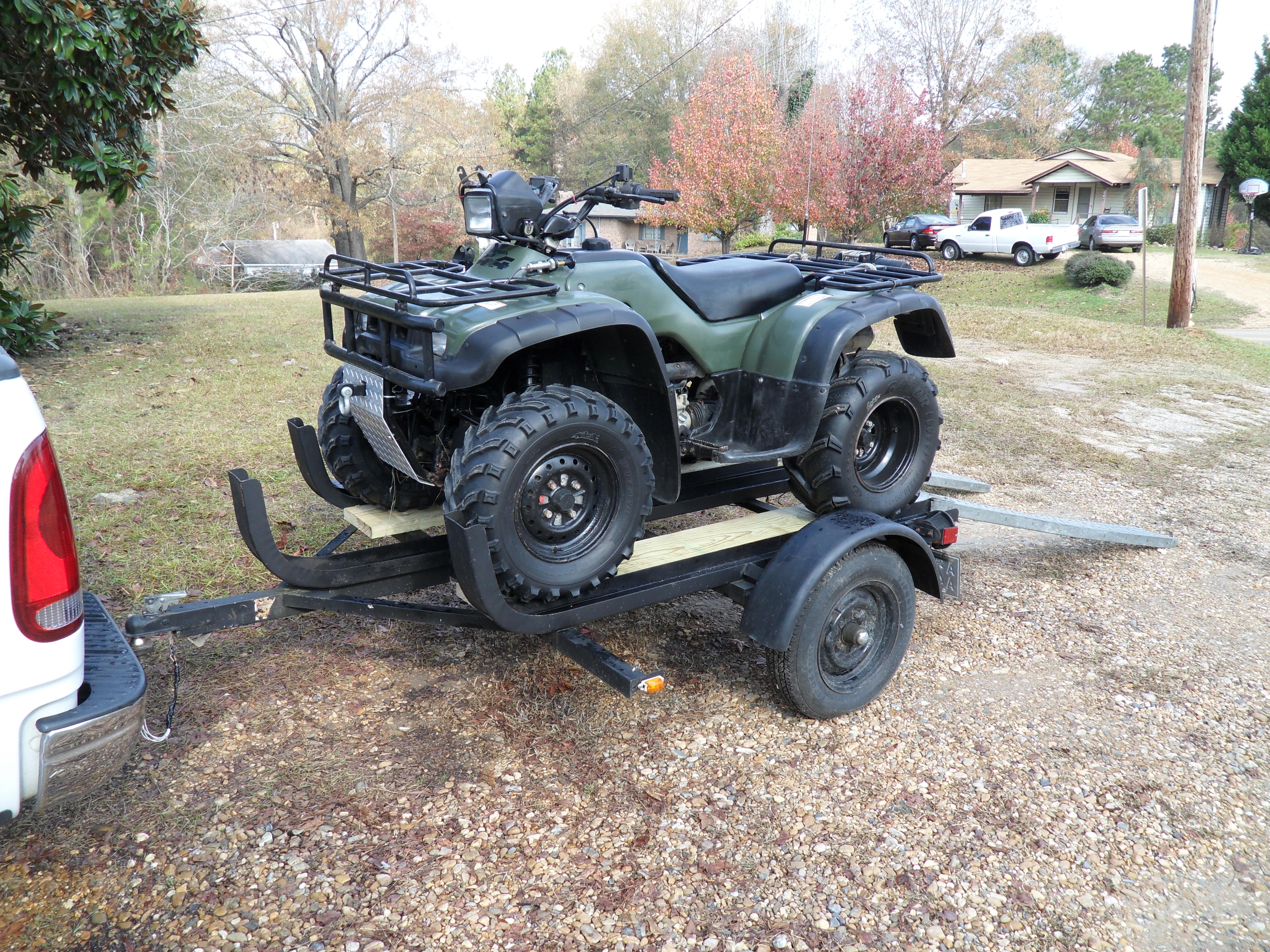
The first thing I did was replace the old polyglass tires with a new set of radials. I also painted the trailer from the old 70’s brown to low-gloss black and I installed new marker lights and rewired the existing lights. At that point the trailer was ready to go and I used it to haul dirt bikes for years to follow. However, the biggest problem is that it was only equipped to haul motorcycles and not ATV’s. So recently I decided to change that…

I bought a treated 12′ 2×12 and cut it in half to form two 6′ planks which I then bolted next to the outside slats. Fantastic solution.

And now I have a cross-functional bike hauler and can haul my tool boxes and supplies in the back of my truck.

Until the next trailer…

February 11, 2010

Project: John Deere Model M

Filed under: Project: John Deere M,Trucks & Equipment — Nicholas Fluhart @ 10:47 pm

Here’s a fun project I completed a while back. I like to buy, fix up, and sell a variety of machines, so when I heard a friend had this old John Deere M for sale I was quick to check it out. He called and indicated he had inherited the old tractor from a relative and no longer needed it because he bought a new Kubota 4×4 with a front-end loader. He wanted $1000 for the tractor, but there was one problem: it didn’t run…

Before

After

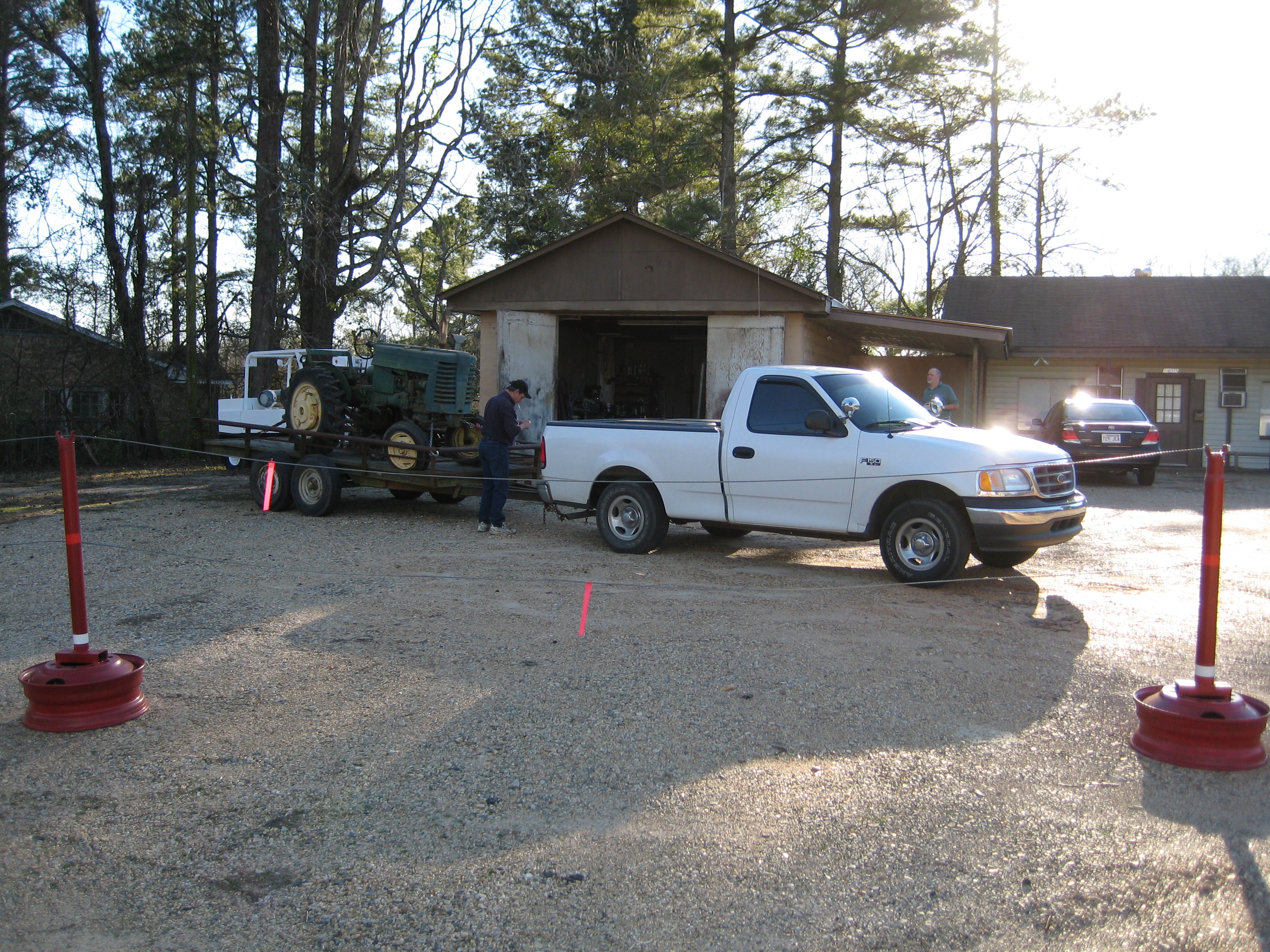
So I grabbed one of my mechanics, some tools, hooked up to a trailer and drove up to Fordyce, Arkansas. When I arrived, it was a sad sight. The tires were flat and it was clear that the tractor had not run in years. There was no point in trying to get it running on site, but one thing was certain: I was not going to give $1000 for it. In fact, I opted for half that. I figured at $500 if the tractor didn’t pan out as would be the worst case scenario, I could part it out or sell it as a project/parts tractor for $600 and relatively break even. Or, best case scenario it wouldn’t take much to fix and I could sell it for a big profit. Either way, it would be an enjoyable project. …Oh, and he took the $500.

The first thing we had to do was get it loaded and get it back to the shop. We used the owner’s new Kubota to push it up on the trailer and then we headed south to El Dorado.

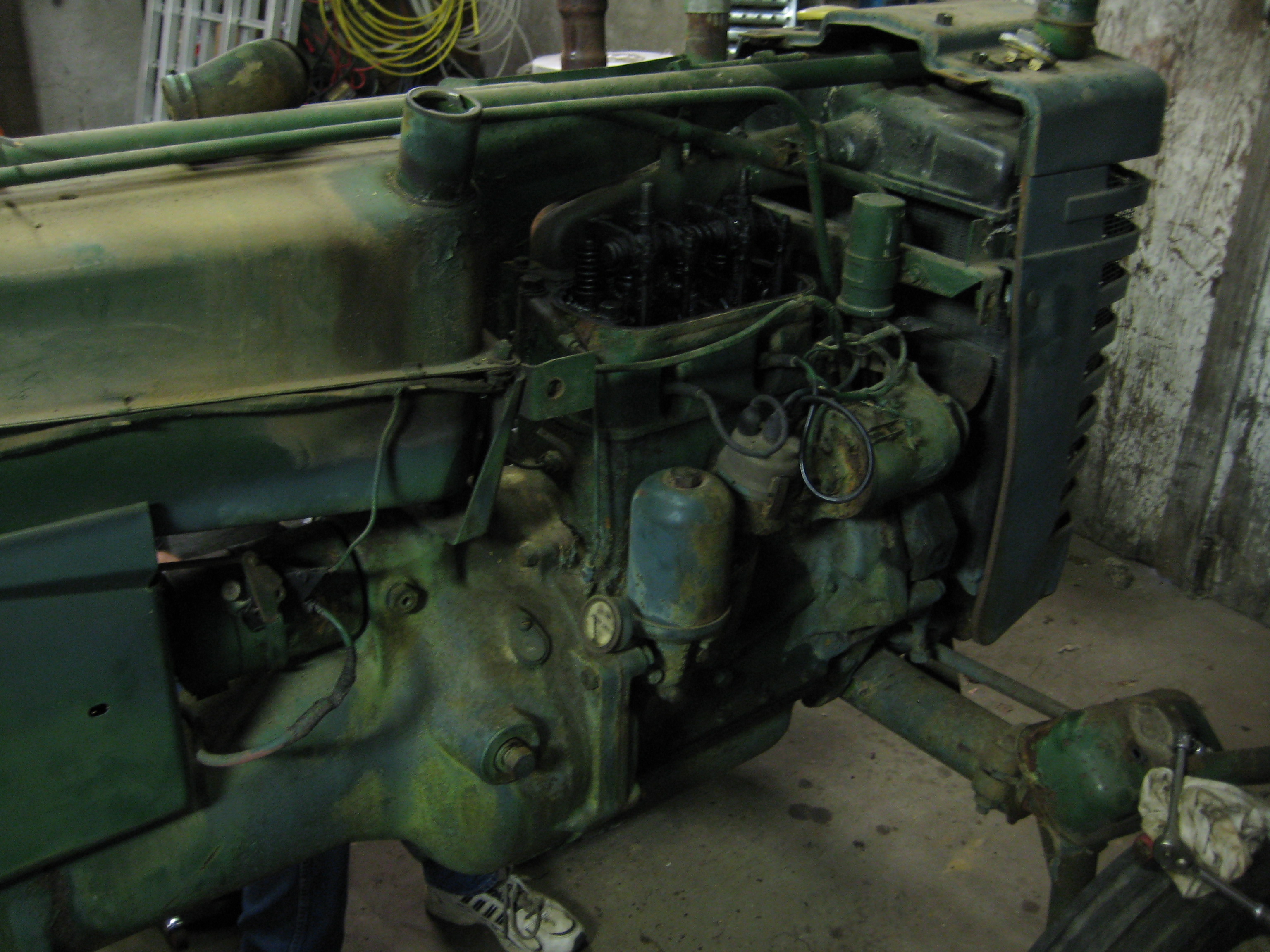
Once at the shop, I had one of my guys check it out. I wanted to check the fire, compression, and carburetor to see what it may take to get it running. The points were corroded but salvageable. We cleaned the ignition components and found that we had good spark. However, the carburetor was a disaster and one cylinder was low on compression. We pulled the valve cover for further inspection…

We found that the cylinder with low compression had a sticky valve, which is good news because we were able to use some penetrating oil and free up the valve. Had it been a damaged piston or rings it would have made for much bigger problems. The carburetor had four rusted and broken bolts that had to be extracted and replaced. After we got it all back together the moment of truth arrived. Did it run? Well, check out the video below and see…

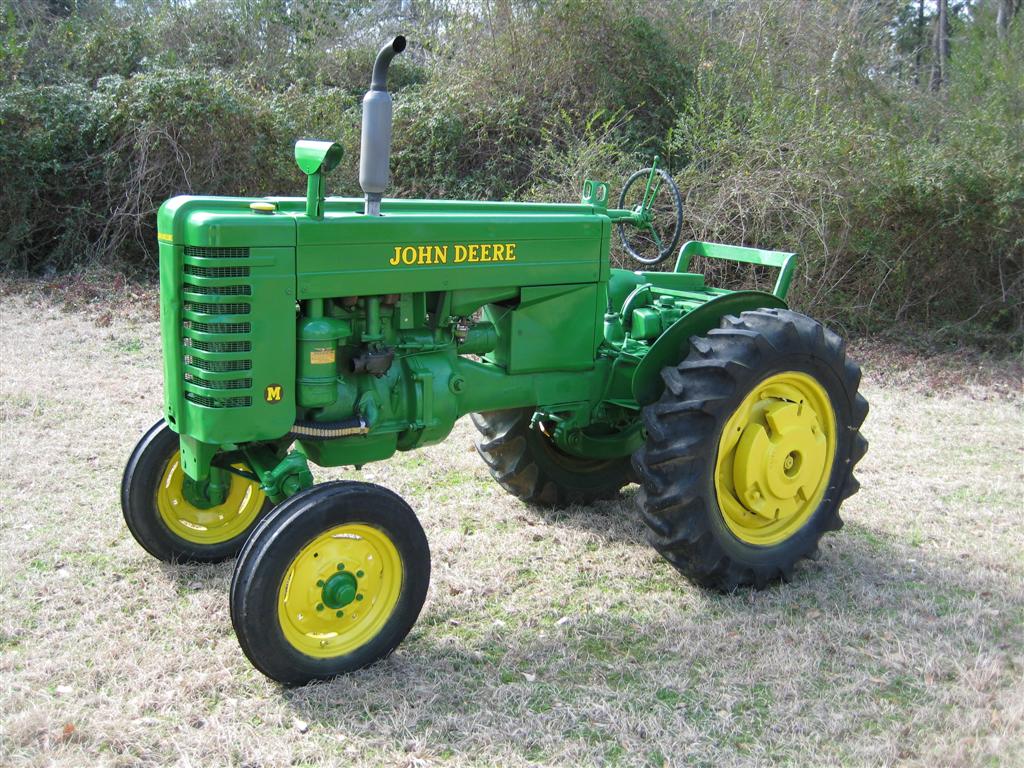
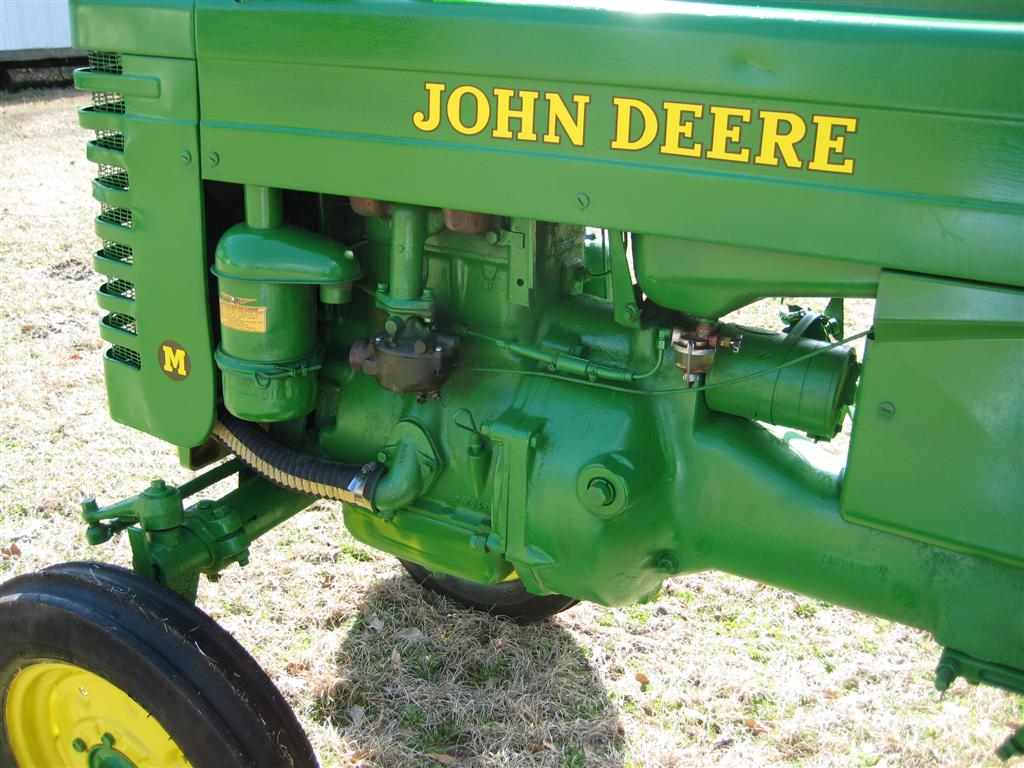
Alright, now that we’ve got it lined out mechanically it’s on to the cosmetic restoration. Sadly, I don’t think I have any pictures of the knitty-gritty but I’ll explain what took place. I took my pressure washer and did my best to wash the dirt and old grease off of it. I got most of the dirt, but I wasn’t able to get all the grease off the belly of the tractor. The grease was old and like concrete, so all I could do was scrape and chisel it off the best I could. I hammered as many dings out of the sheet metal as I could and then sanded it. Then I went over the axles, transmission, etc. with a cup brush on my angle grinder. Note, I was not going for a show-quality paint job here. That would have taken much longer and cost far more than would have been feasible for my purposes. I simply wanted a decent, good looking paint job that would enhance the cosmetic appeal of the tractor….oh, and I may have painted over some of the grease on the bottom of the tractor, but don’t tell anyone. LOL OK, so I primed the bare surfaces and then painted the tractor John Deere Green with yellow wheels and new decals. Now check out the next video clip and see if you can tell a difference…

And here are some pictures of the finished product.

And that pretty much does it. Oh wait, how about the cost breakdown? OK, well I paid $500 for the tractor, and I estimate the cost of transport, shop labor (not including my personal labor), and supplies at about $300 which puts me at about $800 on the total. The entire process took about three weeks and it was ready to sell. The tractor sold within 7 days and it brought $1,850.00. It cost me about $50 to sell it on eBay so my overall estimated profit is $1000.00.

All in all it was a fun learning experience and I walked away with an extra thousand bucks in my pocket.

On to the next one…

« Previous PageNext Page »

Blog at WordPress.com.