Nicholas Fluhart

November 14, 2011

1969 Mack R611ST Oil Field Winch Truck

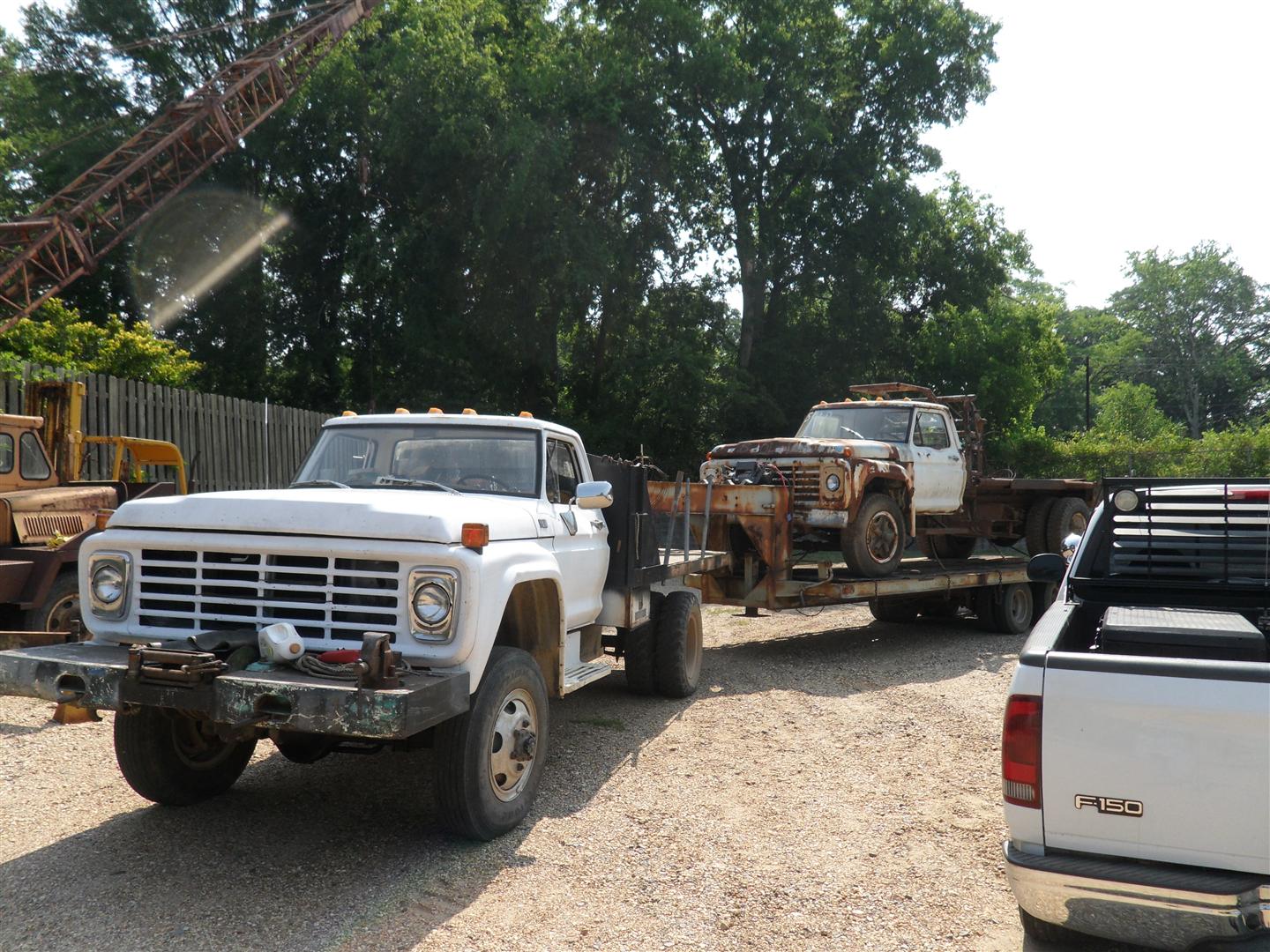
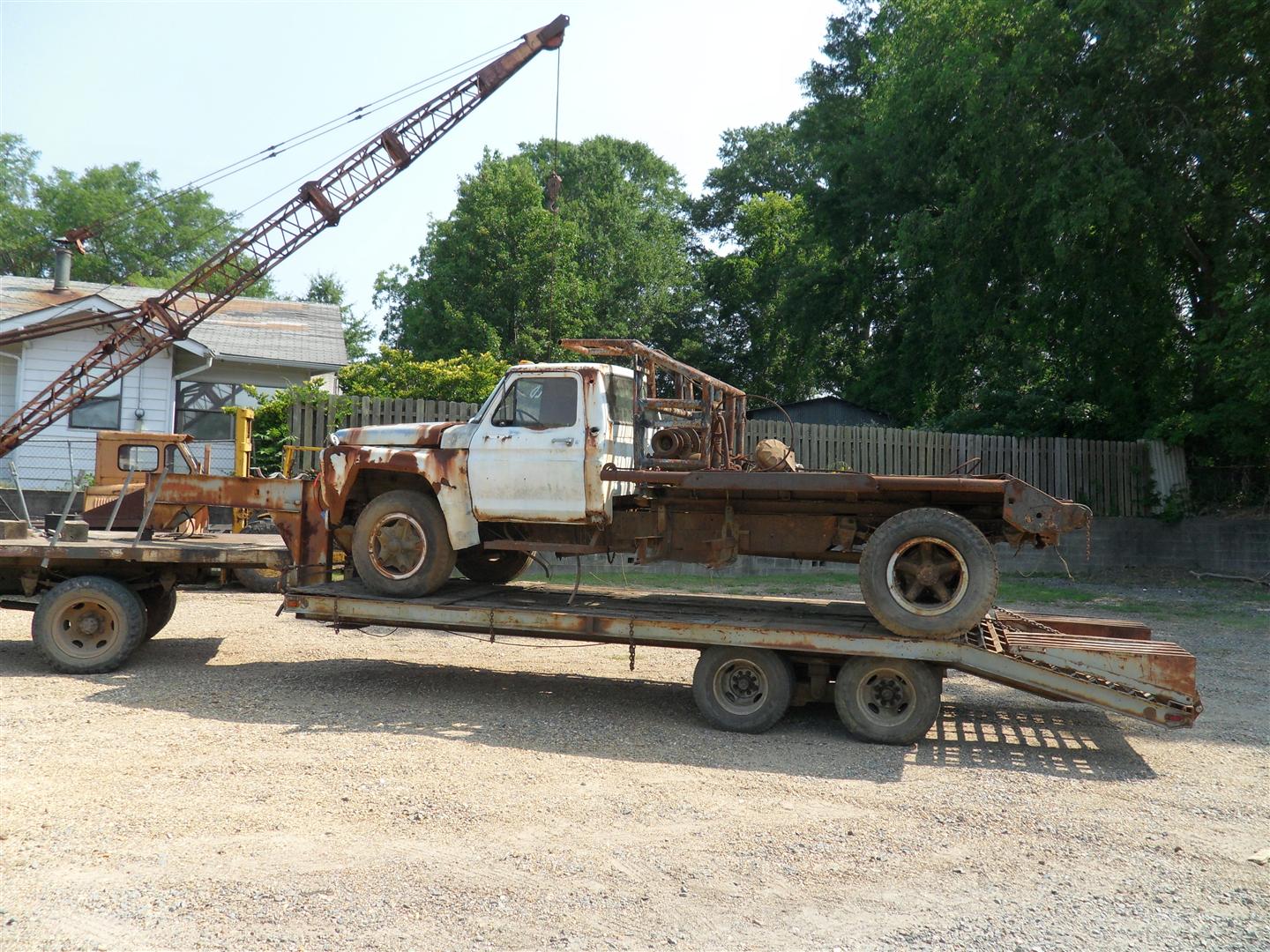
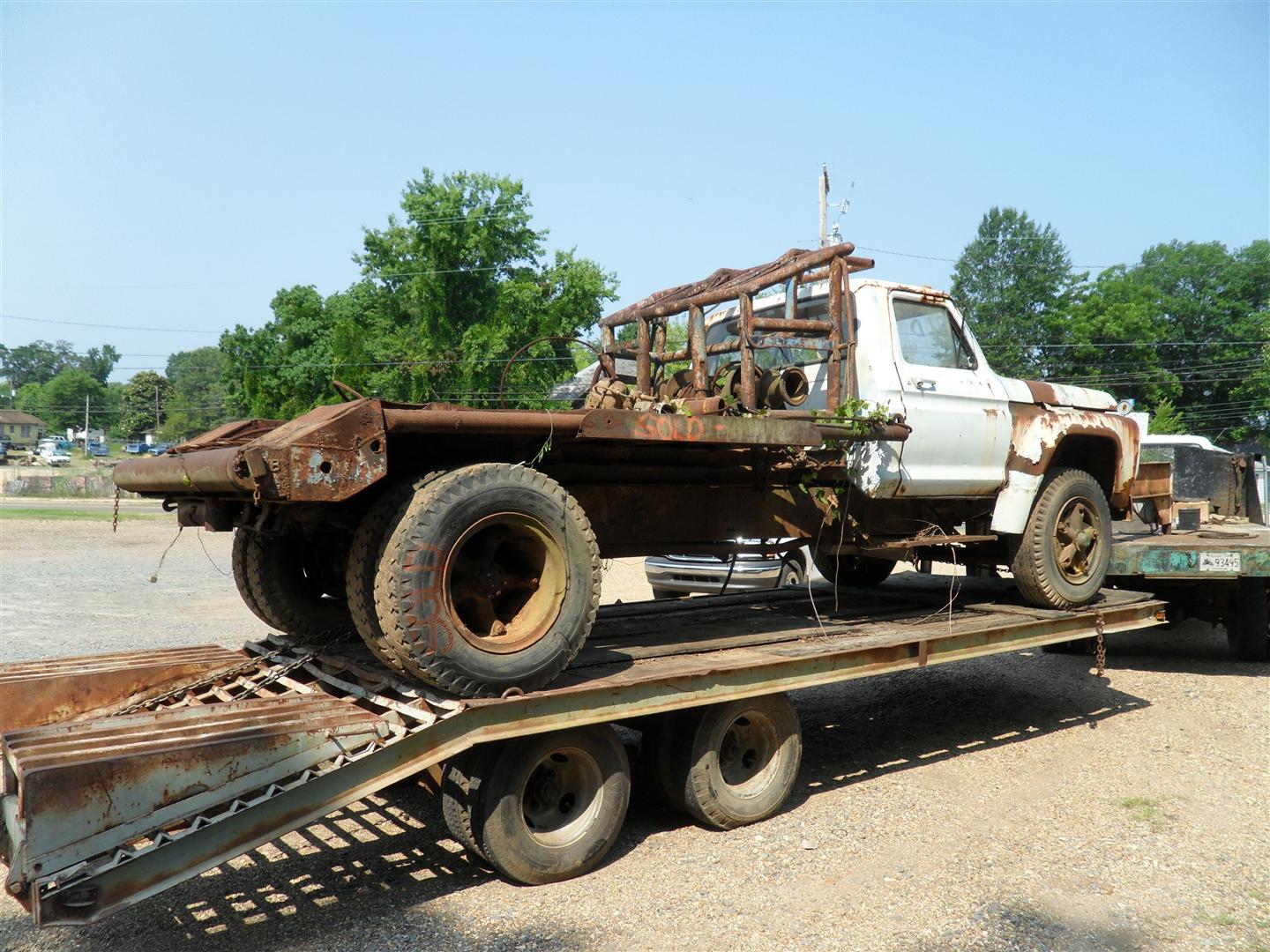
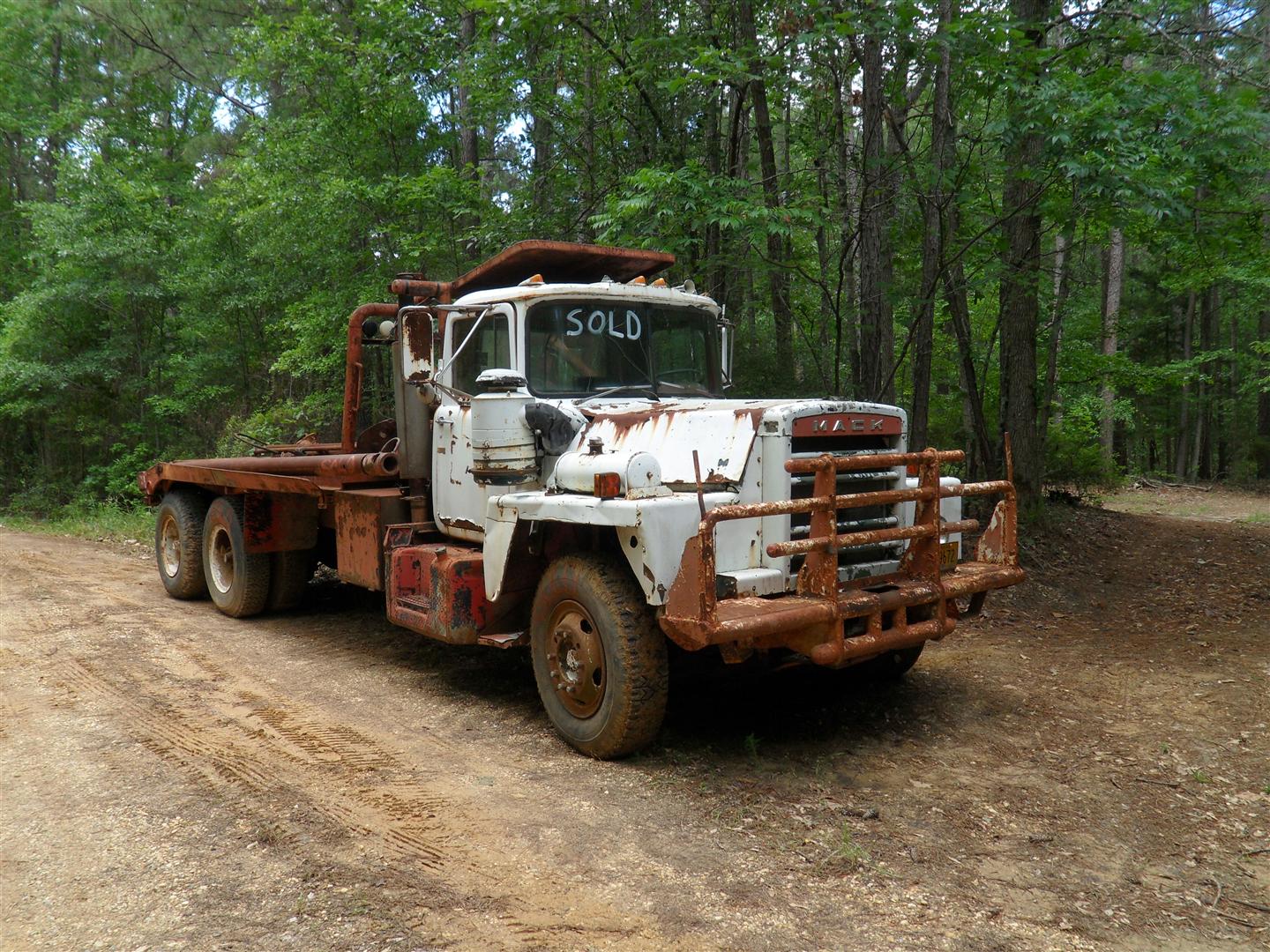
Here’s a cool old truck I bought last summer. I love old trucks! It’s a 1969 Mack R611ST with a fully rigged oil field winch bed utilizing two massive winches (one Tulsa and one Braden), rolling tail board, power assist poles, and a fifth wheel. I’d love to hear from some Mack guys on this truck, because I know very little about Mack’s. Although I haven’t done extensive research on it yet (that will come when I get the truck to my shop), I haven’t seen much in terms of history or specs on the R611ST.

This truck has been setting up for a few years and obviously needs some work to return it to roadworthy status. I’ve always wanted a winch truck for loading heavy equipment, and this one is larger than anything I imagined owning (you can see a much smaller version of winch truck that I also bought last summer here), but the price was right and the bed is in good shape for its age. Very cool old rig.
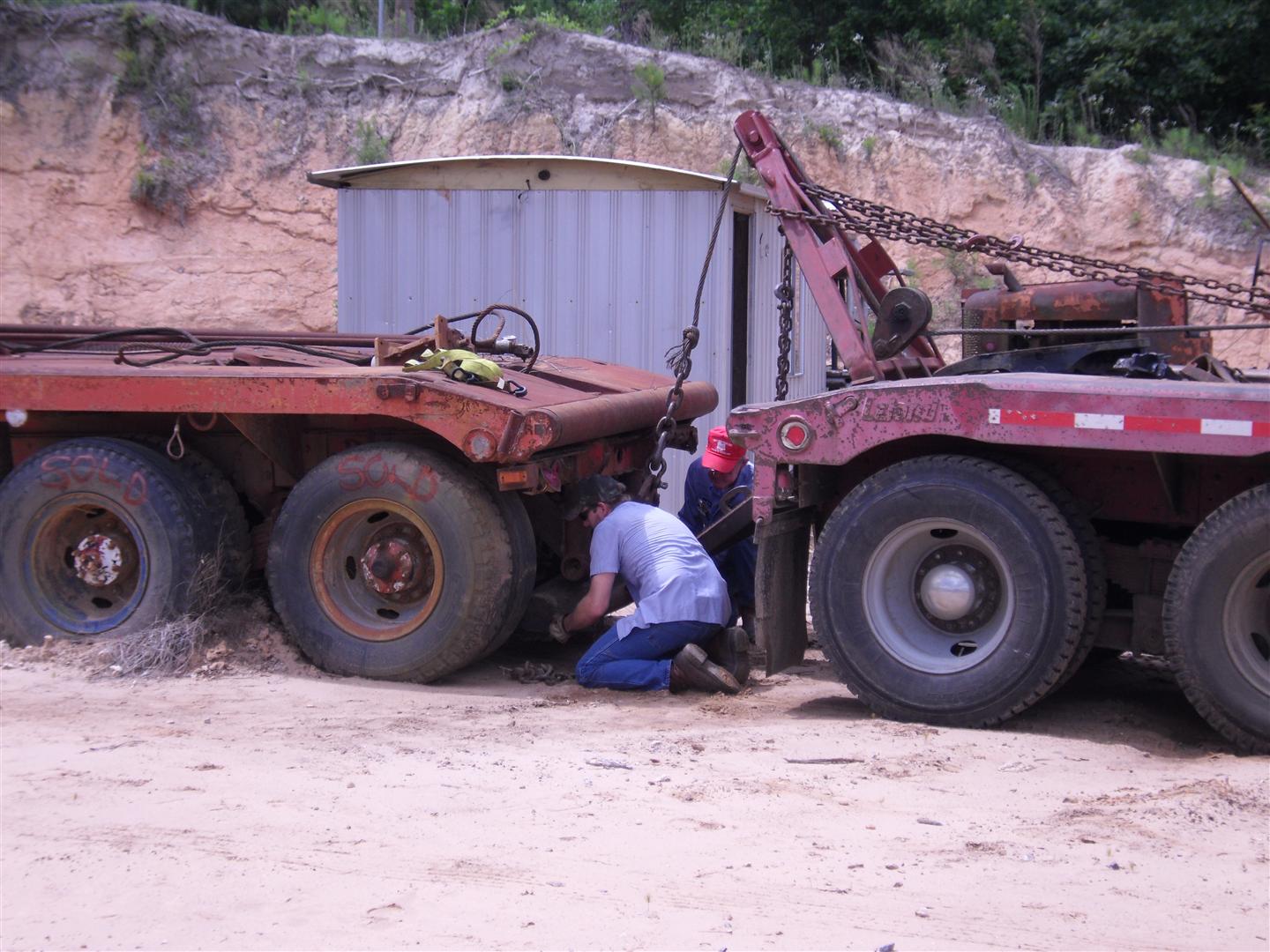
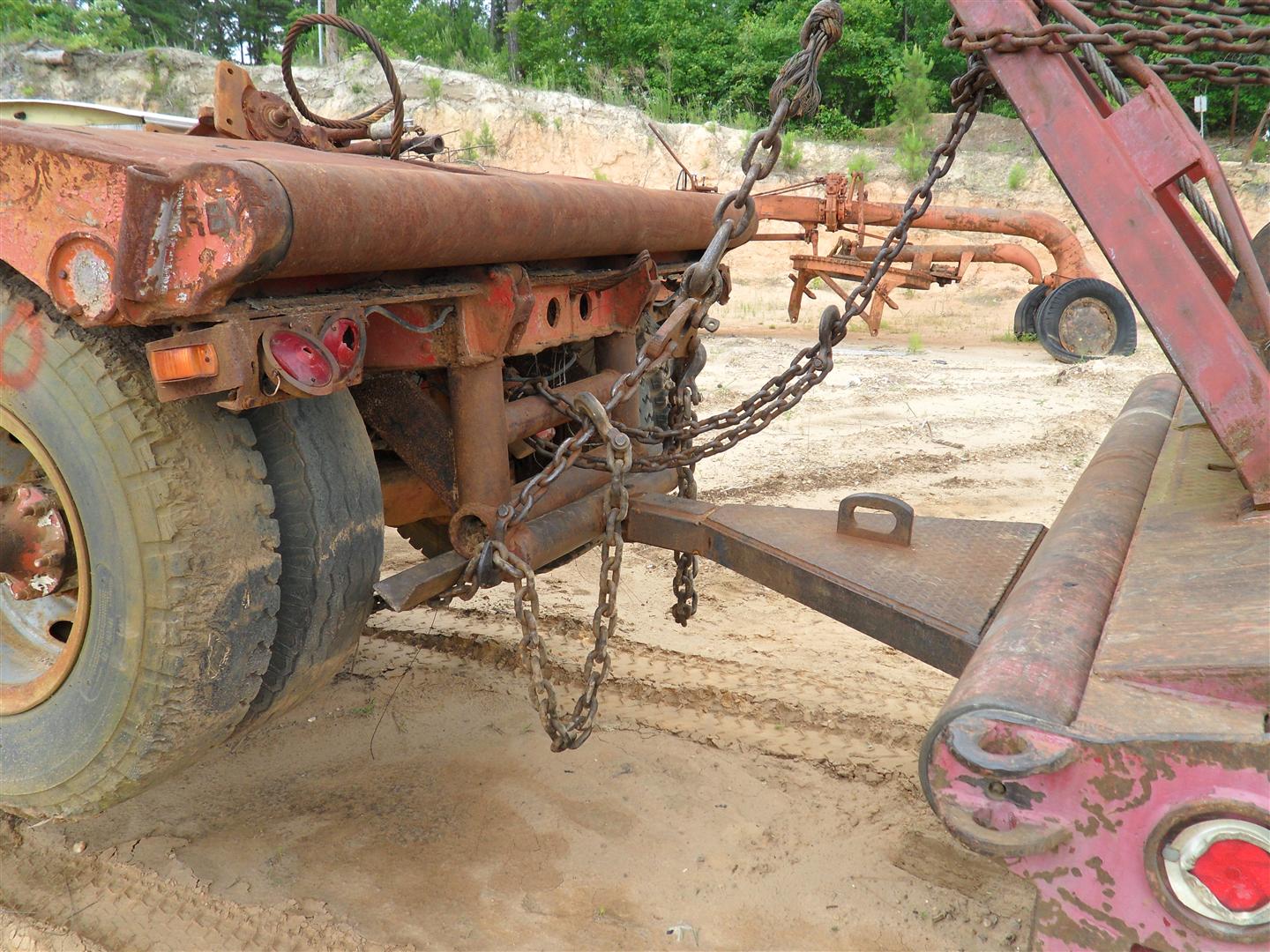
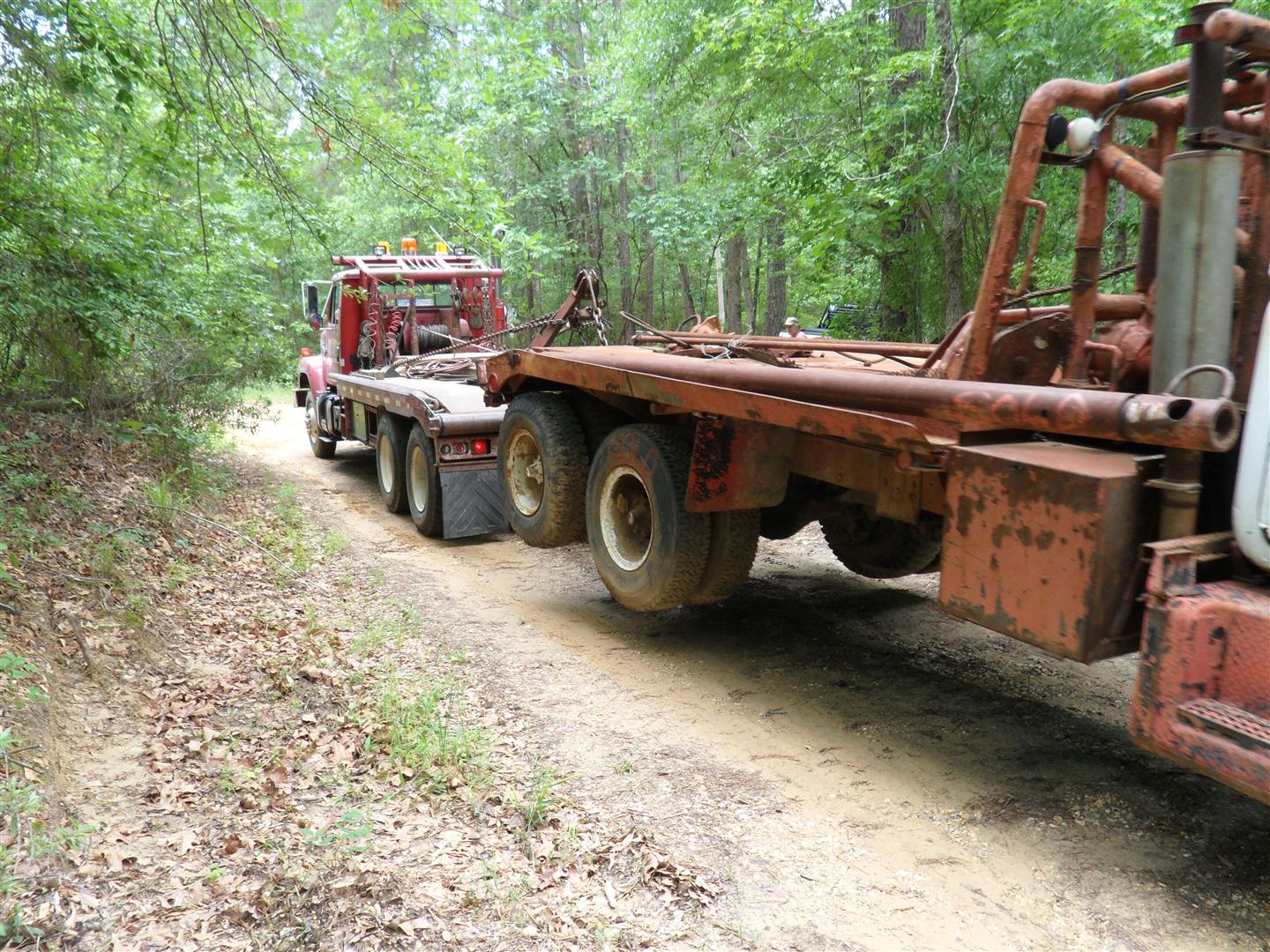
So once purchased, the first order of business was moving this monster. At first, I checked into getting it running and driving it home. However, upon close inspection I found the brakes, as well as other components, had taken a beating from the weather and it would take more time than I had to get it going. I thought about hauling it, but I didn’t have access to the type of trailer that would likely be required. The most viable solution was to have it towed. I called a local towing company and we immediately got to work. Concerned that the rear brakes may be stuck, we opted to tow it from the rear…

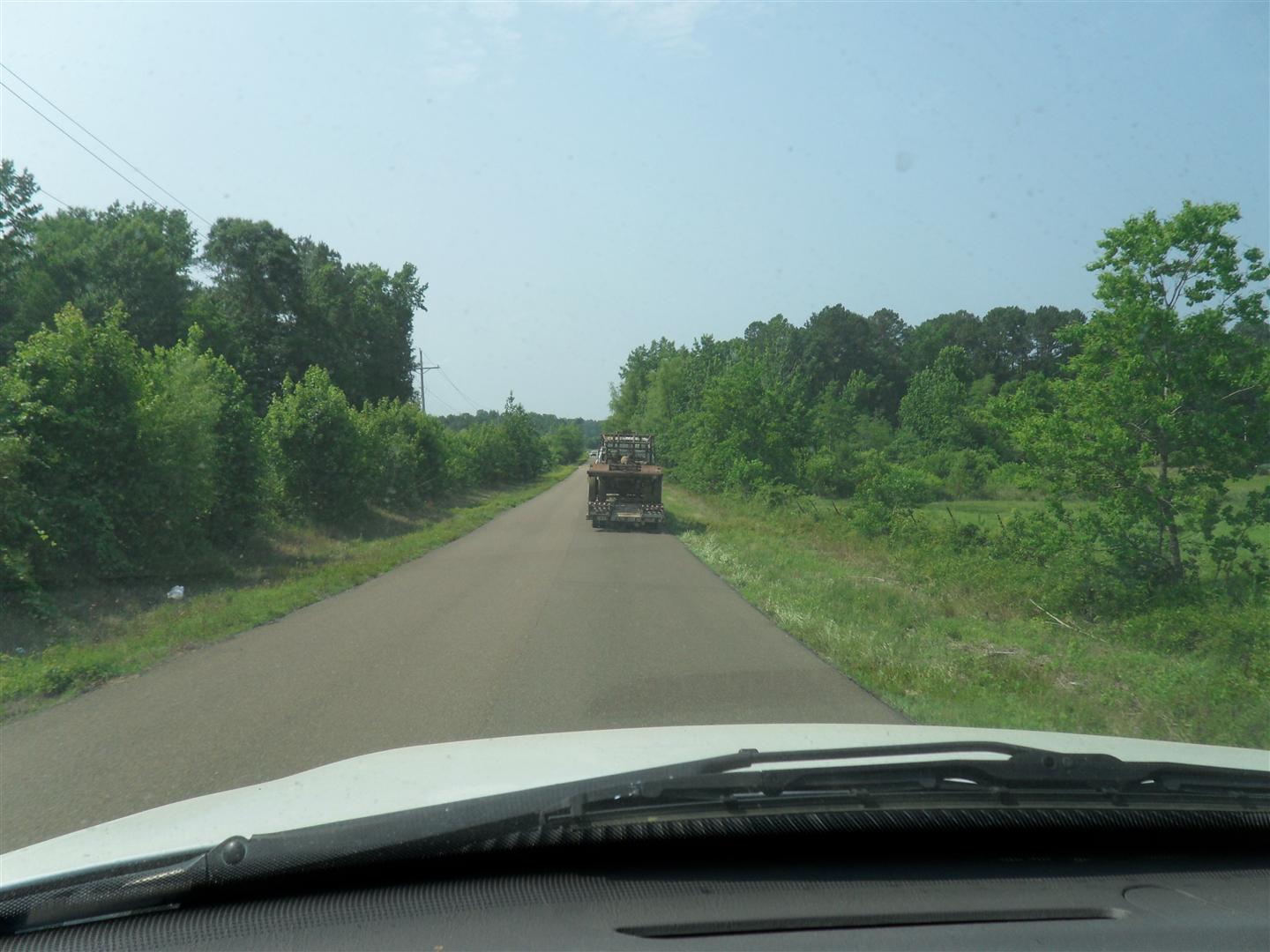
Once we got it rigged up, we hit the road. Since the yard at my shop isn’t quite big enough to have much non-running equipment present, I decided to have it towed to my friend’s property until I have time to get started on it. We had to get it into some tight places to reach its final parking place.
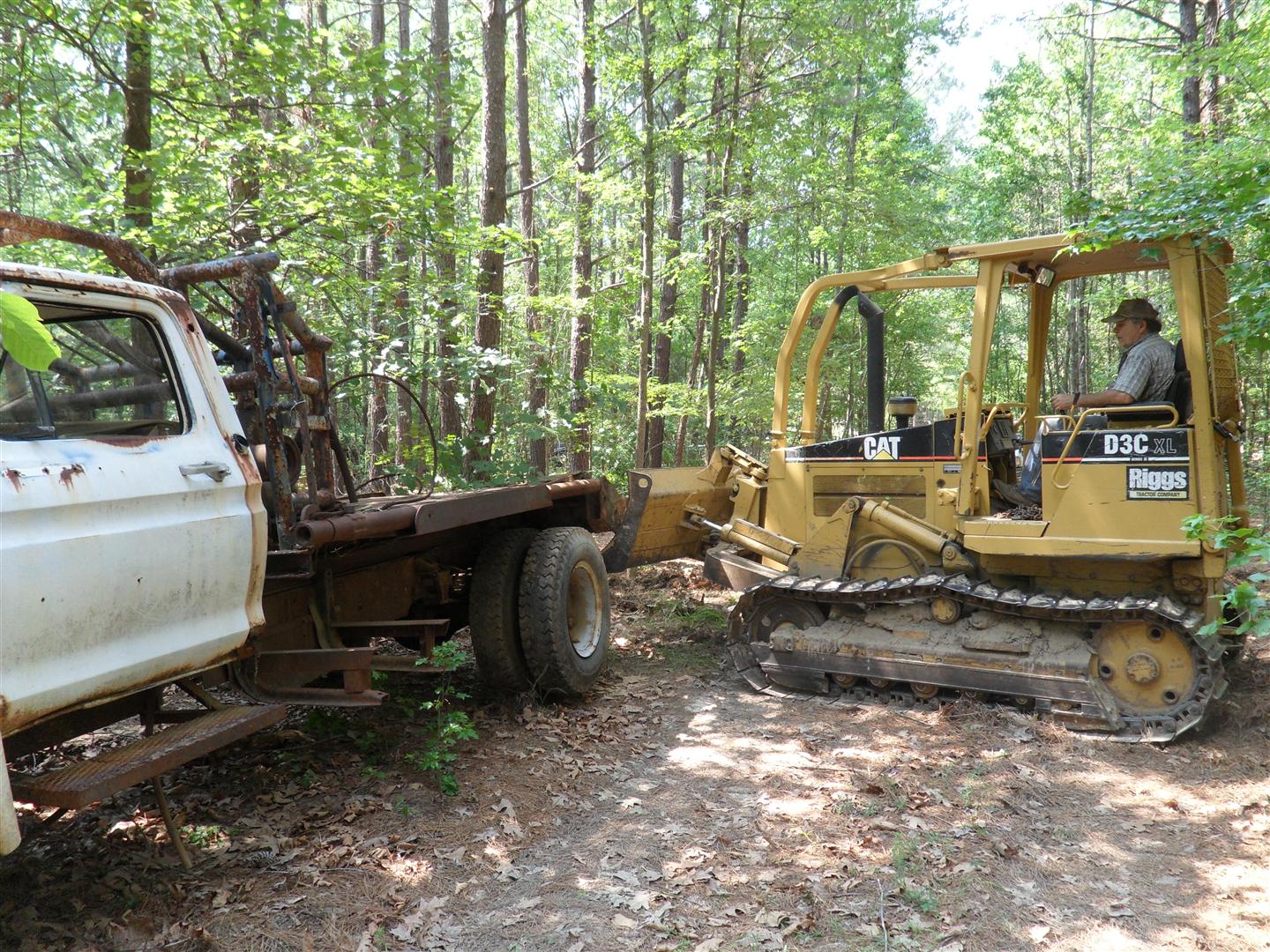
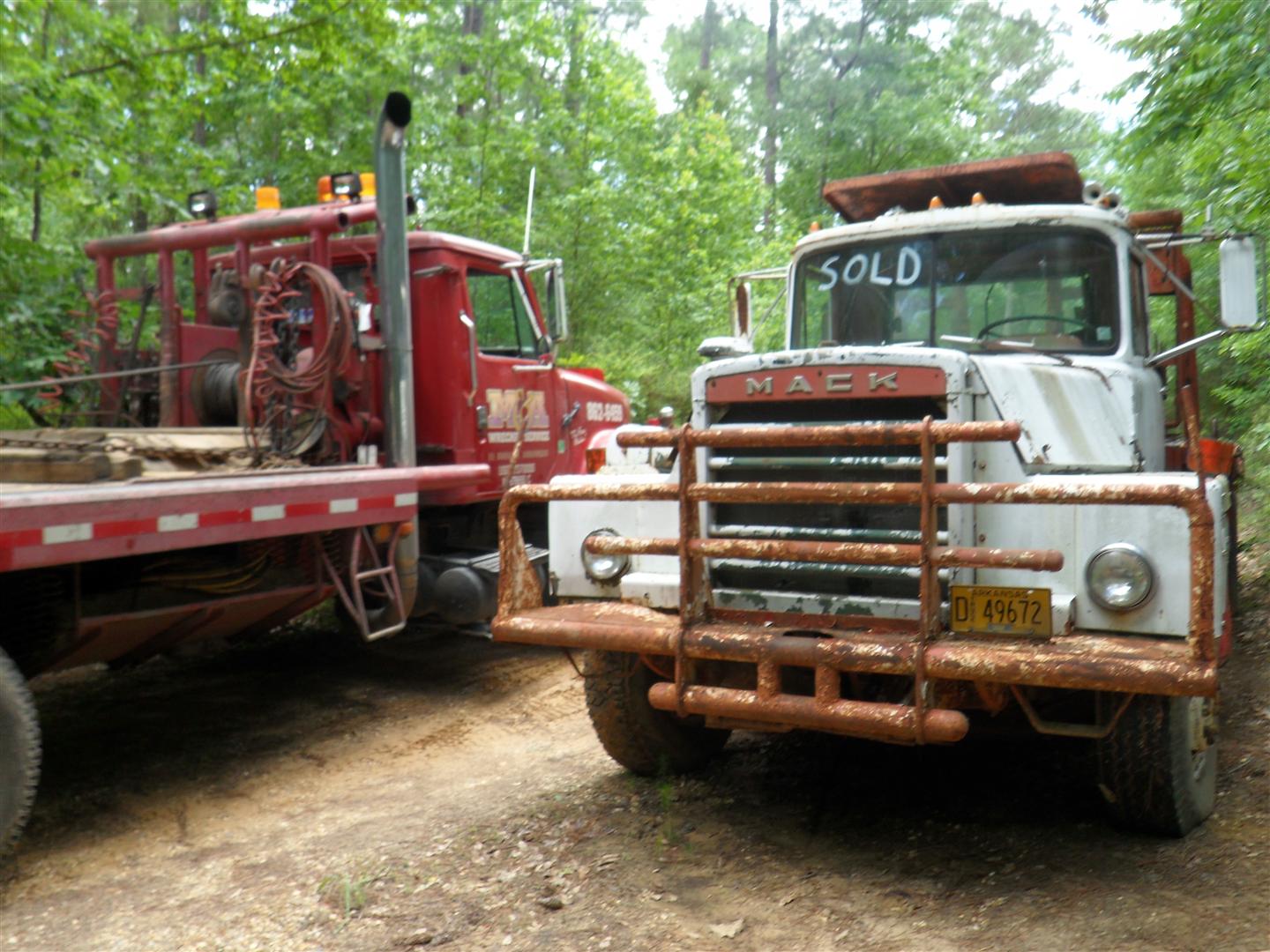
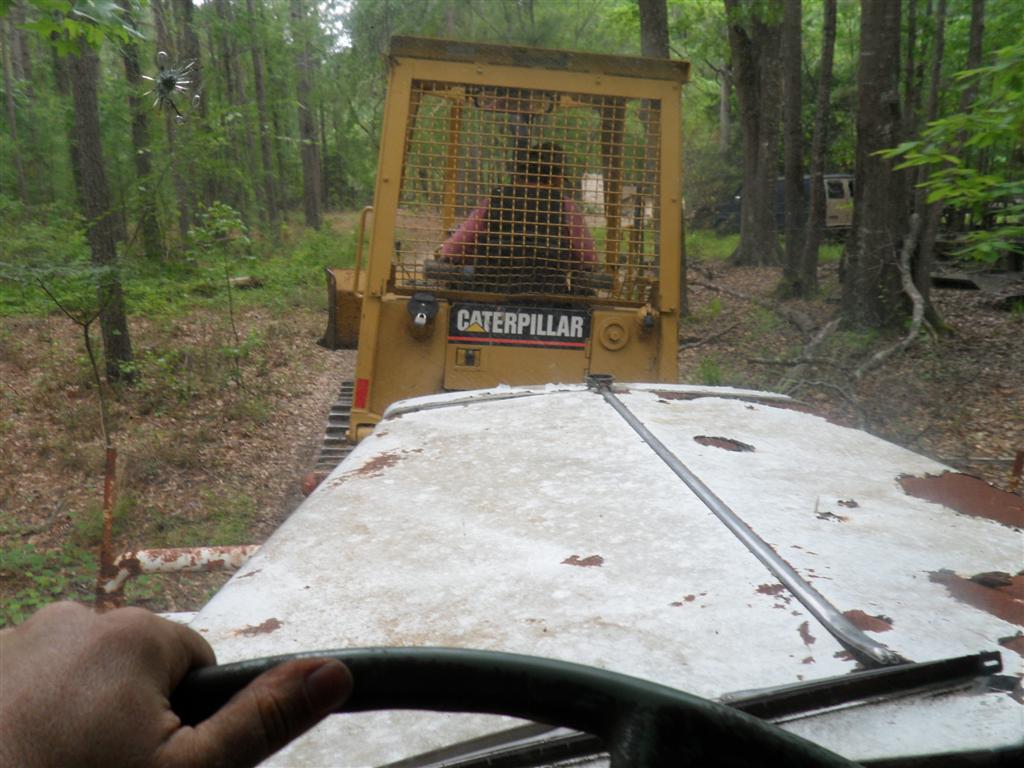
It was a tight squeeze for the wrecker to back out of the road we dropped the Mack on, but he got it done. Once the wrecker let it down, we used a 2006 Caterpillar D3 to move the truck into place. I jumped up into the cab of the Mack to steer. Below you’ll see some pics and a video clip of the process.
There are a few projects on the list before the old Mack, but once I thin some of those out, we’ll move it to my shop and get started. Until then….
November 5, 2011

Project: 1971 Clark CY20B Forklift

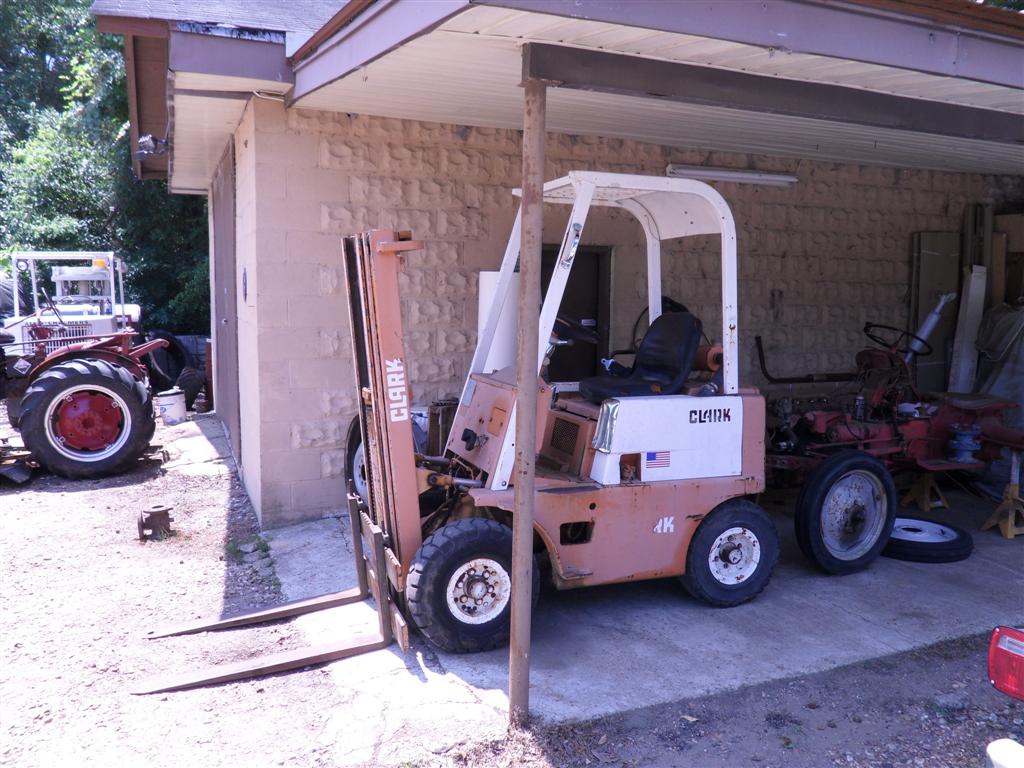
I promised a project post from my recent forklift purchase, so here it is. This has turned out to be one of the most handy machines I have owned. I’m not sure how I got along without a compact forklift for as long as I did, and with it being an all-terrain unit, it has been perfect for my application.

Before

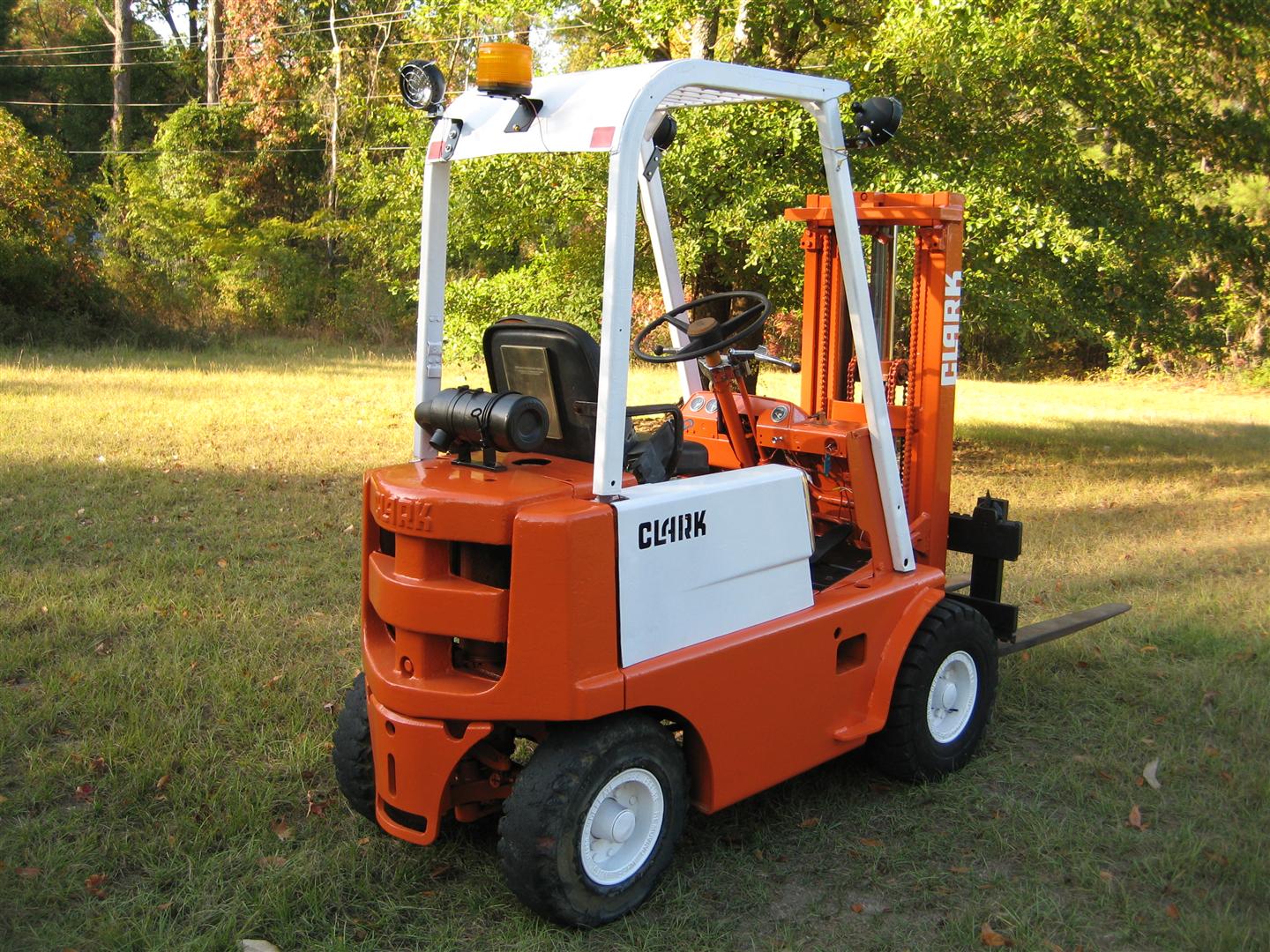
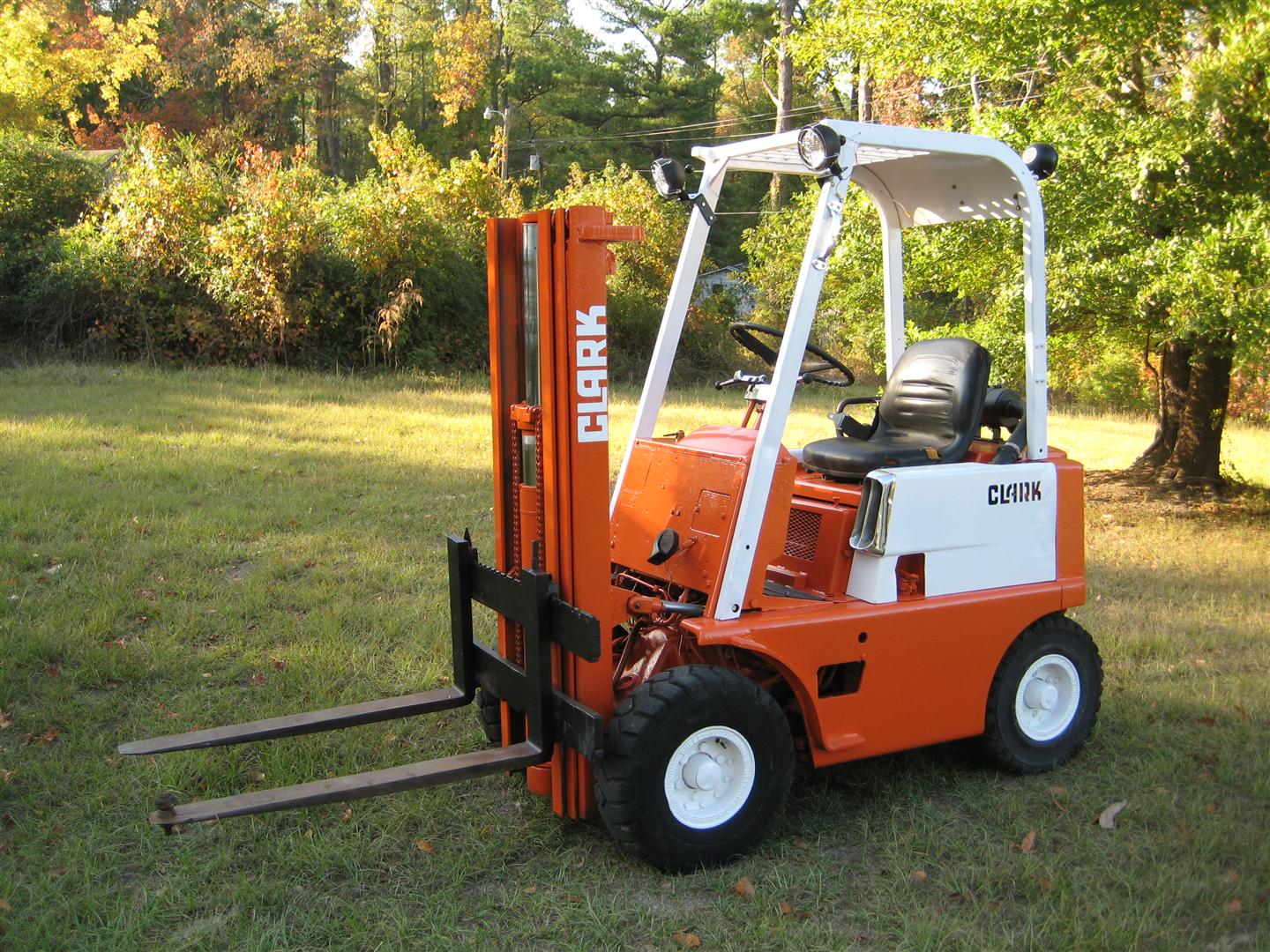
After

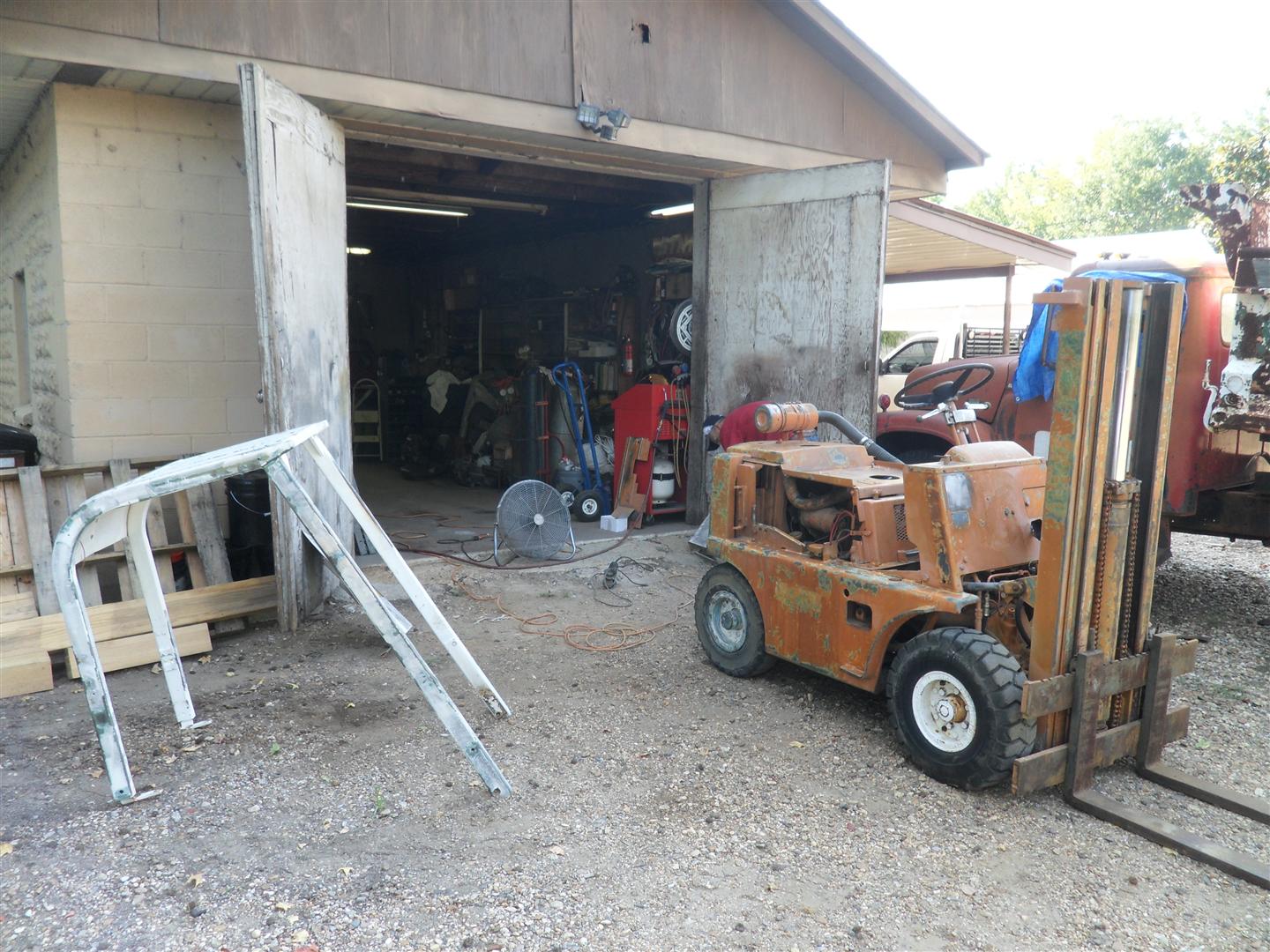
When I got this lift, it ran OK and was overall functional, but I knew it needed service so I began planning the project.When we finally got some down time, my new mechanic Jose and I pulled it up into the shop and got started….

Getting Started

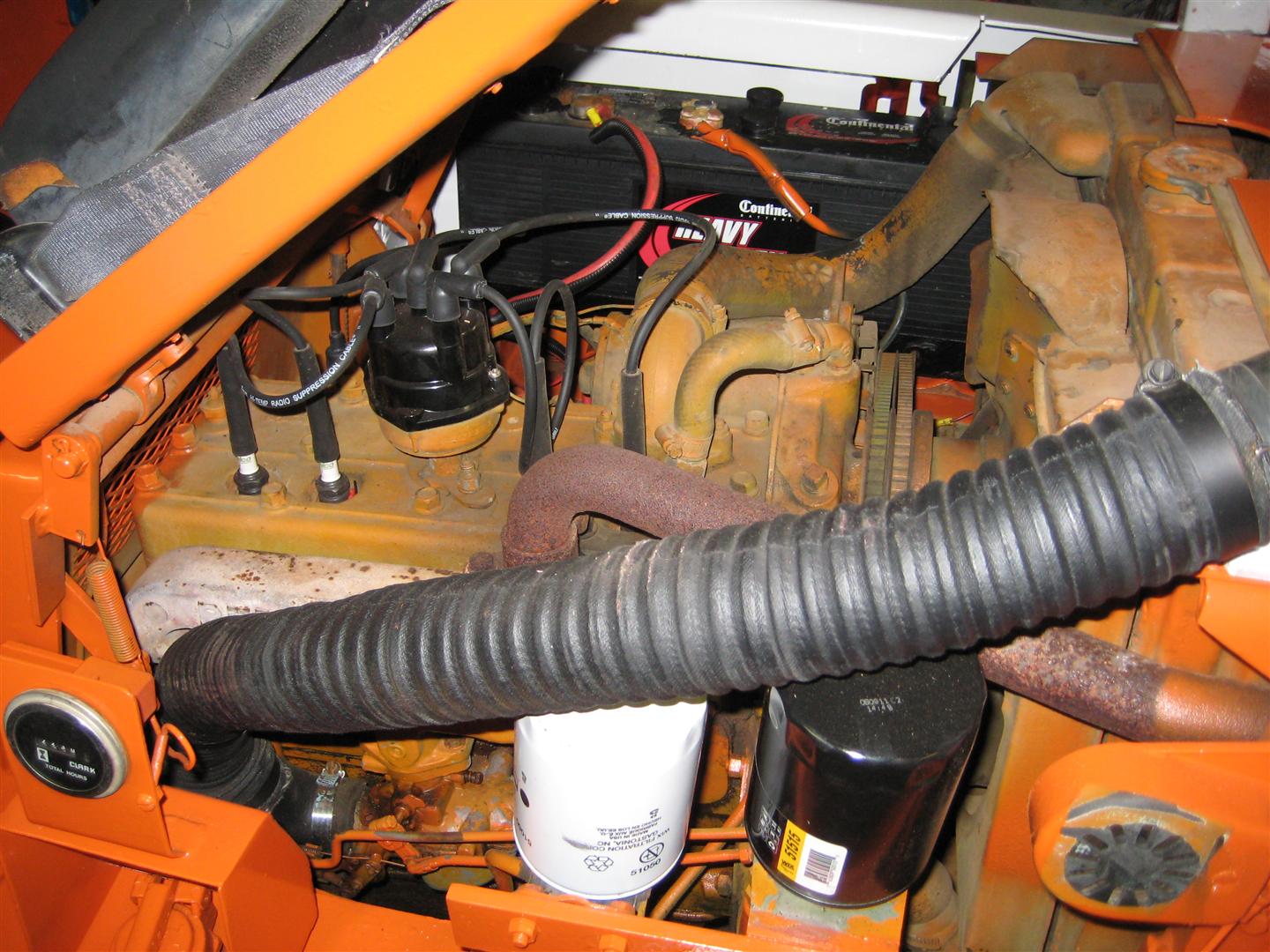
The first order of business was a general tune-up and service. The engine in this Clark CY20 is a very small, 4-cylinder, gasoline Red Seal. Since I don’t have a manual on this unit, we pretty much had to go on skill. The ignition points were fried, so we replaced them along with the condenser, distributor cap, and rotor. We also installed a new set of plugs and wires, wrapping up the ignition system.

Next, we changed the fluids starting with the engine oil and then the transmission fluid. Forklifts are usually compact and difficult to work on, but fortunately the engineers at Clark had a little foresight and placed the filters in an easily accessible area (see the engine oil and transmission oil filters below). While changing the transmission fluid, we found something troubling. Metal shavings? No, not quite that bad, but still troubling: There was a large amount of water in the transmission. The fluid looked like strawberry milk. My first thought was the transmission oil cooler which is in the radiator. I was prepared to mount an external cooler if necessary, but upon further testing we determined that the water did not get in through the cooler. So how the heck did it get in there? We never fully solved the mystery but surmised that it must have been due to the machine having set out in the weather for an extended period of time before I purchased it….either that or someone ran it off into some deep water? Whatever the case, I had to flush at least five gallons of costly transmission fluid through it and change the filter twice to get the water out. I’ve run it several hours since, and no sign of water so I’m calling it resolved.

We decided to wait on hitting all the grease points until last because the next step was to put a shinny new coat of paint on her, and I didn’t want to fool with washing a bunch of grease off before painting. We pulled it outside the shop and begun stripping it down. As I point out on this page, my general goal is not to pursue a show-quality finish. The aim here is to have a good, solid finish without the unfeasible cost of completely disassembling the machine and stripping all parts to bare metal. So we went over it with cup brushes and various abrasives to remove any loose paint and most of the faded paint.

Then it was time to remove the side panels, seat, and roll cage to deal with them separately.

Once everything was adequately sanded, we began the priming process.

Next, we began the final painting process. Like most Clark forklifts, this unit was originally green. However, at some point in its life it was painted orange and white. So rather than trying to go back to the original color, which would have meant painting the entire engine compartment, transmission, and running gear that was all now orange, I opted to keep it orange. In fact, I painted it one of my favorite equipment colors: Allis-Chalmers Orange. LOL Below you’ll see Jose mixing up the paint and applying the first coat. We used a tractor/implement paint and added hardener for a durable finish.

We painted the wheels, side panels, and roll cage white, and once dry, we removed all of the masking and began reassembling the machine.

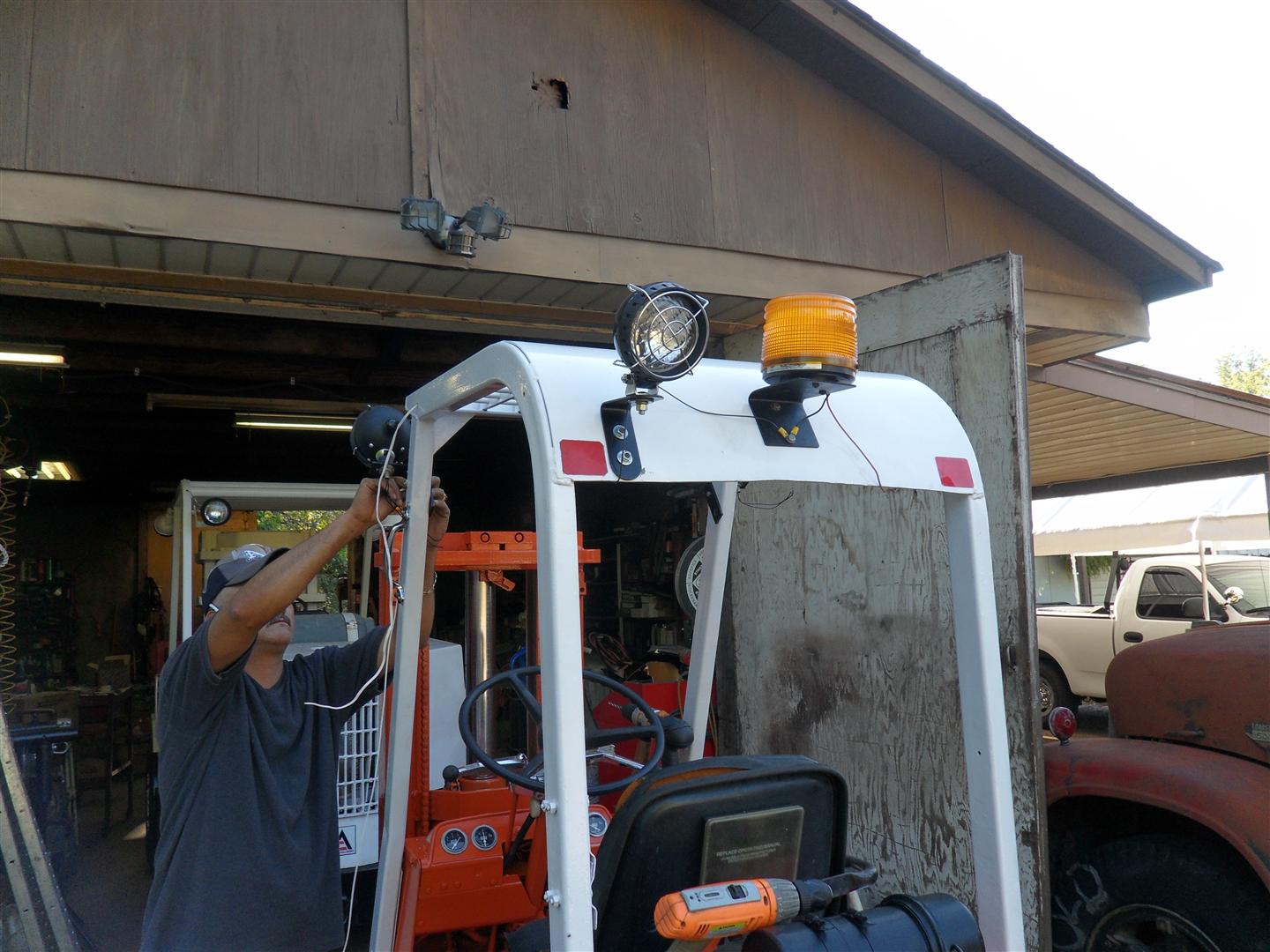
In keeping with my lighting policy (notable in several other posts) the final step was to add lights and of course decals. We fixed the strobe light on the roll cage and added front and rear work lights wired to a switch on the dash. The front lights are such that the operator can adjust them by hand if needed. The rear light is similar, but without the adjustment. I purchased “Clark” decals to go on the mast.

And now for the finished product…

And that pretty much sums it up. Many more projects like this to come…

October 23, 2011

2nd Anual East Camden Expedition Pt. 3

Filed under: Trips and Fun — Nicholas Fluhart @ 3:46 pm

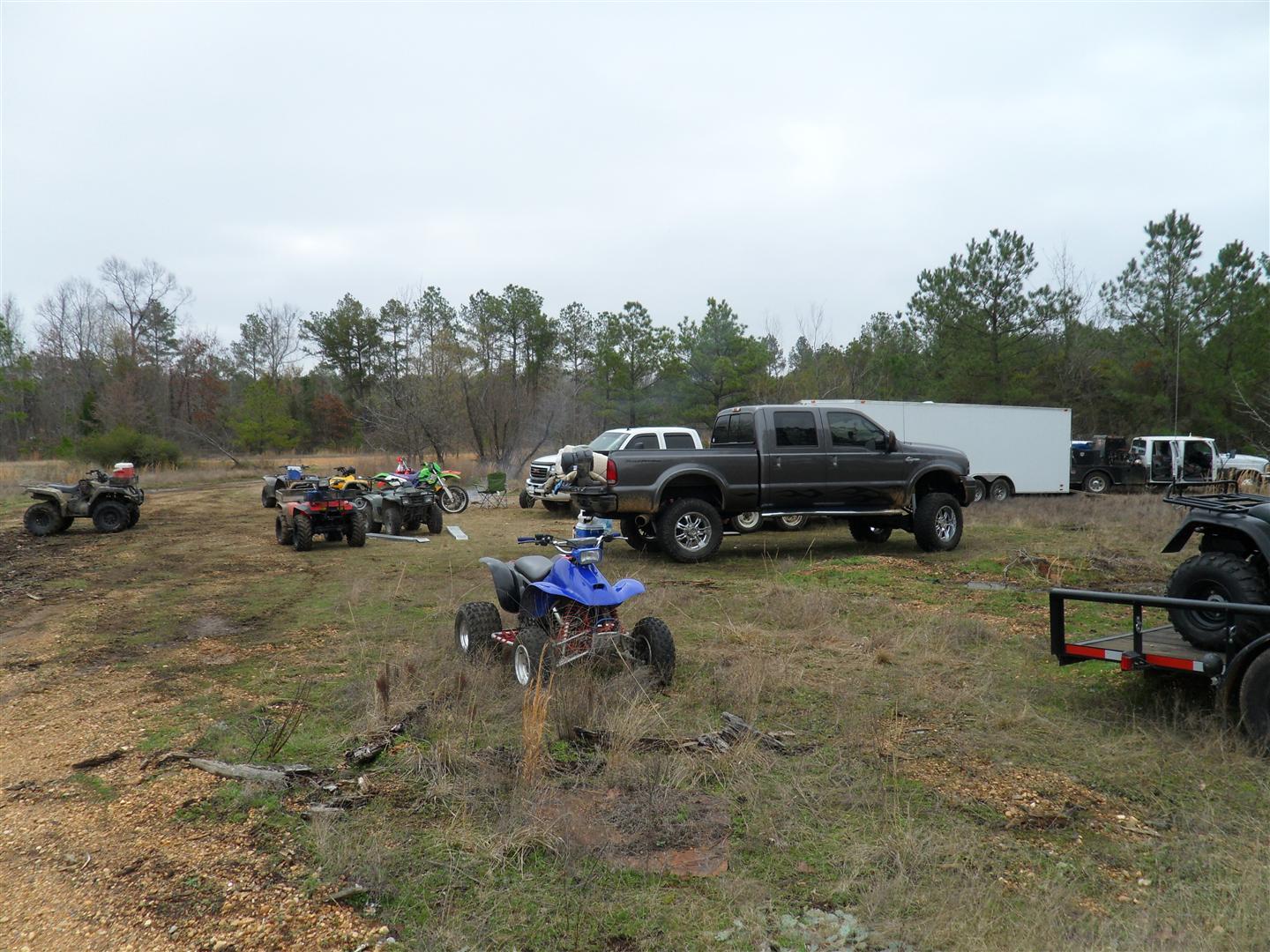
Now for the long awaited day-2 4×4 ride. We woke on the second day to see that a late night storm completely obliterated the camp. Fortunately, we weathered the storm quite well in the enclosed trailer. Equally fortunate, all of our ATV’s and vehicles escaped harm. The photos below show the camp minus the canopies and shower that blew away in the night. It appears that the ATV’s far outnumber the people on this trip. That’s what I call being prepared. Had the storm taken out a few of them, we still would have had enough to continue the ride.

The guys spent the morning rebuilding the camp while I cooked breakfast burritos for everyone. Once we recovered from the previous night, the storm, and the rebuilding of the camp, we geared up to head out to the main event: magnum mud, rugged terrain, and everything else we could steer toward. We plotted a course that would take us over a large portion of the property through the most challenging routes, i.e. abandoned trials, wash-outs, deep water, etc. On the first leg, we encountered a series of creek crossings that proved to be moderately challenging. In fact, it took most of the day to get through them all. Second, our path took us through a long stand of flooded timber. The challenge of riding in murky water is that you cannot see the bottom and have no idea if or when you might drop out of sight. Below you will see a slideshow, followed by videos of our encounters. The video footage, which contains the subsequent and moderately humorous dialogue, is from Chris Taylor’s hat cam.

Slideshow: Outlines the Day-2 highlights.

Video 1: Our encounters with the creek.

Video 2: Flooded pipelines.

Video 3: Into the unknown – Flooded wilderness.

Alright, that sums up Day-2, but last and certainly not least, I will be posting the Day-3 freestyle ride; one of the best rides of the event….lots of action (and carnage) so keep an eye out for the upcoming post!

August 25, 2011

Retreiving More Old Iron: F-700 Winch Truck

Filed under: Day to Day,Trucks & Equipment — Nicholas Fluhart @ 6:40 pm
Tags: , , , , , , , ,

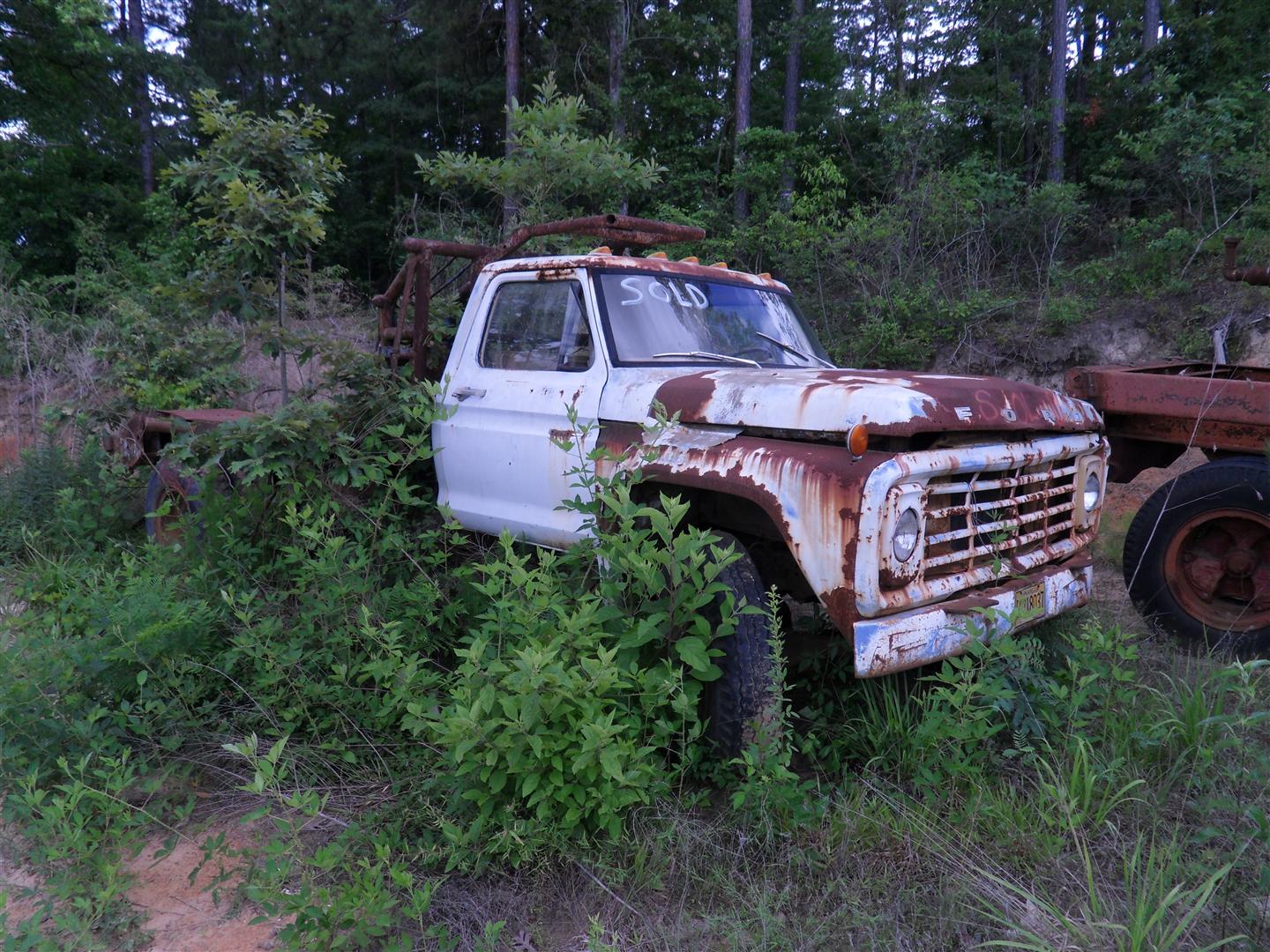
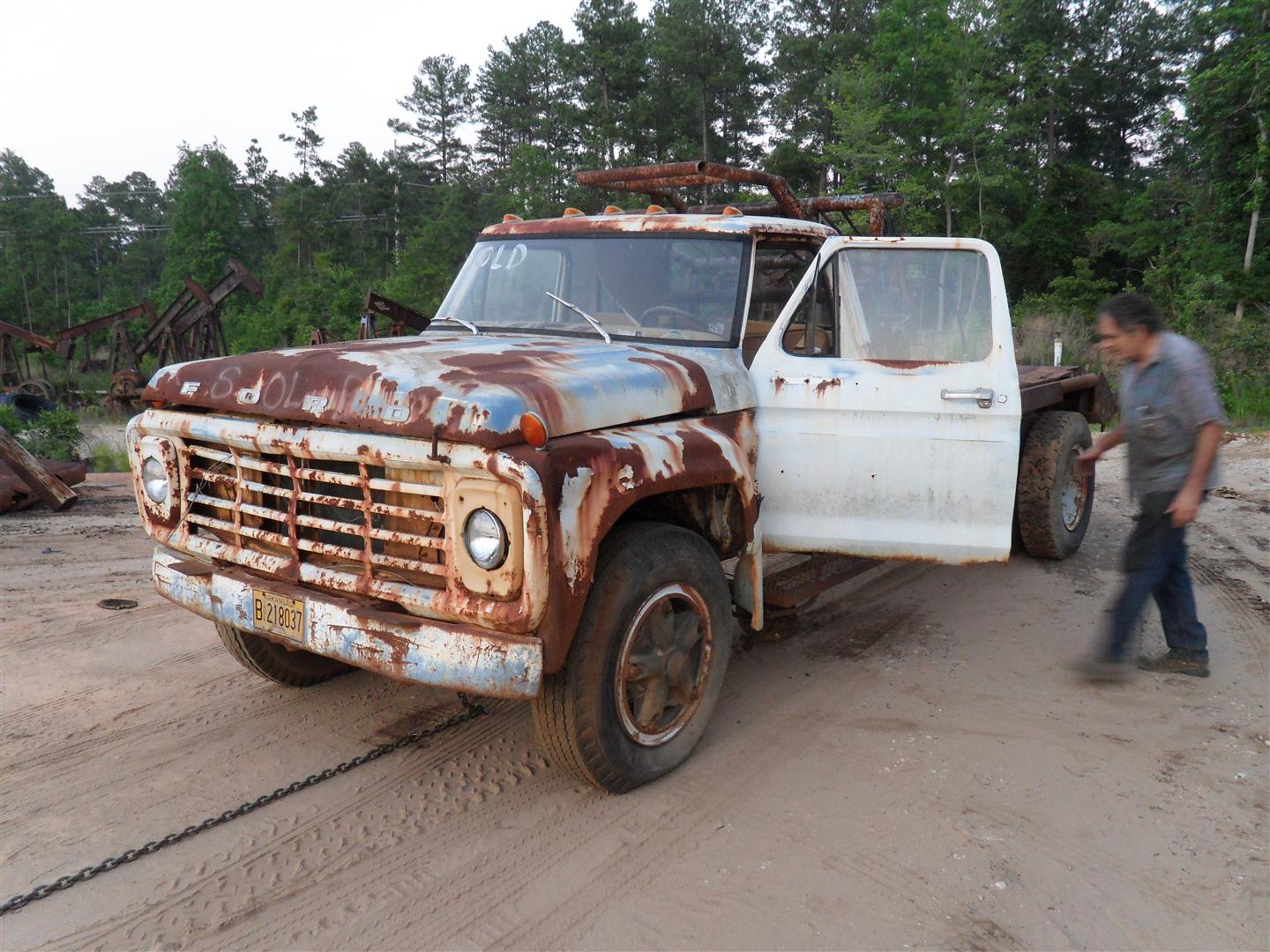
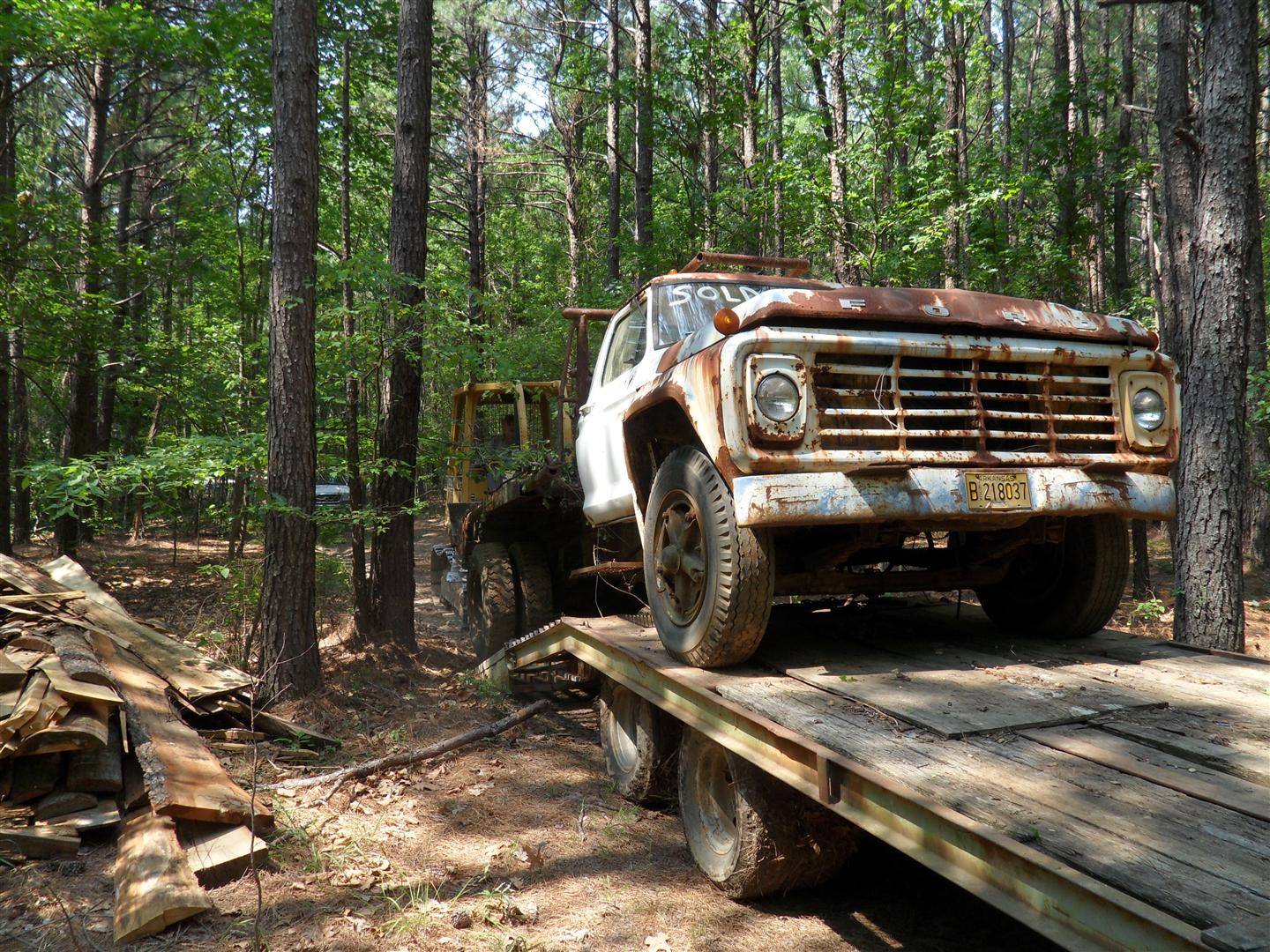
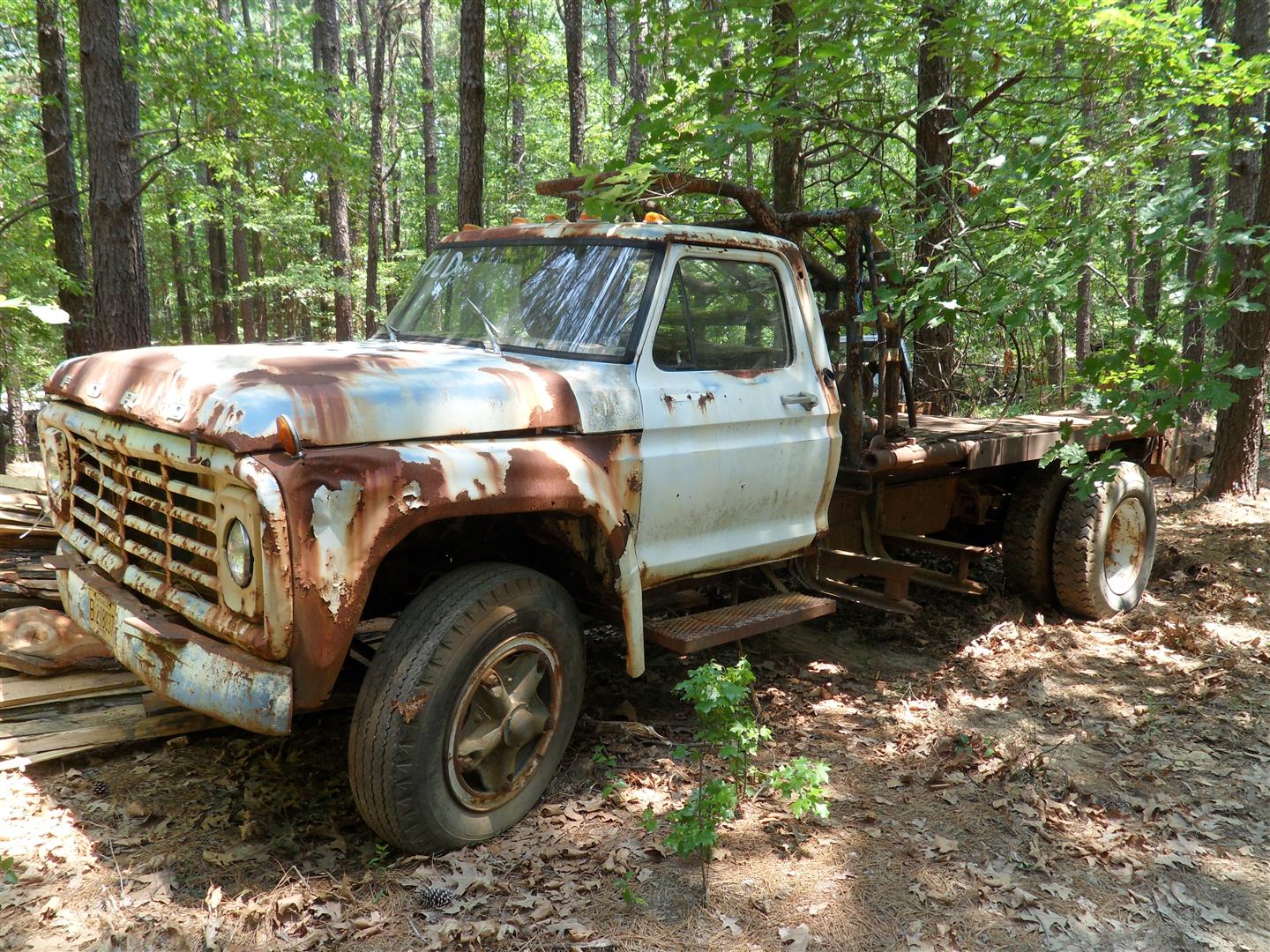
Shortly after purchasing the Ditch Witch, I ran across a deal on two old Ford trucks. One is a 1974 F-700 oil field winch truck. It has a Tulsa winch mounted behind the cab, and the traditional winch bed with the rolling tail board and provisions for a fifth wheel. The transmission is missing, but the engine, two-speed rear end, and PTO provisions are still there. The truck itself is too far gone for me to want to restore, but I bought it for the winch and bed. I’d like to transplant the bed onto an all-wheel-drive truck, such as a military 6×6 or perhaps an old Ford F-600 or F-700 4×4. Here’s a couple pics where I found it in the bushes:

The second truck in the lot is a 1979 F-600 which used to be a U-Haul truck, converted and extended to be used as an oil field pump truck. I got it as a cab and chassis, no bed. The engine, transmission, and PTO are in it. It also has a nice pipe bumper on the front. I have no use for it as is, but it will be a great parts truck.


Once purchased, I decided to haul the F-700 first for logistics reasons. They were stacked back in a corner and we needed to move the F-600 over a few feet to have room to load the 700 which was in the bushes ahead of the 600. Below you’ll see a video clip of us moving the 600. My friend came out with his 1979 F-600 4×4 with PTO winch and 25′ goose neck trailer to help me. The first order of business was to get the trucks moved out and lined up for loading. For this, we used the PTO winch on the front of the F-600 4×4.

Then it was time to drag out the 700. We backed the trailer up to it, tied on with a chain, and pulled it out in the open to level ground.

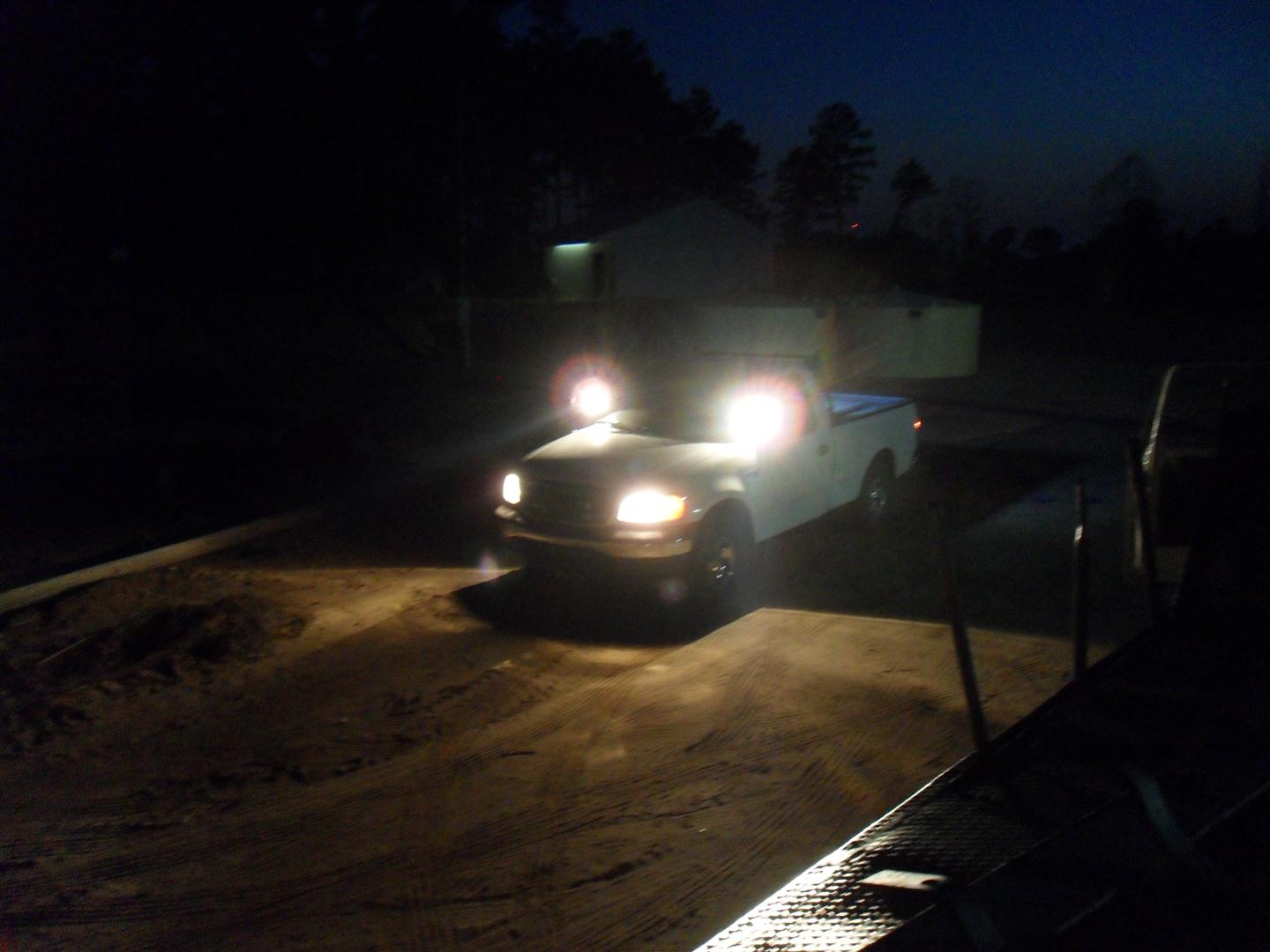
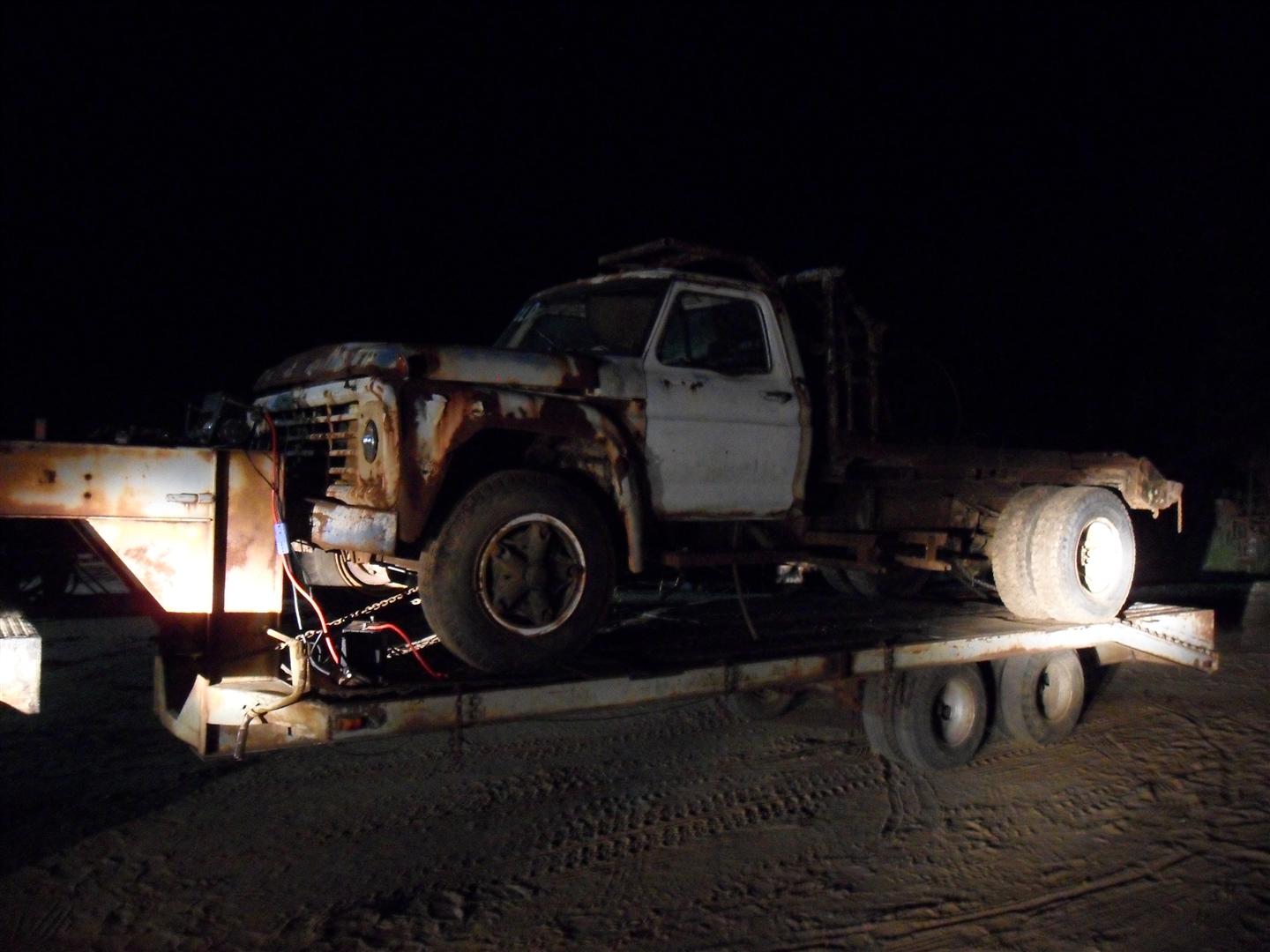
After resolving a slight debacle with the winch cable on the F-600 4×4, it began to get dark so I pulled my truck up to supply lights for the loading procedure. We used a 10,000 lb electric winch on the neck of the trailer to winch the F-700 up the dove tail and onto the bed.


We got it back to the in-town yard that night and decided to reconvene the following morning to haul the truck out to the country where I will store it. The next morning… I took several pictures of it up on the trailer.

We set out to the country…

We found a nice shady place for it out of the way and fired up the Cat D3 dozer to unload and move it…

Below you see it in its final resting place, at least until it is robbed of all usable parts at which time it will likely be hauled for scrap….but that probably won’t be anytime soon. At least for a few years it will likely remain as a monument of industrial history to be enjoyed only by unusual people like me.

These aren’t the only trucks I’ve recently acquired. I’ve gotten bigger and better trucks, machines, and equipment to be posted soon. Until then….

July 31, 2011

Another Addition: Ditch Witch 2300

Filed under: Day to Day,Trucks & Equipment — Nicholas Fluhart @ 8:11 pm

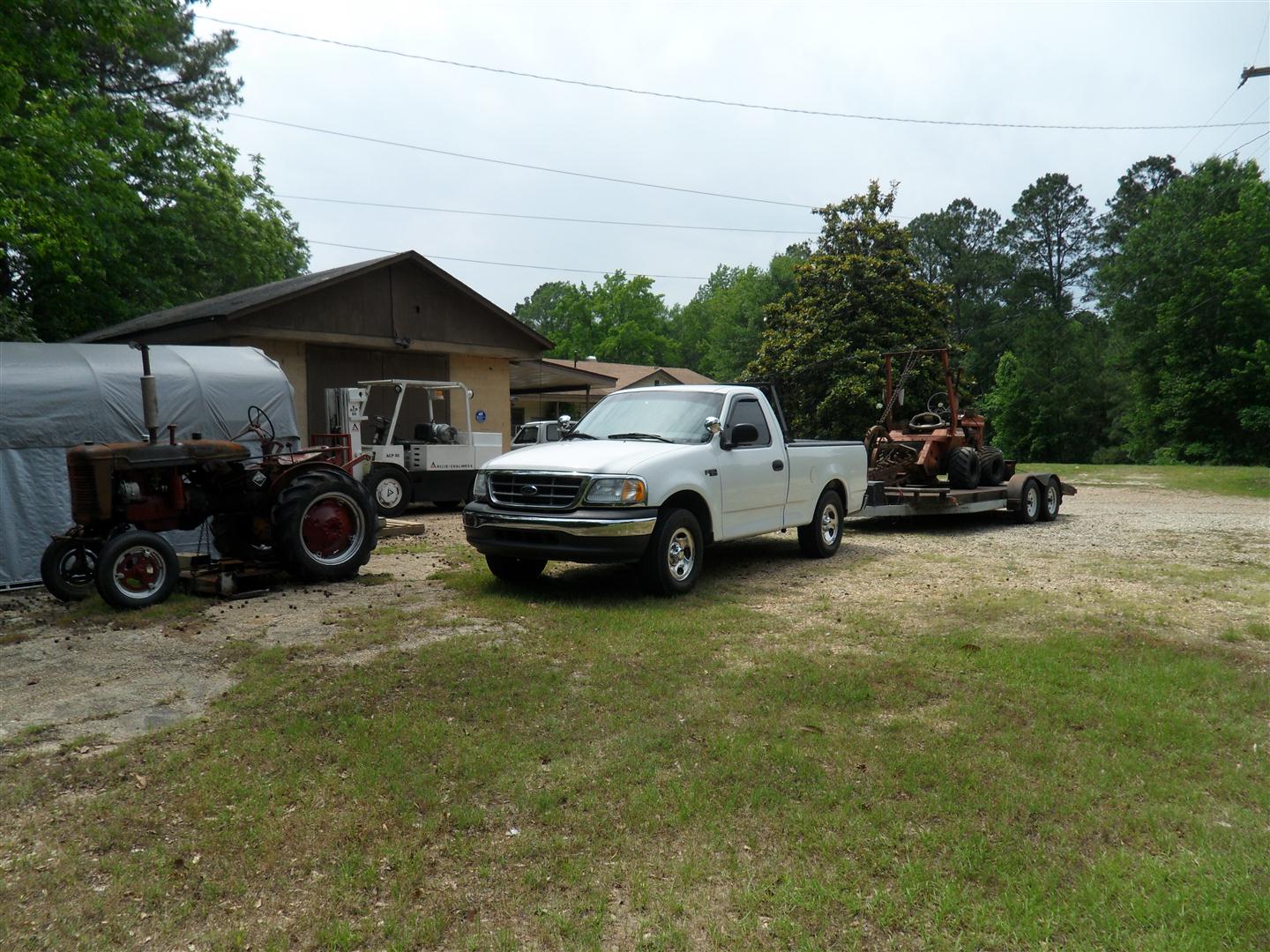
So I ran across a deal on an old Ditch Witch the other day. I was looking at an Allis-Chalmers AD4 motor grader when this little unit caught my eye.  This is one piece of equipment I never thought I’d own, but they are handy when you need one. The coolest thing about it, to me, is the four-way push blade on the front. Even if I rarely have need for a trencher, I could always use a compact machine with a blade for driveway maintenance, etc. The owner told me it ran the last time they used it, but it had been setting up for a year. They tried to tell me it would still run, but I knew better than to take someone’s word for item condition. I took a close look for myself, and I’m glad I did. Upon closer inspection, I noticed the top of the muffler had a hole from rust. I then pulled the dip stick, and sure enough, the engine had water in it and was stuck. The price became right (it was actually a steal) so I scooped it up.

Winched onto the trailer.

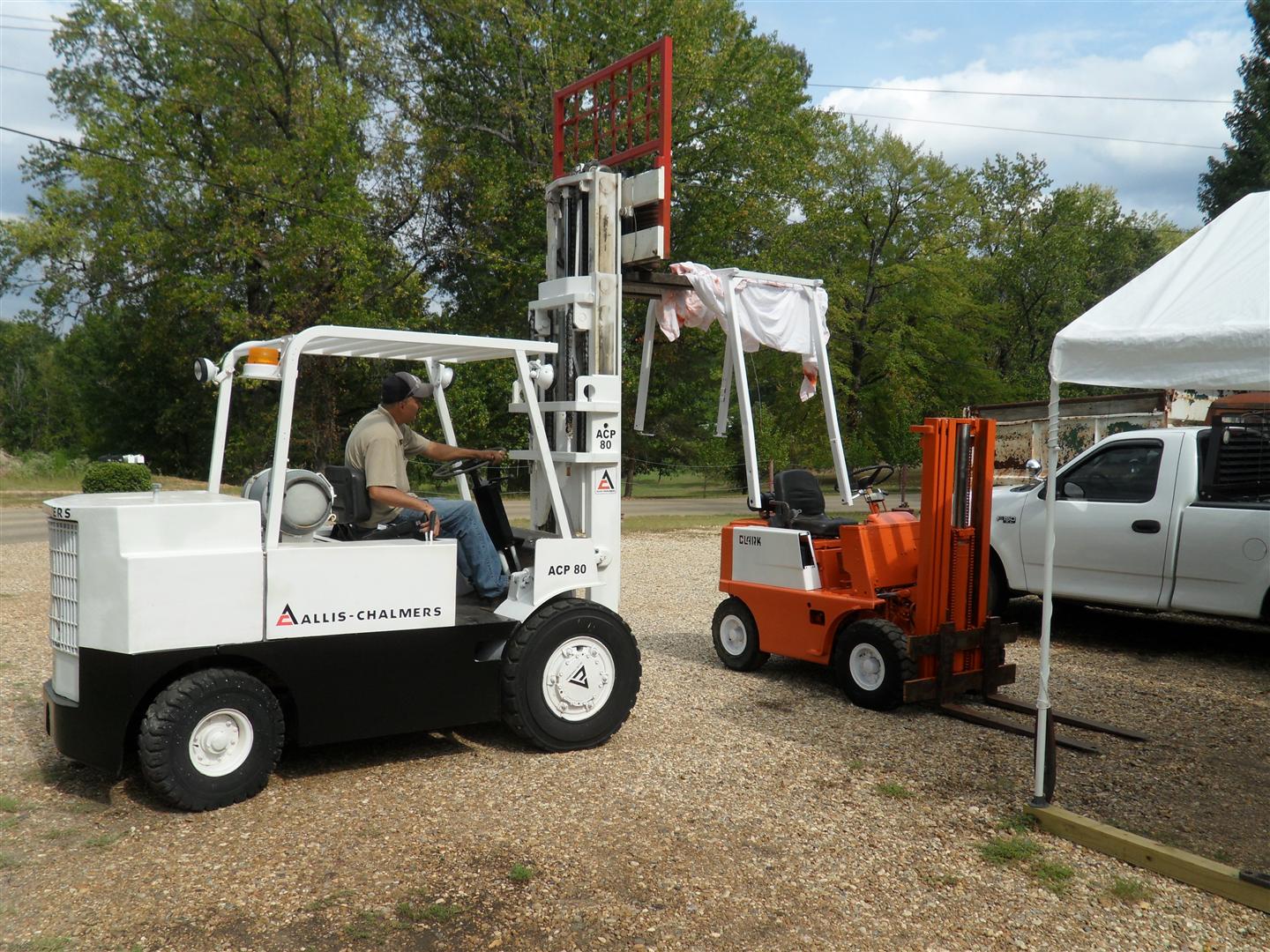
Without running, it is difficult to get the implements up which makes it a challenge to load and unload. We used a winch and some planks to skid it up on the trailer. When I got it home, I used my Allis lift to drag it off the trailer and set it down.

Getting it Home

Unloading with Forklift

Once I got it unloaded, I pulled the spark plugs and filled the cylinders with transmission fluid and let them soak for three weeks. Then I pulled the starter and used a pry-bar on the flywheel ring gear, and after much leveraging, I got the engine to turn over. I flushed the engine with diesel and then tried to get it running. Unfortunately, the rings took a beating from all the rain water and it no longer had enough compression to run. So, the plan is to pull the cylinders and ring the old gal and hopefully she’ll live. The rest of the machine appears to be in good enough condition to justify fixing the engine, so maybe one day soon you’ll see the project posted. Until then…

« Previous PageNext Page »

Create a free website or blog at WordPress.com.