Nicholas Fluhart

February 28, 2010

Tire Change: Dirt Devil XT on the Foreman

Filed under: Project: 475 Foreman — Nicholas Fluhart @ 10:27 pm

A few years back, I acquired an old Yamaha Big Bear 350 4×4 that had a nice set of GBC Dirt Devil XT’s on it. The XT is basically a more aggressive version of the standard Dirt Devil, but unfortunately GBC no longer has them listed in their product lineup. They caught my eye because they were very aggressive, yet the tread pattern was arranged in such a way that would offer a fairly smooth ride. I bought the bike to part out, but I set aside the tires in hopes of one day trying them out on whatever ATV I happen to have.

Fast forward four years…

I finally got around to trying out the 26″ Dirt Devil XT’s. As seen in my Foreman post, I’ve been running 25″ tires on my ATV, Gators on the rear and standard Dirt Devils on the front. This was an excellent performing combination as I discussed in the Foreman post. However, the ATV is geared so low I think a taller tire would help the performance while also providing additional ground clearance. So when my dad needed a set of good tires for 12″ rims I volunteered the tires on my Foreman and decided to install the Dirt Devil XT’s. Since I recently rigged up my tire changer, we were able to do the tire work at my shop.

While I had it down, I took the opportunity to clean and paint the rear axle housing, hubs, and repaint the rims.

Pros:

So far I’m pleased with the performance of these tires. Having the extra height has improved the driveablity by slightly raising the gear ratio. As for traction, they are absolutely awesome in the mud. I have gone through some unbelievable stuff with these. The added ground clearance has also proved to be helpful when climbing over large logs.

Cons:

They don’t seem to do that great in wet sand such as that found in creek bottoms, but no aggressive tires do. I’ve found that factory type tires tend to do the best in the wet sand of creek banks. Another thing is the ride quality is not quite as good as with the other setup. Also the machine is not as nimble with these big tires, but that’s to be expected since these tires are heavy and mounted on steel rims. Overall, these issues are relatively minor.

I think my next tire/wheel experiment will be a set of factory type tires on aluminum rims. It should offer a very smooth ride and make for good driving performance as a result of the lighter weight. However, I’ll be giving up some in the mud, but maybe I’ll get a gain in the sandy creeks. That’s if I ever get around to it…
UDATE: See the next tire experiment here>

February 25, 2010

Multi-Purpose Motorcycle/ATV Trailer

Filed under: Trailers — Nicholas Fluhart @ 7:45 pm

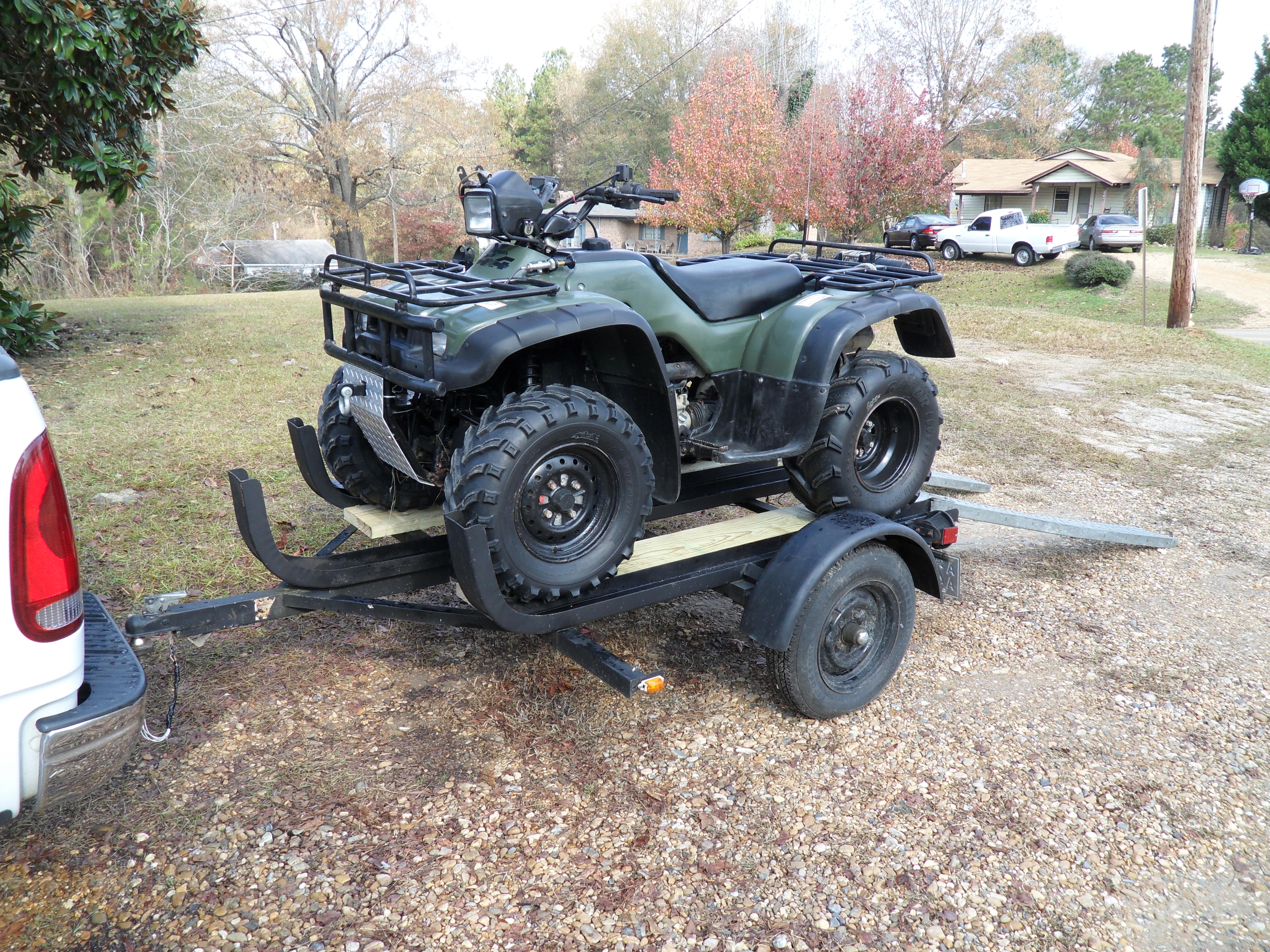
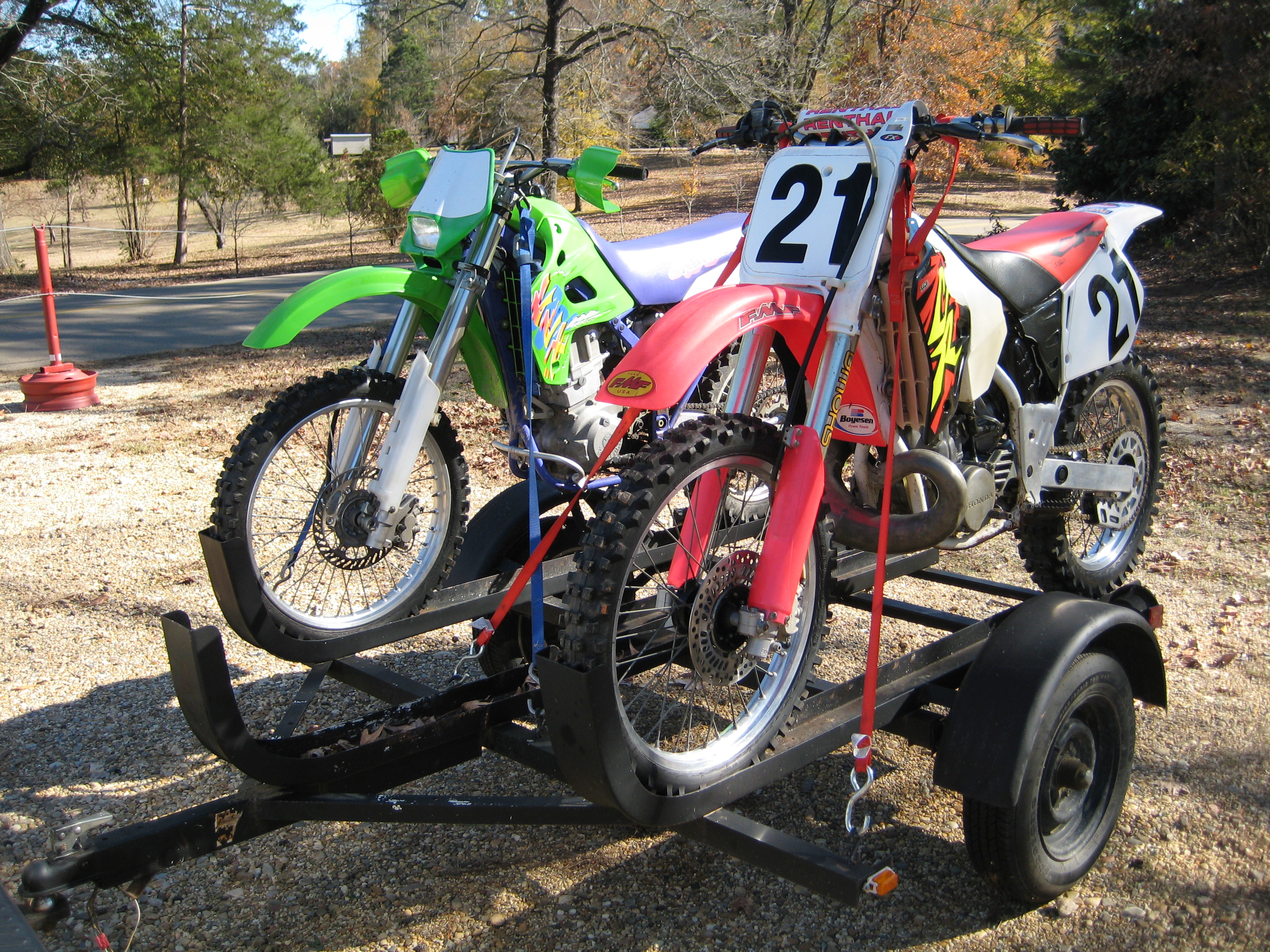
When you do a lot of hauling and moving materials and equipment, you learn fast that the bed of a pickup truck isn’t always adequate. For that reason, I use a variety of different types of trailers. Since I stay involved with dirt bikes and ATV’s, I found myself needing the ability to haul both my machines and my equipment, tools, and supporting materials. However, if your bike is in the back of the truck you are limited on space for other things. This is where a trailer comes in handy, and what better than a trailer that will haul a dirt bike? A trailer that will haul two dirt bikes or an ATV.

My bike hauler appears to have been built back in the 70’s, but it’s a really good little trailer. I traded a set of motorcycle forks for this trailer and an antique Westinghouse AC arc welder. I couldn’t be happier. Both the trailer and the welder work great.

The things I had to do to this trailer for it to meet my specifications were as follows:

The first thing I did was replace the old polyglass tires with a new set of radials. I also painted the trailer from the old 70’s brown to low-gloss black and I installed new marker lights and rewired the existing lights. At that point the trailer was ready to go and I used it to haul dirt bikes for years to follow. However, the biggest problem is that it was only equipped to haul motorcycles and not ATV’s. So recently I decided to change that…

I bought a treated 12′ 2×12 and cut it in half to form two 6′ planks which I then bolted next to the outside slats. Fantastic solution.

And now I have a cross-functional bike hauler and can haul my tool boxes and supplies in the back of my truck.

Until the next trailer…

February 11, 2010

Project: John Deere Model M

Filed under: Project: John Deere M,Trucks & Equipment — Nicholas Fluhart @ 10:47 pm

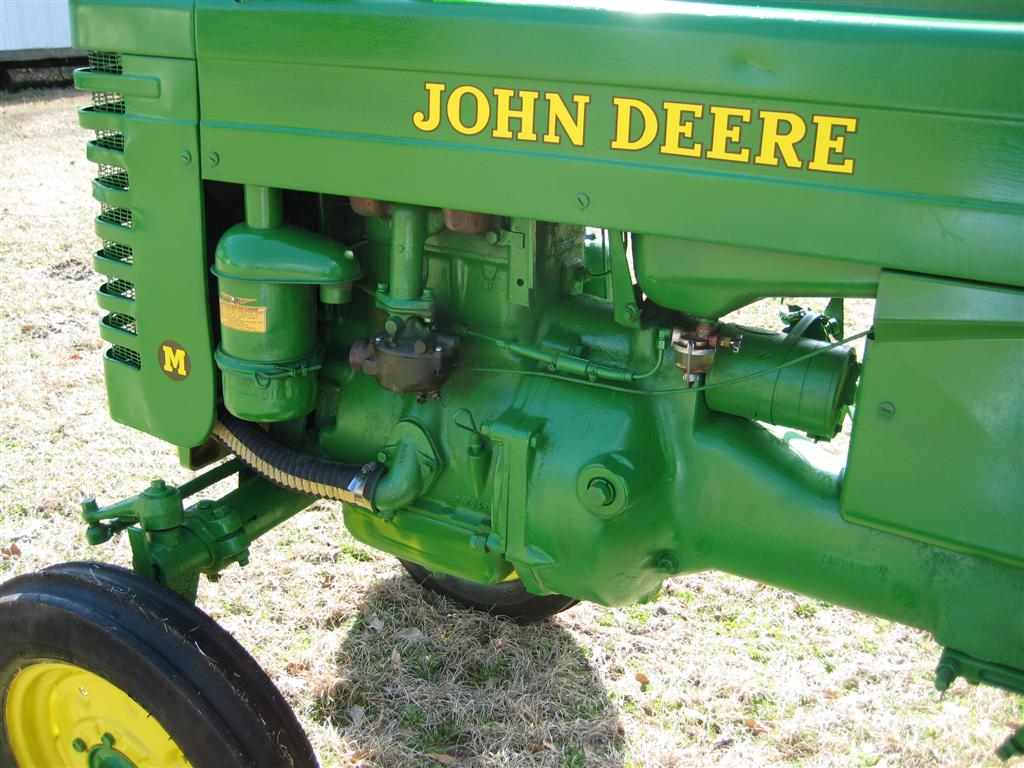
Here’s a fun project I completed a while back. I like to buy, fix up, and sell a variety of machines, so when I heard a friend had this old John Deere M for sale I was quick to check it out. He called and indicated he had inherited the old tractor from a relative and no longer needed it because he bought a new Kubota 4×4 with a front-end loader. He wanted $1000 for the tractor, but there was one problem: it didn’t run…

Before

After

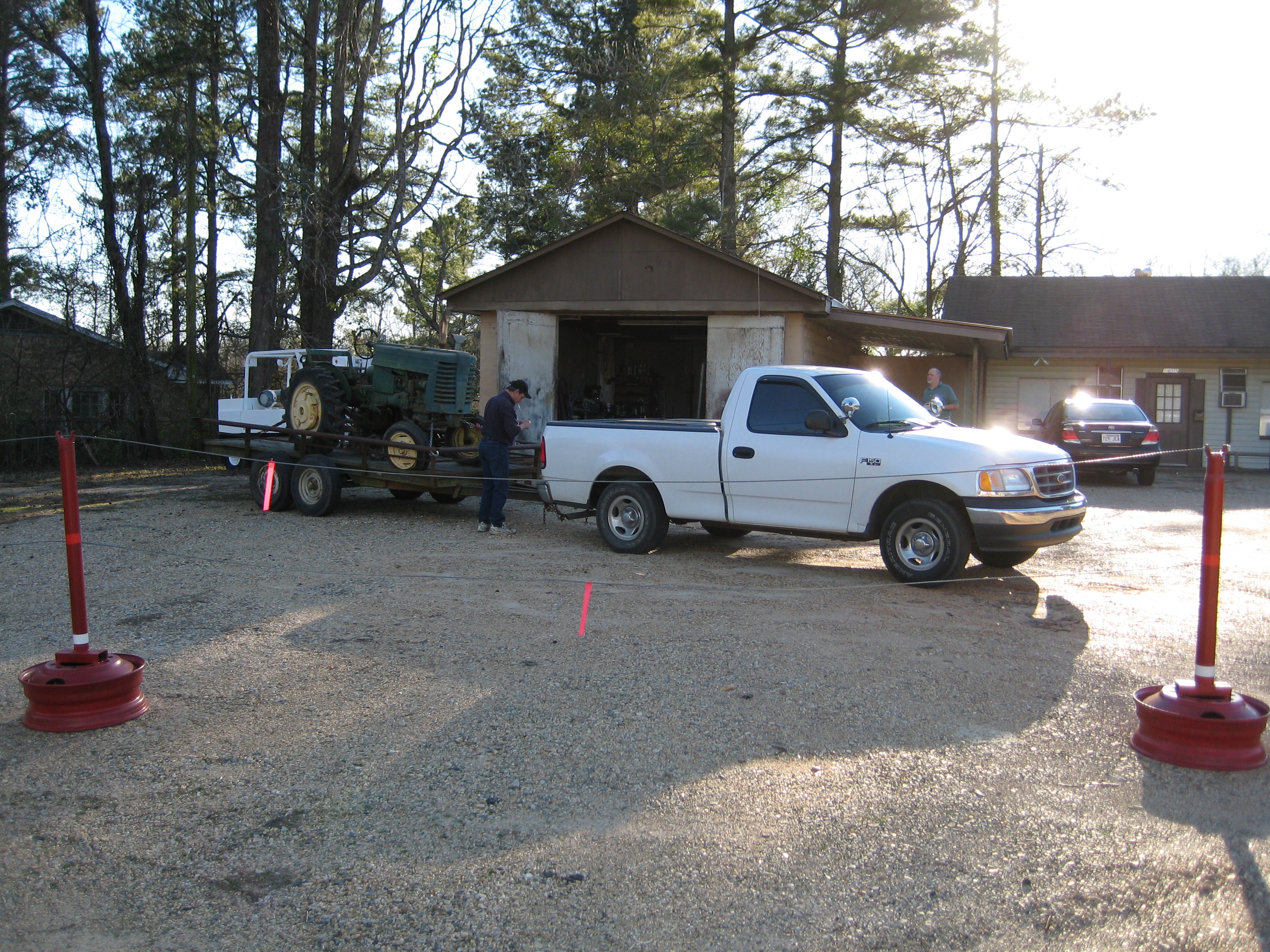
So I grabbed one of my mechanics, some tools, hooked up to a trailer and drove up to Fordyce, Arkansas. When I arrived, it was a sad sight. The tires were flat and it was clear that the tractor had not run in years. There was no point in trying to get it running on site, but one thing was certain: I was not going to give $1000 for it. In fact, I opted for half that. I figured at $500 if the tractor didn’t pan out as would be the worst case scenario, I could part it out or sell it as a project/parts tractor for $600 and relatively break even. Or, best case scenario it wouldn’t take much to fix and I could sell it for a big profit. Either way, it would be an enjoyable project. …Oh, and he took the $500.

The first thing we had to do was get it loaded and get it back to the shop. We used the owner’s new Kubota to push it up on the trailer and then we headed south to El Dorado.

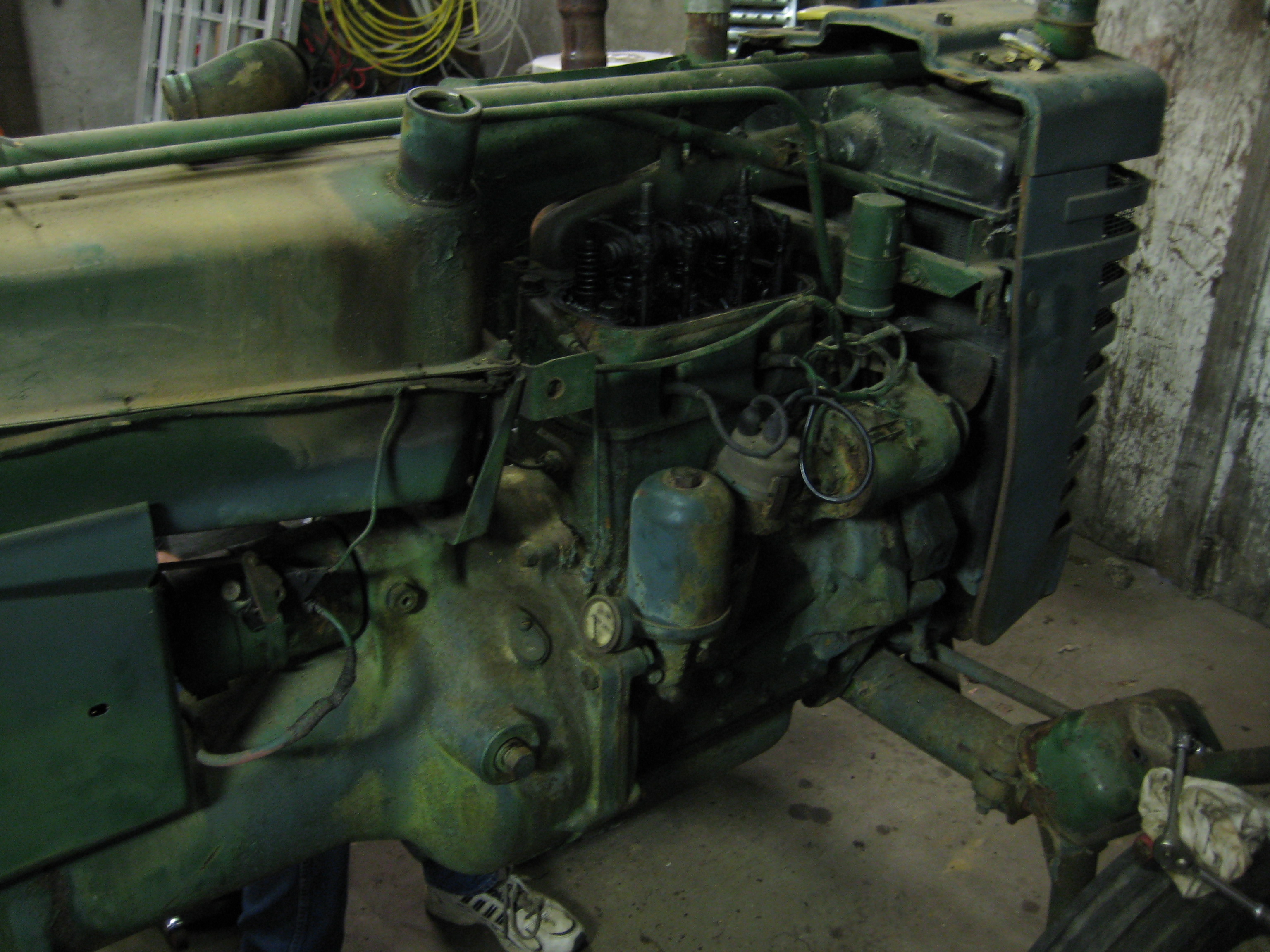
Once at the shop, I had one of my guys check it out. I wanted to check the fire, compression, and carburetor to see what it may take to get it running. The points were corroded but salvageable. We cleaned the ignition components and found that we had good spark. However, the carburetor was a disaster and one cylinder was low on compression. We pulled the valve cover for further inspection…

We found that the cylinder with low compression had a sticky valve, which is good news because we were able to use some penetrating oil and free up the valve. Had it been a damaged piston or rings it would have made for much bigger problems. The carburetor had four rusted and broken bolts that had to be extracted and replaced. After we got it all back together the moment of truth arrived. Did it run? Well, check out the video below and see…

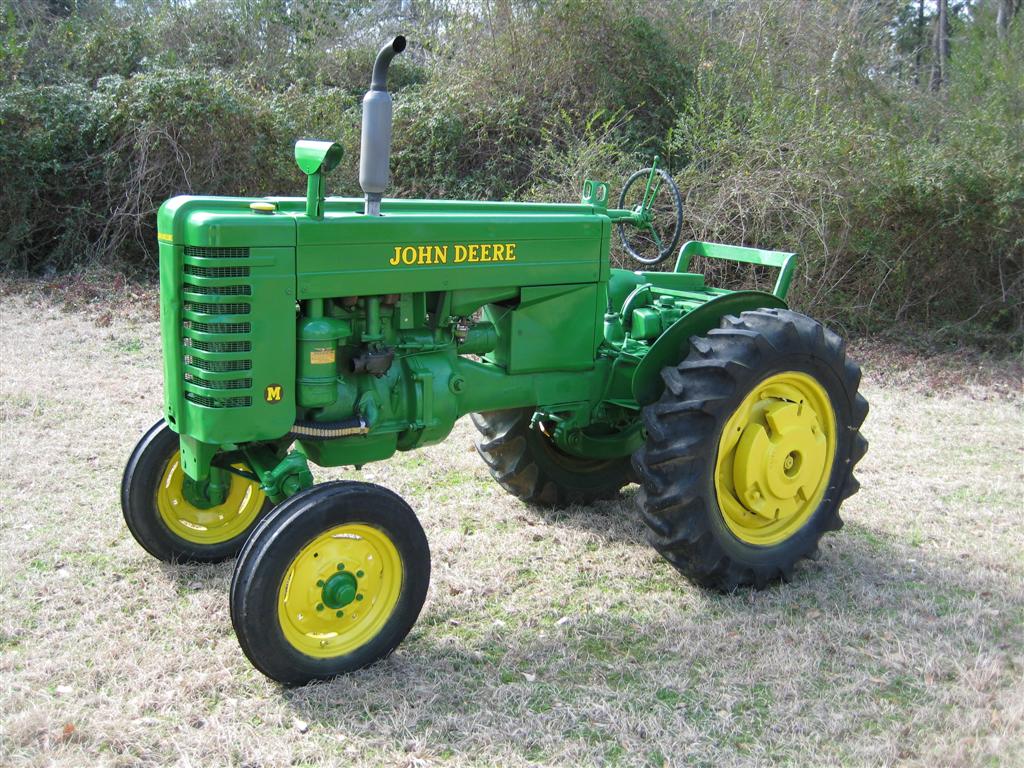
Alright, now that we’ve got it lined out mechanically it’s on to the cosmetic restoration. Sadly, I don’t think I have any pictures of the knitty-gritty but I’ll explain what took place. I took my pressure washer and did my best to wash the dirt and old grease off of it. I got most of the dirt, but I wasn’t able to get all the grease off the belly of the tractor. The grease was old and like concrete, so all I could do was scrape and chisel it off the best I could. I hammered as many dings out of the sheet metal as I could and then sanded it. Then I went over the axles, transmission, etc. with a cup brush on my angle grinder. Note, I was not going for a show-quality paint job here. That would have taken much longer and cost far more than would have been feasible for my purposes. I simply wanted a decent, good looking paint job that would enhance the cosmetic appeal of the tractor….oh, and I may have painted over some of the grease on the bottom of the tractor, but don’t tell anyone. LOL OK, so I primed the bare surfaces and then painted the tractor John Deere Green with yellow wheels and new decals. Now check out the next video clip and see if you can tell a difference…

And here are some pictures of the finished product.

And that pretty much does it. Oh wait, how about the cost breakdown? OK, well I paid $500 for the tractor, and I estimate the cost of transport, shop labor (not including my personal labor), and supplies at about $300 which puts me at about $800 on the total. The entire process took about three weeks and it was ready to sell. The tractor sold within 7 days and it brought $1,850.00. It cost me about $50 to sell it on eBay so my overall estimated profit is $1000.00.

All in all it was a fun learning experience and I walked away with an extra thousand bucks in my pocket.

On to the next one…

January 21, 2010

Honda Foreman in Action

Filed under: Project: 475 Foreman — Nicholas Fluhart @ 9:50 pm

My Honda 475 Foreman posts tend to get the most traffic, so I thought I’d post a few pics of it in use. Now this is what I built my ATV for.

Pulling small trailers is necessary for my purposes. This is a weighty machine, so it handles trailers very well.

Winching is another requirement. I put my winch through the paces. Generally, it’s never a good idea to tow with a winch as you risk snatching against the cable and shattering the gears. However, I sometimes tow relatively easy loads when I can keep the line tight. In terms of winching, sometimes I have to block on to something like a tree or post when pulling something that requires a lot of tug. Tying to a tree or post keeps the ATV from skidding into the item you are winching but it can be hard on the winch.

Below I’ve posted some pics of me winching up an old fence post and section of fence. I have the winch mounted at the rear of the ATV and I had to tie up to a large post to keep the front of the ATV on the ground and to keep it from skidding backward when winching.

Sometimes I have to trek through swamps…

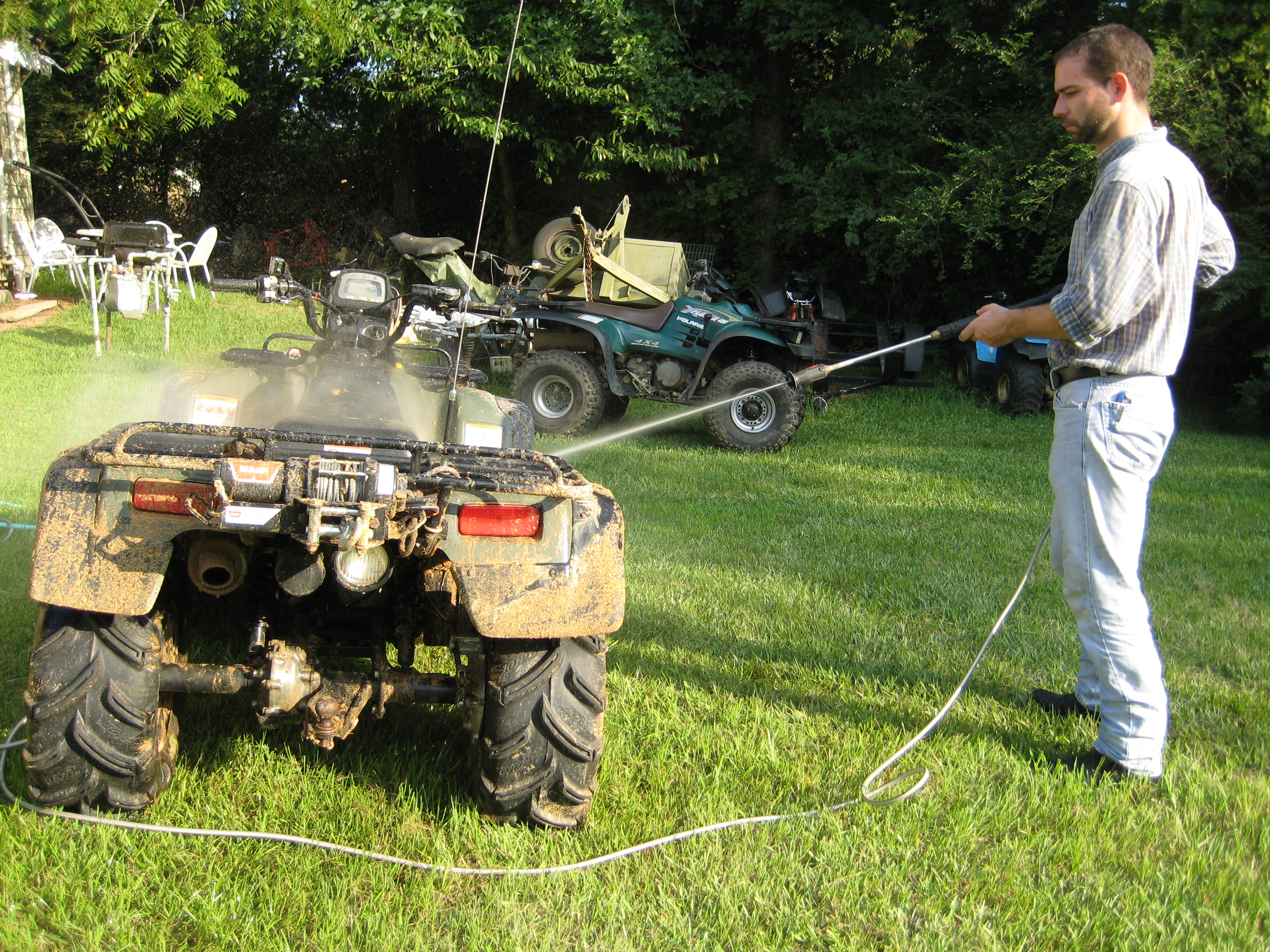
…but I always keep it clean and serviced.

UPDATE: There will be lots of other posts with the Foreman in action here.

December 19, 2009

Taylor Welding

Filed under: Day to Day — Nicholas Fluhart @ 1:40 am
Tags: , , , , ,

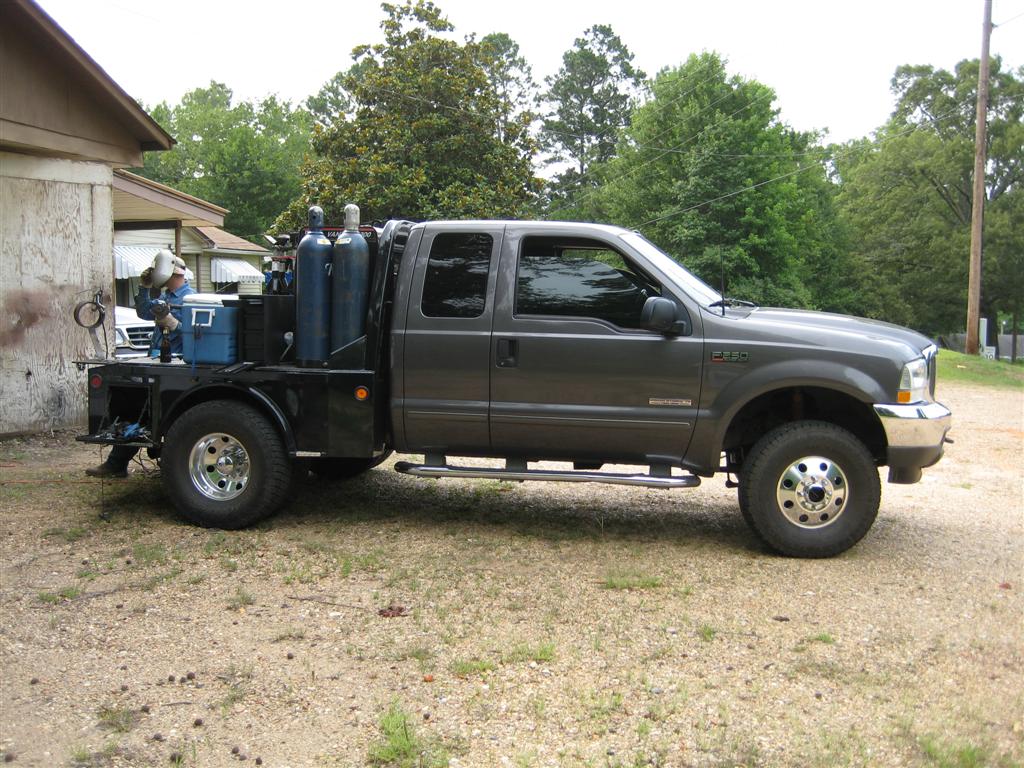
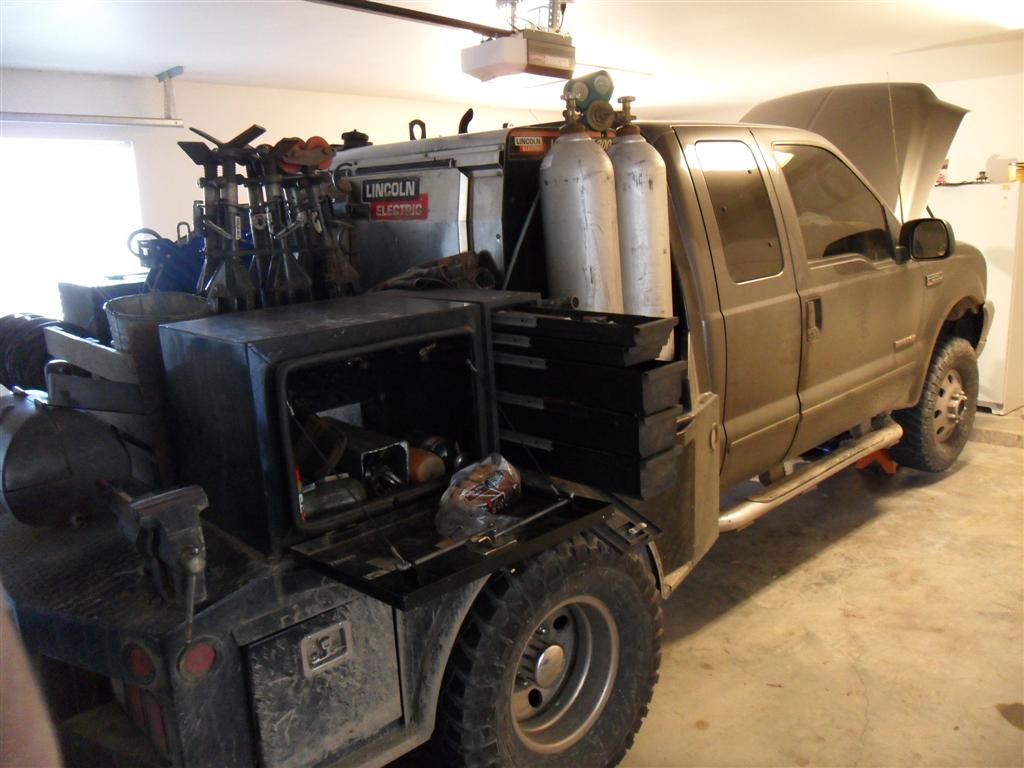
Maintaining strategic alliances with competent local and regional companies is a smart move for any business owner. I’ve been blessed to have a handful of these alliances which have been beneficial to my business. One such example is Chris Taylor, owner of Taylor Welding which specializes in pipeline and related equipment in the oil and gas production and transport industries. We’ve worked together on some projects at my shop as seen below.

We’ve been good friends since childhood and have worked together on several endeavors over the years, so when I received a call for assistance in emergency truck repairs I loaded my tools and headed for Louisiana.

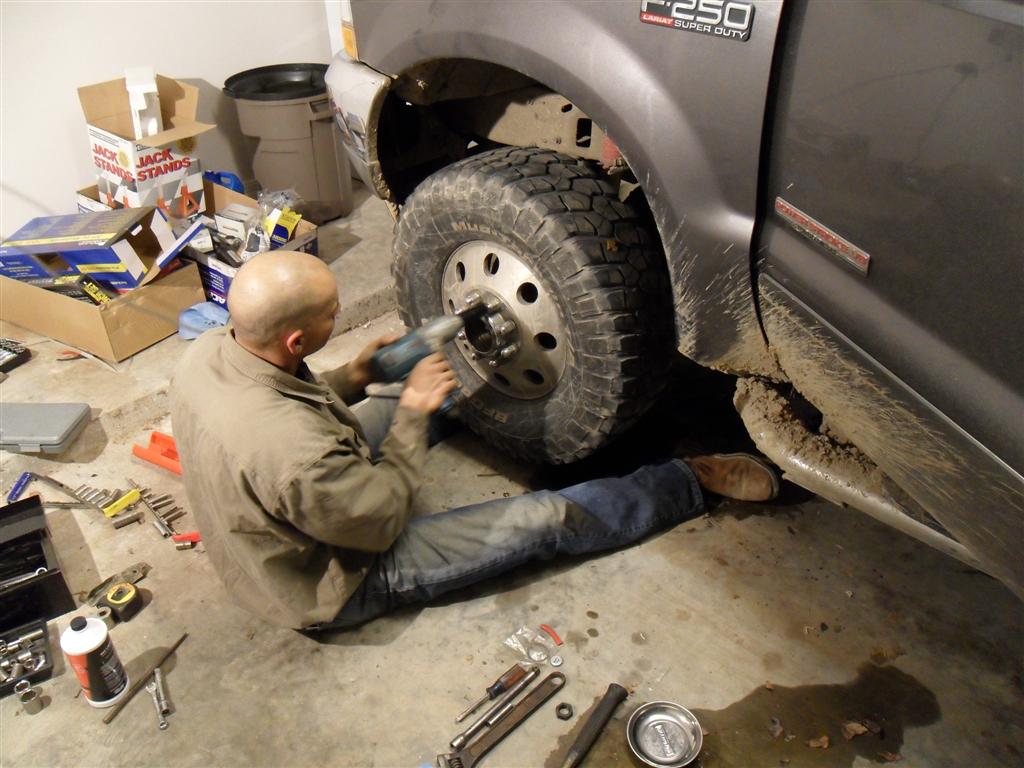
The Truck: The rig we’re working with here is a Ford F-250 6.0 Powerstroke Diesel 4×4 with a dual wheel conversion and suspension upgrades.

When I arrived I was informed the issues were brake failure, loose steering and popping during turns. The truck had to be back in service at a job location as soon as possible. We promptly determined we would need new front brake calipers, pads, rotors, as well as ball joints. It was about 25°F outside so we found a place to get the truck inside. Limited on tools and time, we knew it would be a challenge, nevertheless we immediately got to work…

Getting Started

Removing the Spacer.

A few months back we had installed new axle seals on each side of the front differential, new Warn locking hubs, and new brake pads. The truck had seen many miles of rough off-road service since then, and although the brakes and ball joints were now gone, the axles, seals, and hubs were still in great shape.

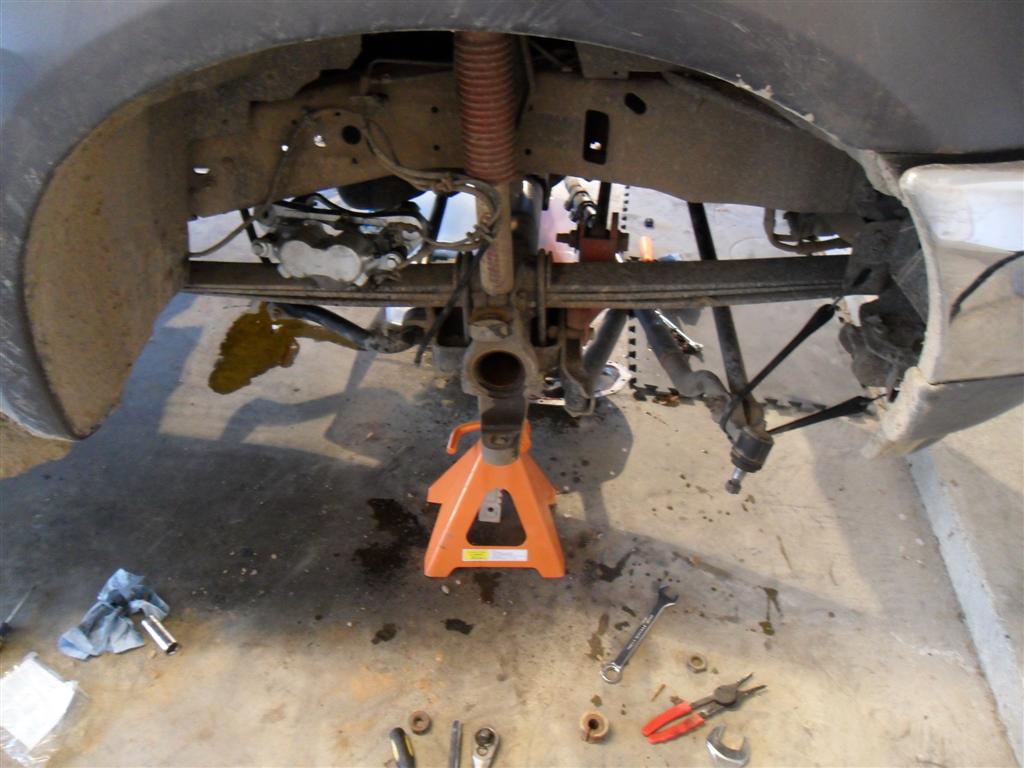
Now what we had to do once we removed the wheels was pull the brake calipers, rotors, 4WD locking hubs, front axles, tie rods, and steering knuckles which contain the ball joints.

Pulling the left front axle.

Disassembled.

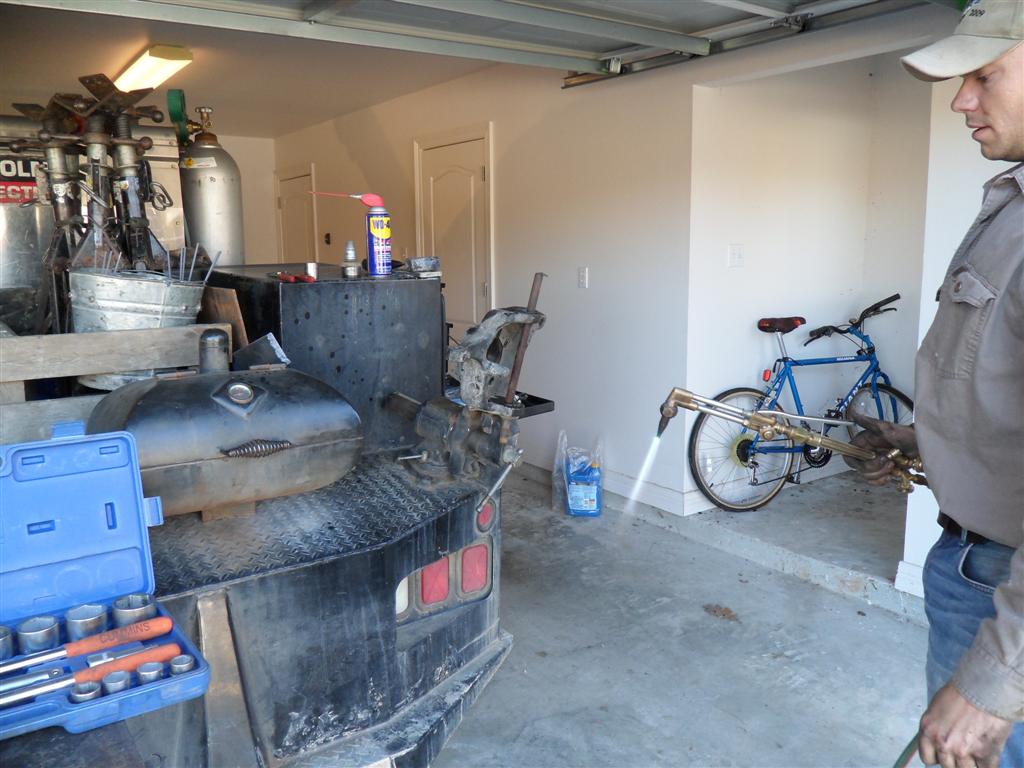
Once everything was removed it was time to install the new components, starting with the ball joints. We were able to place the steering knuckles in the vise on the back of the truck and drive the old ball joints out by first heating the knuckle with an oxyacetylene torch. Lacking a hydraulic press, the only way we could install the new joints was to freeze them and then heat the steering knuckle which enabled a fairly smooth installation. However, to avoid damage to the new joints, we fabricated adapters from a few pieces of pipe that matched the outside diameter of the ball joints.

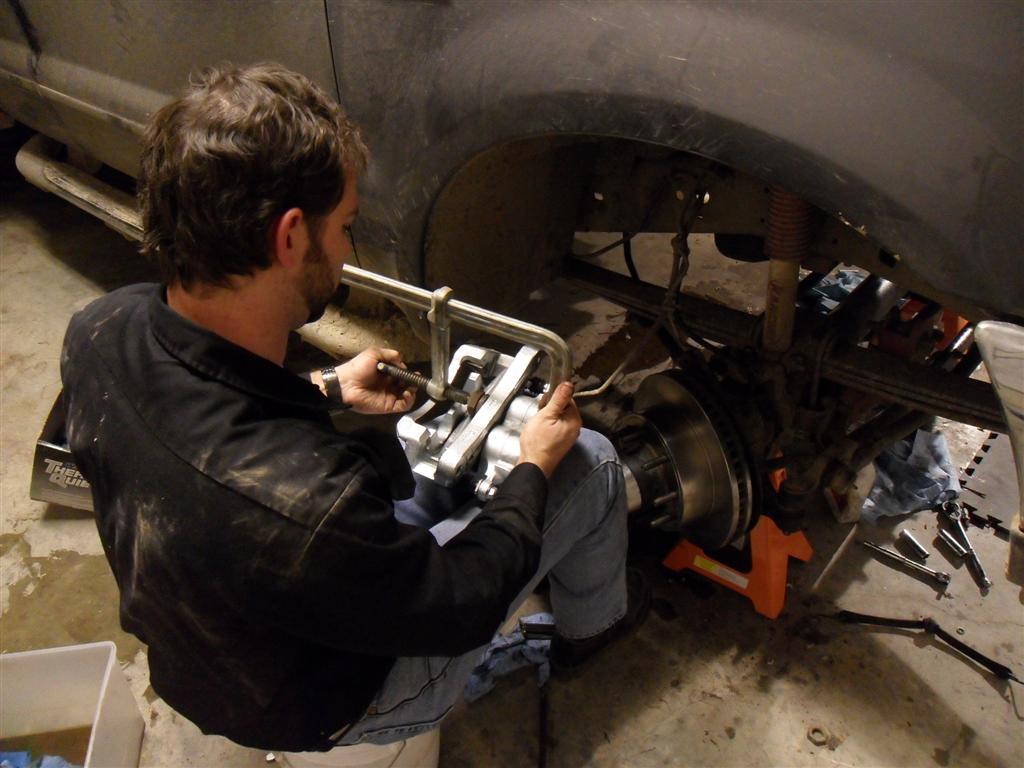
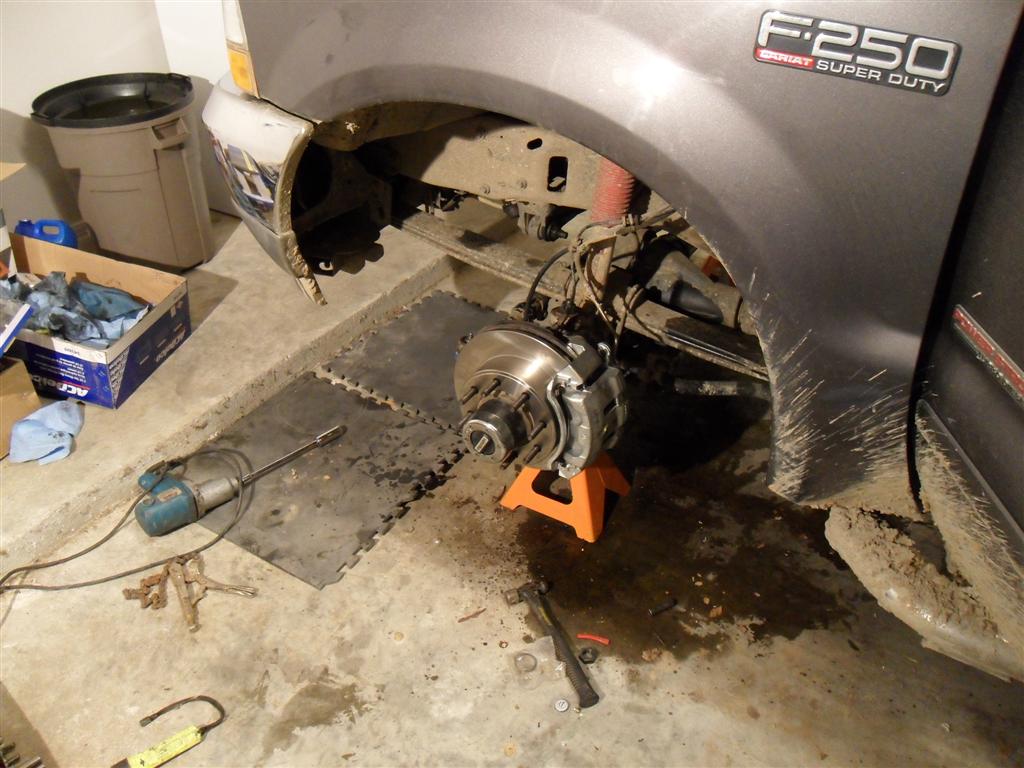
Once we got the new ball joints in, we installed the steering knuckles, axles, and hubs before installing the new brake rotors and Wagner Thermoquiet calipers. We also took time to replace the thermostat on the engine.

Installing the new thermostat.

Installing the front caliper.

When all the new parts were installed and the brakes were bled, it was time to zip it up. We put the wheels back on and took it for a test drive, albeit about 2:00 AM by this time.

It drove out great and the truck was ready to go back into service. This post made it sound like an easy task, and although it was fairly straightforward, it was quite an undertaking especially considering the circumstances. Plus, we had to make multiple trips to the parts store due to the incompetence of the counter help who gave us the wrong parts. This was definitely not a job for the novice do-it-yourselfer. Overall, it was several hours of hard work, finishing up in the wee hours of the morning, but everything worked out great and we got the job done successfully.

Until next time…

« Previous PageNext Page »

Blog at WordPress.com.