Nicholas Fluhart

December 5, 2009

Driveway Maintenance

Filed under: Day to Day,Trucks & Equipment — Nicholas Fluhart @ 10:38 pm

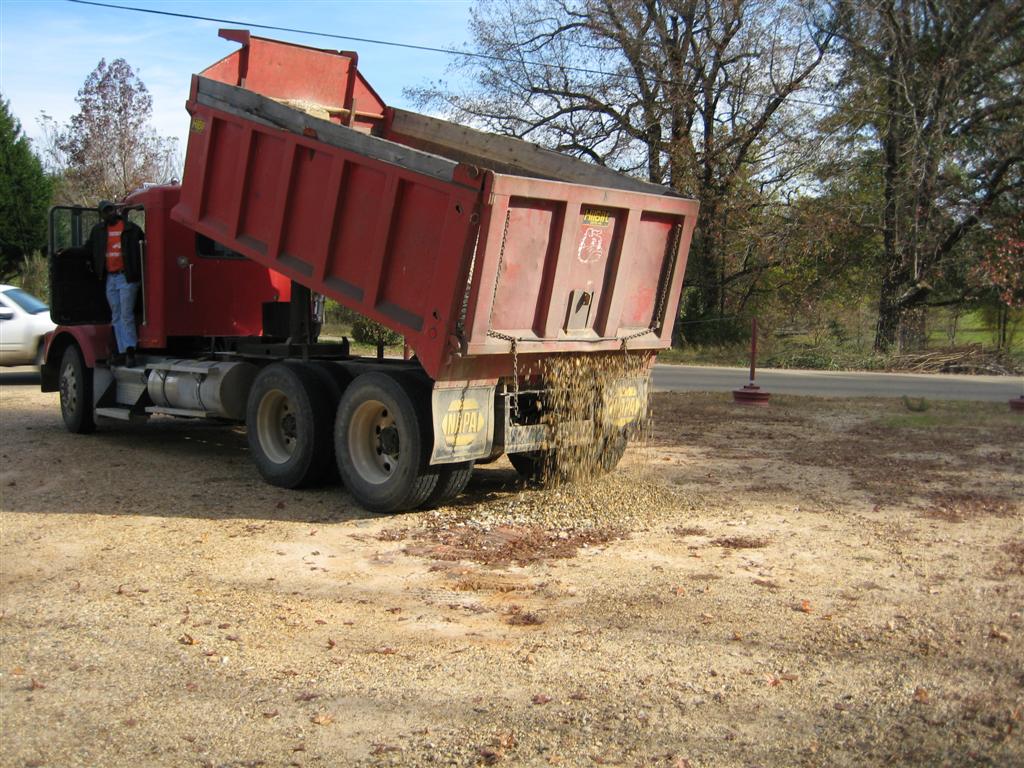
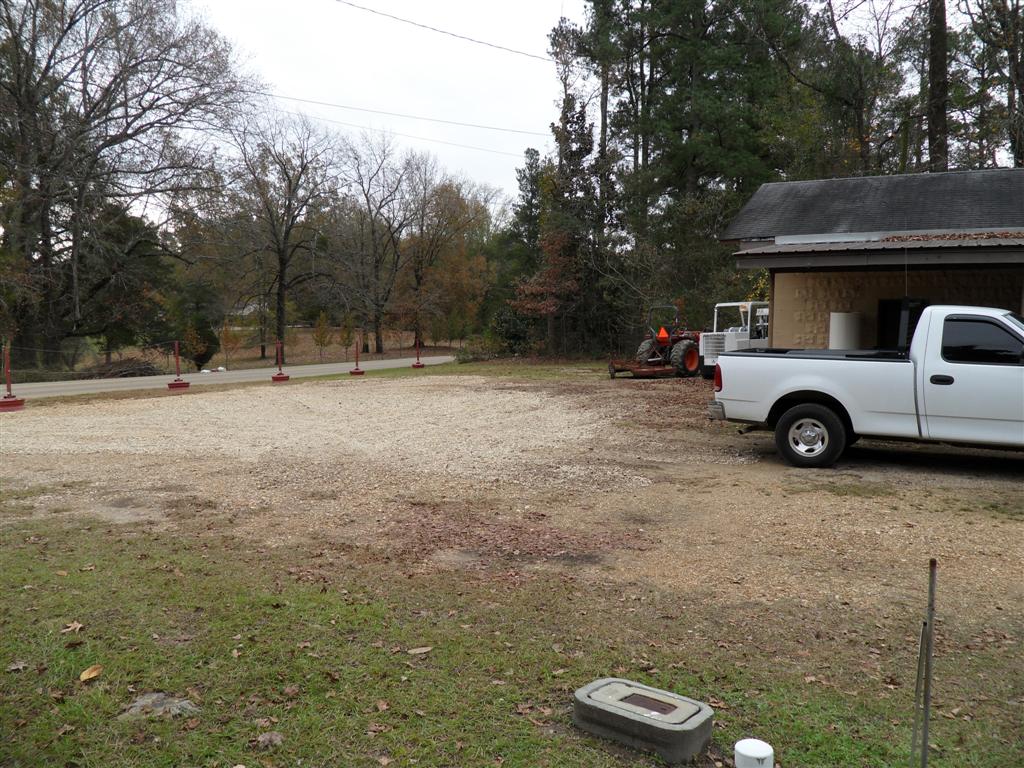
The driveway here at the Omni Complex was getting pretty rough so I decided to do some maintenance. Typically, if you have major ruts or holes you would want to bring in some clay-gravel to fill in the low spots and then top it off with a load of wash-rock which packs into the clay and leaves you with a smooth clean finish. However, in this case there really wasn’t any “major” damage, mostly just some soft spots that were starting to get worse due to the wet season. So I had a load of wash-rock hauled in so I could spread it out over the soft spots in order for it to pack in and restore the integrity of the driveway.
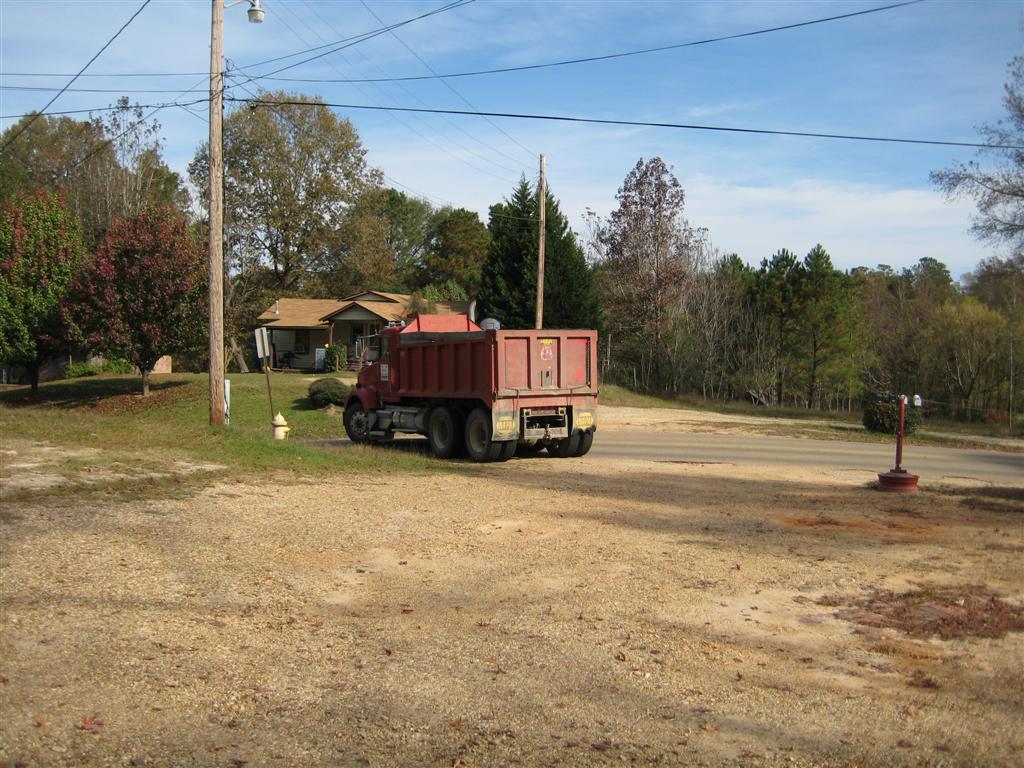
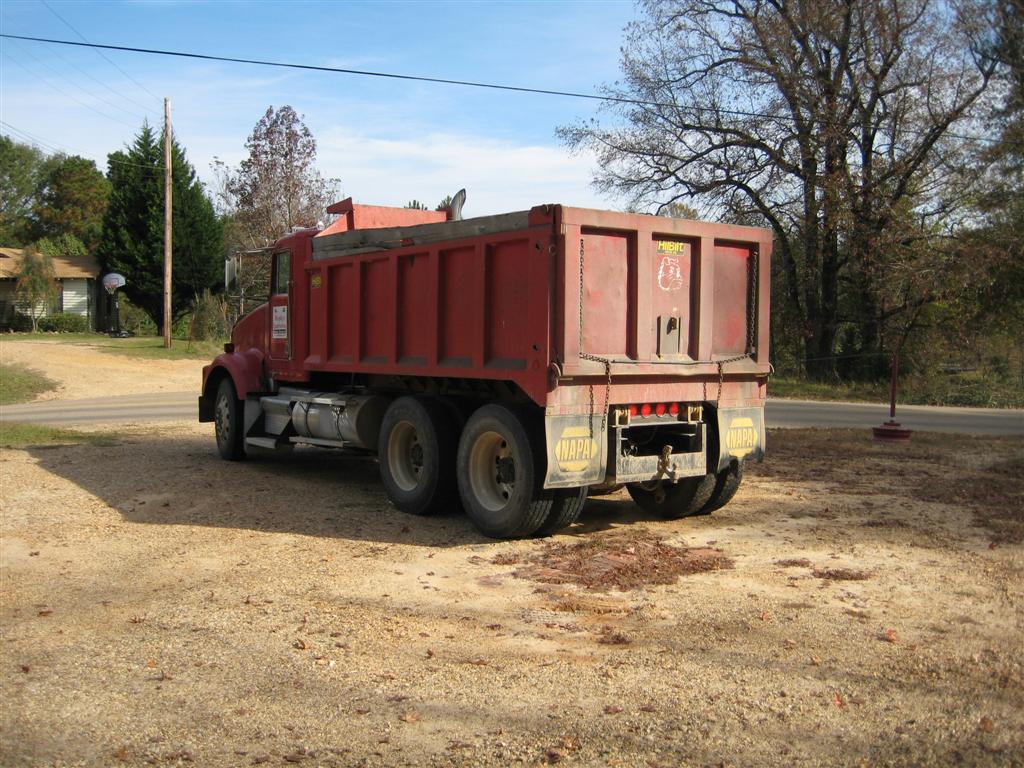
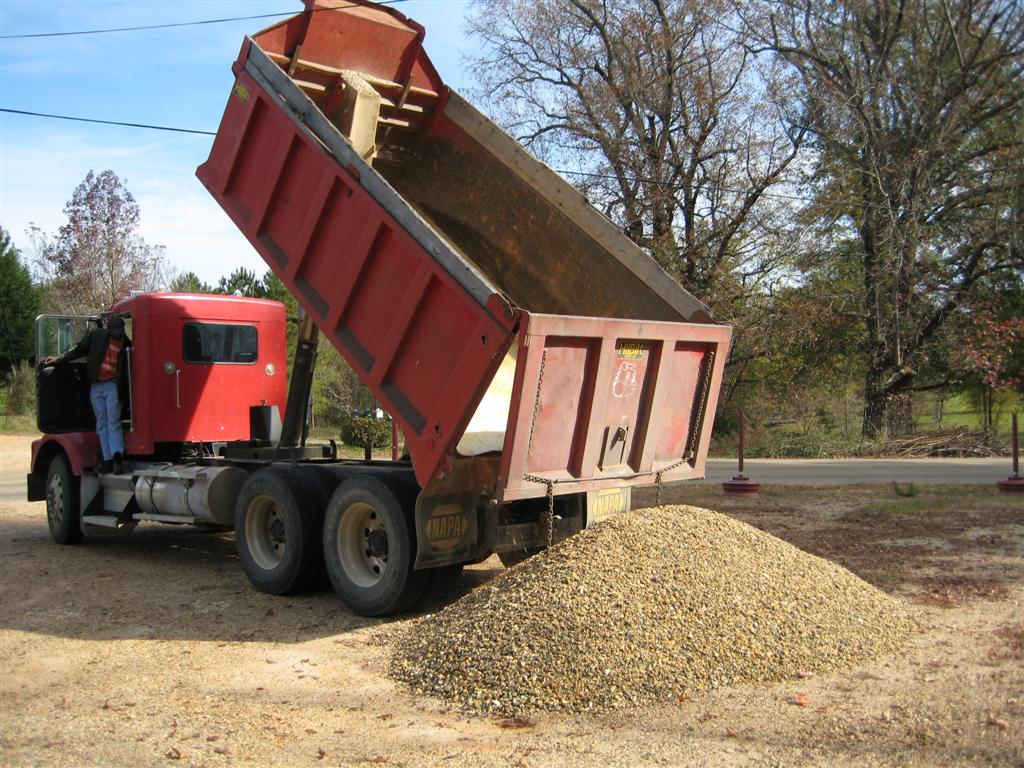
It’s important to spread wash-rock thin or else you end up with thick patches of gravel that makes it hard to walk or drive in. The load seen above is 8 cubic yards which is about half of a load for the truck shown. Now if you’ve dealt with gravel before you know a pile like the one shown can be deceiving because the amount looks a lot smaller than it actually is. I was concerned it wouldn’t be enough but my concerns were unfounded. It was just the right amount. Given how thin wash-rock has to be spread, the load actually covered a lot more than I thought it would.

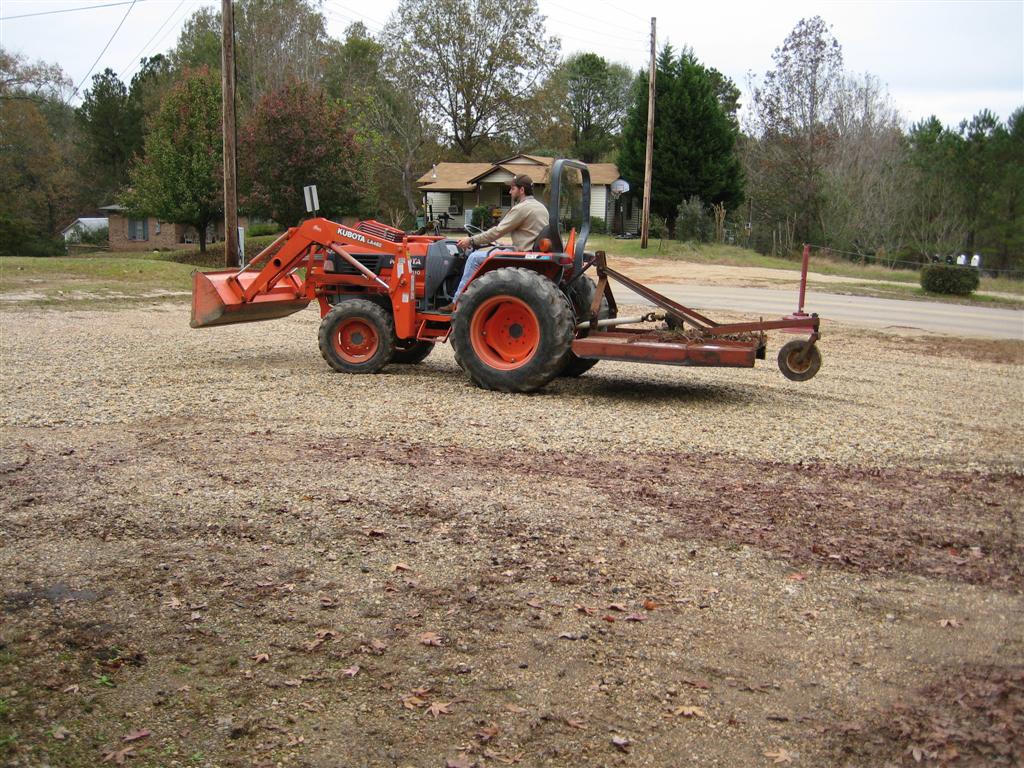
Since my tractor was down for upgrades I had a friend bring his tractor over so we could spread the gravel. He started out until he got called out to work so I jumped on the tractor and finished the job. The front-end loader spread the gravel like butter on toast. Fantastic.

Shortly after the gravel was spread we got a chance to test it. I had a freight truck stop in for a pickup.

Everything turned out great. The amount of gravel was perfect and now I have a nice driveway that keeps my tires clean and my ride smooth.
November 28, 2009

John Deere 850B Long-Track Dozer

Filed under: Day to Day,Trucks & Equipment — Nicholas Fluhart @ 10:32 pm

Here’s a nice machine I recently sold. This one was owned by a logger and was also used to do some dozer contracting.

1987 John Deere 850B Bulldozer

I actually sold two of these. The first one was a parts dozer, a 1986 model, and this one was a 1987 model which was a good running machine. The 850 is large enough to do substantial work. The guy who owned this one also has a late model Caterpillar D6N and he indicated the old 850 would actually out-perform the Cat in some situations. The 850B utilizes a 6 cylinder turbo charged John Deere diesel engine producing 165 hp. The operating weight is just shy of 40,000 lbs. Check out all the specs here.

Now lets see it in action! I took a short video clip to demonstrate how it operates.

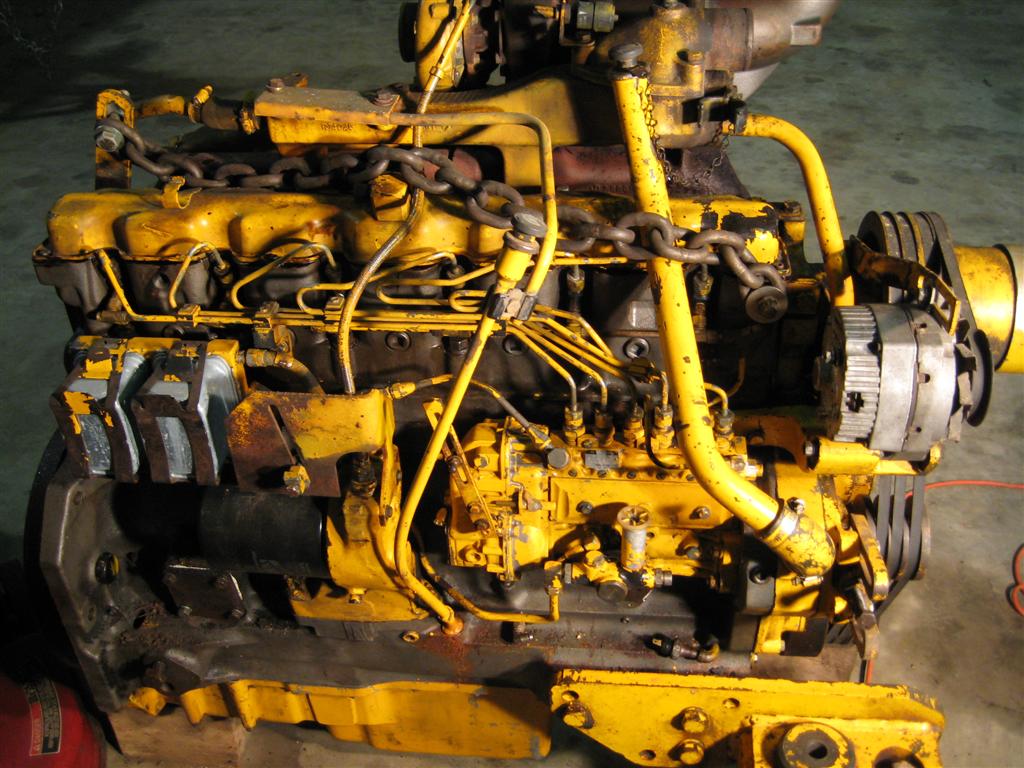
As indicated in the video, the hydrostatic drive enables easy and swift operation. The engine is also very powerful. Below I’ve posted a couple of pics of an 850B engine. It’s the engine from the ’86 parts dozer after it was just rebuilt.

The winch on this machine is a 60,000 lbs Hyster with 1 inch diameter cable. It was installed to winch out log skidders when they got stuck in the mud.

60,000 lbs Hyster Winch

How about some pros and cons? Well, I’m by no means an 850B expert, so this is solely from the information I’ve gotten from operators who have used and/or owned these machines. It’s funny that one of the main pro’s is also considered by some to be the major con, and that is the hydrostatic drive. This drive system is much smoother than a powershift system and eliminates the need for steering clutches and steering brakes. It also allows for dual-path operation which means the tracks can turn in opposite direction from each other making it turn 360° in one spot, great for working in tight areas. The main drawback of the system however, is that apparently it is prone to failure after about 10,000 hours of service, or so they say, at which time the hydrostat units require rebuilding or replacing which is a very costly procedure. For this reason, the 850 has earned a bad name in certain circles of the construction industry. Aside from that, they appear to be very good, solid machines. If you’re setup to do repairs yourself you can definitely save a lot of money, but it’s a major undertaking nonetheless. Alternatively, if you buy one that’s just had the hydrostat units rebuilt or replaced (like the one I sold), you’ve got a good machine with lots of service life.

September 27, 2009

Followup on the Forklift Hydraulic Repairs

Filed under: Project: AC Forklift,Trucks & Equipment — Nicholas Fluhart @ 10:02 pm

This is a followup on the short lift cylinder repair. To see the later hydraulic repairs, click here.

Overall, the hydraulic repairs on the forklift were a success. The cylinders that we overhauled aren’t leaking a drop. The only notable issue we now have is with the lift cylinder we installed the new packing in. Often times when new packing is installed the cylinder is a little more stiff in operation until the seals and such seat in. This may be magnified slightly by the seal modifications made by the hydraulic shop (see the original post). With a double acting cylinder, this is rarely even noticed. However, with a single acting cylinder like the one I am dealing with, it can complicate operation.

The Issue: The cylinder powers up fine, but until the packing wears in it has made the cylinder a little too stiff for gravity to pull the forks back down. So when I pull the lever to lower the forks, they don’t move. Typically, what goes up must come down. Not so anymore; it’s a one-way street. The only way to get them back down is to apply a load of at least 300 lbs.

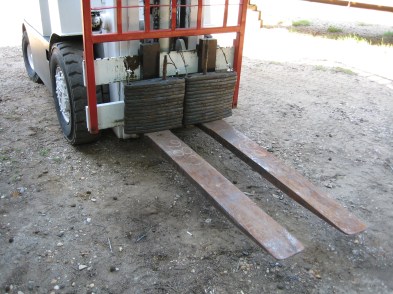
Solution: The more I use the forklift, the better it gets. However, since I only use it occasionally, it may be a substantial amount of time until the cylinder wears in. Until then, I’ve developed a short term solution. First, I added fork extenders. This is a two-fold benefit: it gives me additional fork reach, and it adds about 150 lbs to the forks which helps my cylinder issue. Second, I added about 330 lbs of low-profile weights to the forks.

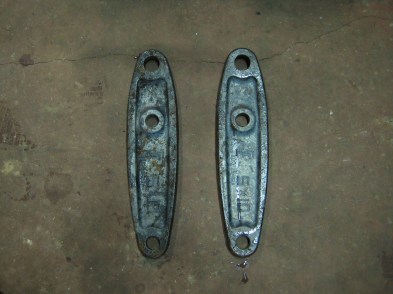
These are actually some type of linkage component, but they weigh 11 lbs each and they are slightly raised on one end making them stack together perfectly. I purchased about 75 of these for less than a buck a piece at an auction with this specific purpose in mind.

Weights

I calculated that I could stack about 15 of these on each fork and place them directly at the base. I placed an axle through each stack with a close diameter to the holes in the weights. This holds them stacked and in alignment even when they get bounced around. I then used winch cable to tie each stack in place.

Fork Weights

Success. So far, it’s proven to be a good solution to the short term lift cylinder issue. I’ve used it to load a variety of types of materials ranging from crates to scrap iron and the cylinder operates better and better all the time. The low profile weights keep them out of the way and the extended forks more than make up for the used space. I can comfortably leave the weights on the machine indefinitely until the cylinder wears in properly.

September 21, 2009

Hydraulic Repairs

Filed under: Project: AC Forklift,Trucks & Equipment — Nicholas Fluhart @ 7:45 pm

Time for some repairs! Since I’ve owned this forklift it’s had minor leaks in the primary lift cylinder and one of the tilt cylinders. The secondary lift cylinder and the other tilt cylinder were still in good shape. Eventually, the lift cylinder leak developed into a steady drip leaving puddles wherever it was operated and one day the tilt cylinder oil seal blew out altogether. It was time to address the issue.

I had my company mechanic helping me on this job; it’s nice to have a hand on the heavier stuff. Many people are afraid to work on hydraulics, but cylinder repair is actually fairly easy. In fact, most of it is easier than working on motorcycle forks.

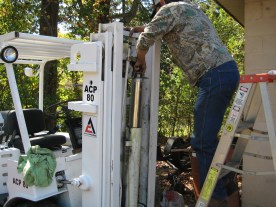
I started with the lift cylinder. Given its size, it was easier to disassemble on the machine. We unhooked the lift chains and lines accordingly. We then used a chain wrench to remove the gland nut.

Removing the Gland Nut

Removing the Gland Nut

Once the gland nut was removed we were able to begin pulling the ram tube.

Removing the Ram

Removing the Ram

Inspecting the Bore

Inspecting the Bore

Once everything is loose, the ram pulls right out and you are ready to install your new packing components. The wiper seal is typically located in the gland nut and the guide bands are usually on the ram.

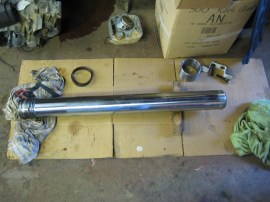
For the tilt cylinder, we simply removed the whole unit and disassembled it on the bench. It comes apart the same way as the lift cylinder. Once we had the parts pulled we were able to measure for replacement packing.

Removed Laid Out

The lift cylinders are single acting. They power up and load gravity pulls them down. The tilt cylinders are double acting, they power in either direction.

Rather than search for parts online, which is what I usually do and probably what I should have done here, I figured it would be faster to go to the local hydraulic shop although they are typically very expensive. It turns out, the seal used on the lift cylinder was obsolete (or so they told me) and hard to order, so the shop fitted the gland nut with a more common seal diameter by using a lathe to turn the inside of the nut to a larger diameter. The other components were easy to order but unfortunately, the entire process took them about two or three weeks because they apparently had systematic memory failure which inhibited them from placing the order for the seals in a timely fashion. The cost of the parts and labor from the local hydraulic shop (not including hydraulic fluid and the labor on my end) was $198.00. Once I got all my components we had the machine back together within a couple of hours and it was ready to go. I think next time I’ll find the parts myself…cheaper and faster.

Click Here for an UPDATE.

Click Here for more hydraulic repairs.

July 28, 2009

Project: Allis-Chalmers ACP80 Forklift (Part 2)

Filed under: Project: AC Forklift,Trucks & Equipment — Nicholas Fluhart @ 9:37 pm


Finished

Cosmetic Restoration

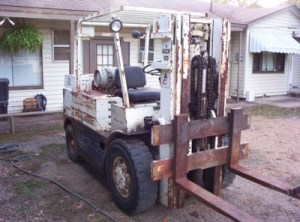
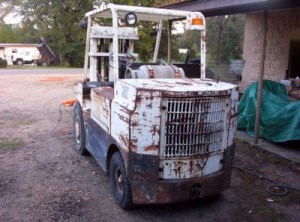
Now it’s on to cosmetics. I wanted the machine to look as good as it runs so I figured it was time to give it the liquid rebuild. From the factory, this forklift was construction yellow with black and orange decals. At some point in it’s life it was painted by a dealer white and black with new decals. Although they did an excellent job, it was now outlived and time for me to restore it. The overall quality of a finished product is directly impacted by the preparation.

It wasn’t my intention to produce a show-quality forklift but I also didn’t want a shade tree job. I planned to use the machine regularly and it would be out in the weather most of the time. With this in mind, I needed a good quality job that would hold up to the weather but not one that would require months of sanding, filling, and priming. I decided to stick with the white and black color scheme. I purchased a gallon of white industrial enamel and a quart of black. The great thing about industrial enamel is its ease of use. It thins with mineral spirits and can be applied with a sprayer or brush depending on the application. The surface doesn’t have to be perfect, but as with anything, the smoother the better.

Preparation

I started by pressure washing the metal to clean any grease or oil from the surface. I then began stripping the old layers of paint with a 4 inch cup brush on a grinder. The brush was coarse, but not so much that it would damage the metal surfaces. I stripped the sheet metal components, such as the engine compartment covers, down to bare metal. The solid steel surfaces, such as the counter weight and mast, received a smoothing over and removal of any rust or loose paint. The cup brush also served well to remove the old vinyl decals. Once the surfaces were appropriately stripped, I washed the unit again to remove the dust. I then primed all the bare metal areas and followed that up with wet sanding.

I don’t have detailed photos portraying each step of the process, but I did manage to snap a few shots of the project.

Beginning the Process

Beginning the Process

Using the Cup Brush to Strip Paint

Using the Cup Brush to Strip Paint

Paint and Decals

Now that I had it ready for paint I assembled my gravity feed spray gun. It’s a low cost paint gun I purchased at Harbor Freight out of curiosity. I found that it worked surprisingly well so I decided to use it on this project. I applied 3 coats of paint as evenly as I could across the machine while waiting the appropriate time between coats. A day or so after the paint was dry I began to apply the new decals. While it’s fairly easy to find decals for farm tractors, it is very difficult to find decals for construction/industrial equipment. I was able to find the long “Allis-Chalmers” decals seen along the side and rear on eBay. The rest of the decals were custom made. I took photos and measurements of the old decals and emailed them to a sign shop who was able to reproduce them. They worked perfectly.

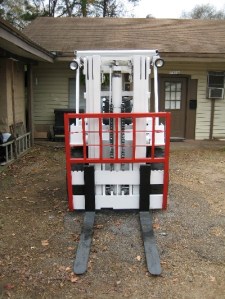
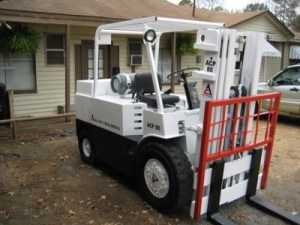
Below are some “before” and “after” photos of the forklift.

Before

Before

After

After

Before

Before

After

After

Before

Before

After

After

Before

Before

After

After

Finished Product

Finished Product

See the Allis-Chalmers ACP80 Lift Truck page for the specs of this machine.

« Previous PageNext Page »

Create a free website or blog at WordPress.com.