Nicholas Fluhart

February 11, 2011

Upgrades to the ’02 F-150

Filed under: Daily Driver — Nicholas Fluhart @ 8:02 pm

I recently upgraded my daily driver, a 2002 Ford F-150, with a trailer brake controller, new headache rack, and auxiliary lighting.  I went with a Hayes brake controller which is primarily for use with my 16ft trailer. The electric trailer brakes are great when hauling something heavy like my tractor and bush hog. Since the truck didn’t have a factory tow package, I basically had to wire the entire system from scratch, but that’s OK because I had been wanting to do some other wiring upgrades as well. I placed an auxiliary power output at the rear bumper as well as a few other components via an auto-reset circuit breaker at the battery. The auxiliary power is great for trailer-mounted work lights or other electrical equipment on a trailer.

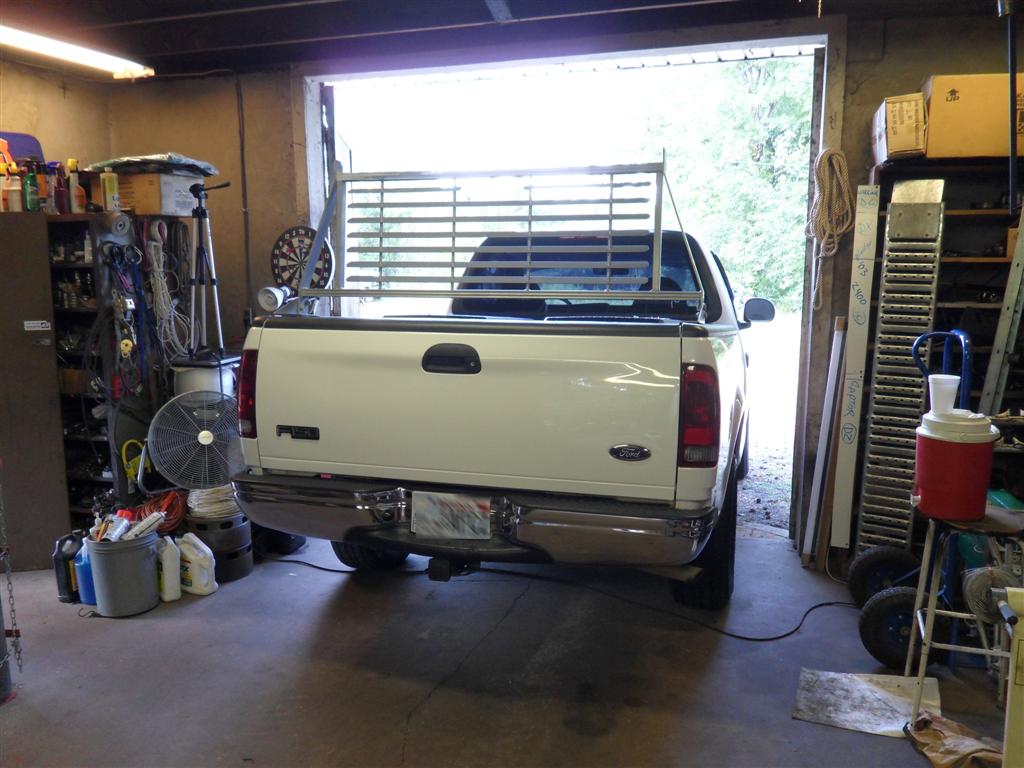
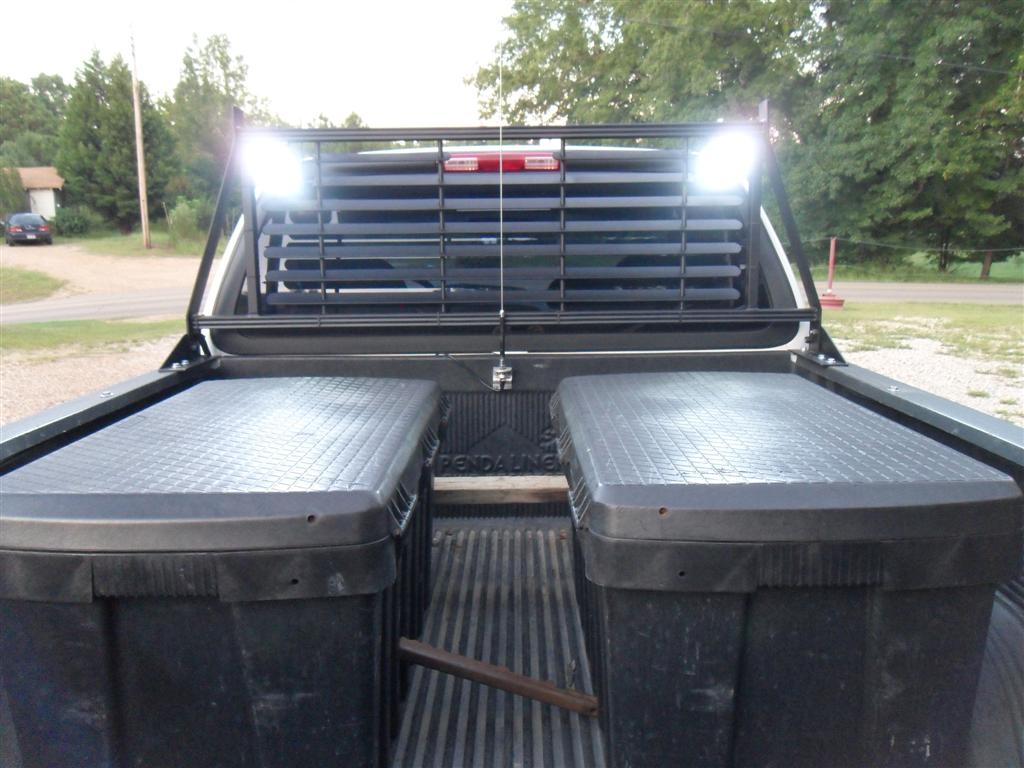
But the one thing I was glad to finally get done was a headache rack upgrade with auxiliary work lighting.  If you’ve read many of my other posts, you know one of my personal requirements for my machines is to have an abundance of lighting. I love to be able to work at night without holding a flash light. I’ve been using a commercial grade Go Industries contractor’s rack for a couple of years now. It’s very handy for hauling lumber, ladders, and most importantly, it protects the back glass and cab of the truck. I’ve been happy with it overall, but I’ve wanted something a little lighter and smaller since it’s on a half-ton truck. Recently, my buddy from Taylor Welding hooked me up with a nice aluminum headache rack which was perfect for what I had in mind. It maintained the same lines and structure as my original but at a fraction of the weight and slightly smaller dimensions. However, since it was a different color, and to properly fit the rack and components to my vehicle, I had to do some modifications. The first thing was to get it in the shop, remove the old headache rack, and take some measurements…
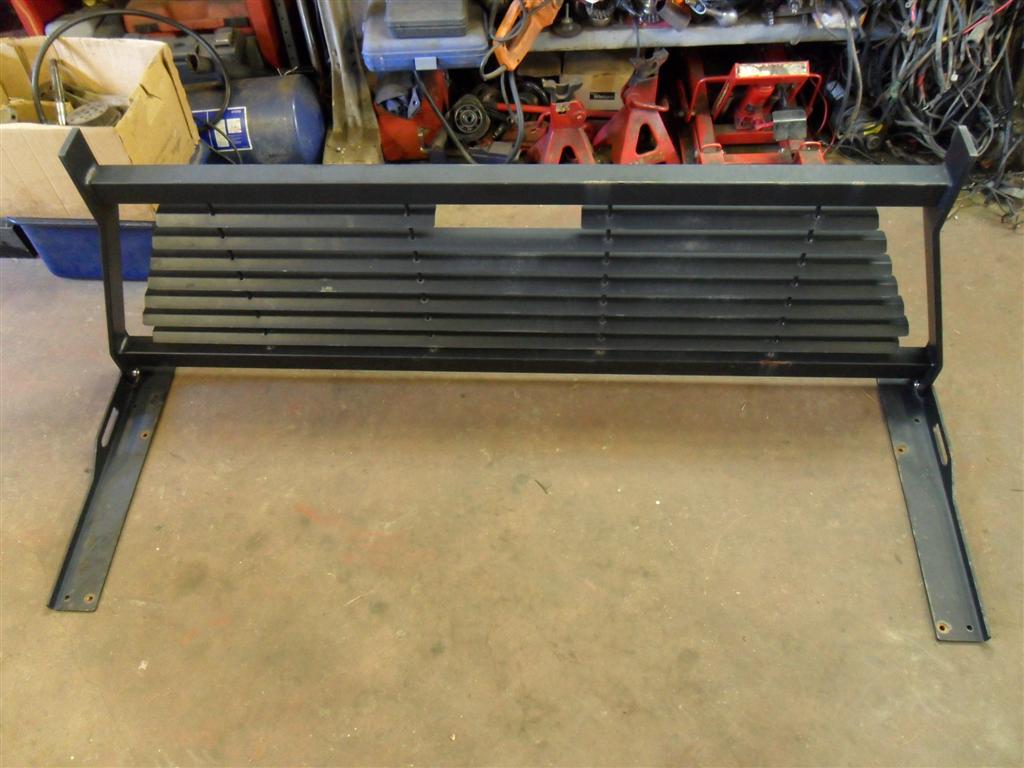
Steel Rack Removed

Taking Measure

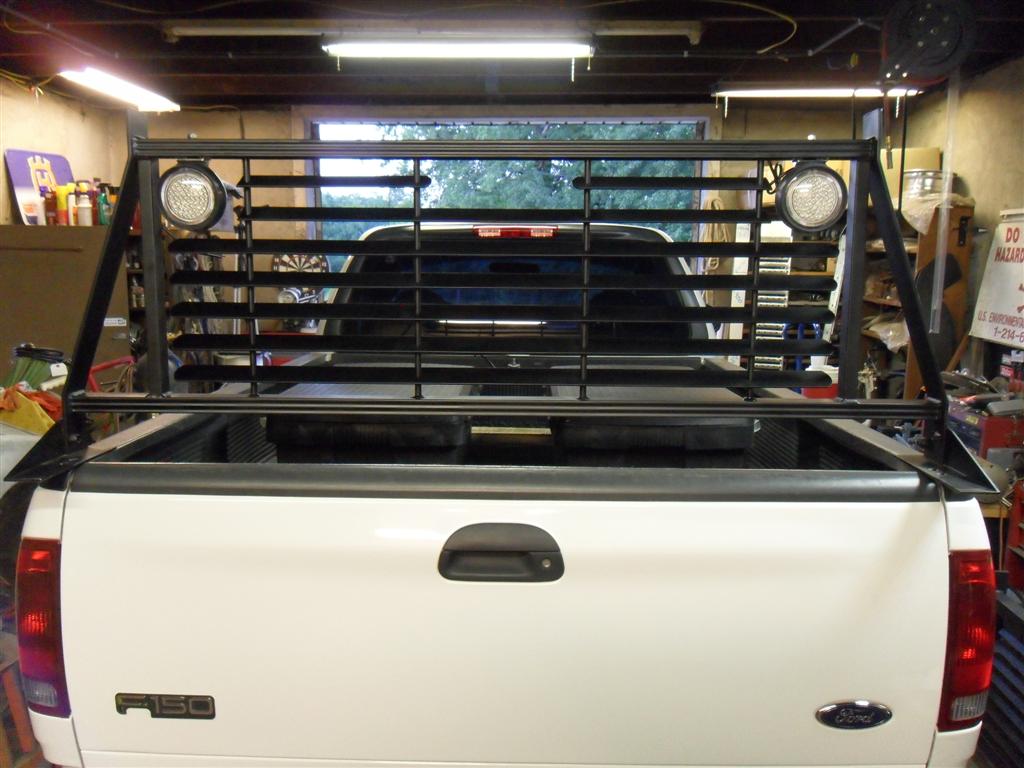
Once I determined proper fitment, I began painting the new rack low-gloss black. The rack had a silver powder coating that was still in good shape, so rather than strip it and loose the corrosion resistant coating, I lightly sanded it and painted over it.

Next, I had to modify the rack for auxiliary work lights. One of my favorite 12V work lights is an LED model offered by Northern Tool. LED’s provide good lighting with very little amp draw (these only draw 1 amp per light) so they don’t over-tax your electrical system and can be run for long periods of time without running down your battery. This particular light provides a 340 lumen flood pattern which is great for a work light. Unlike a driving light, which utilizes a concentrated beam, flood lights tend to project light evenly over a broad range.  It has a good, industrial construction…

To fit the lights on the rack, I trimmed the louvers and mounted the lights to the top cross bar as shown below:

The light fitted to the rack.

Ready for installation on the truck.

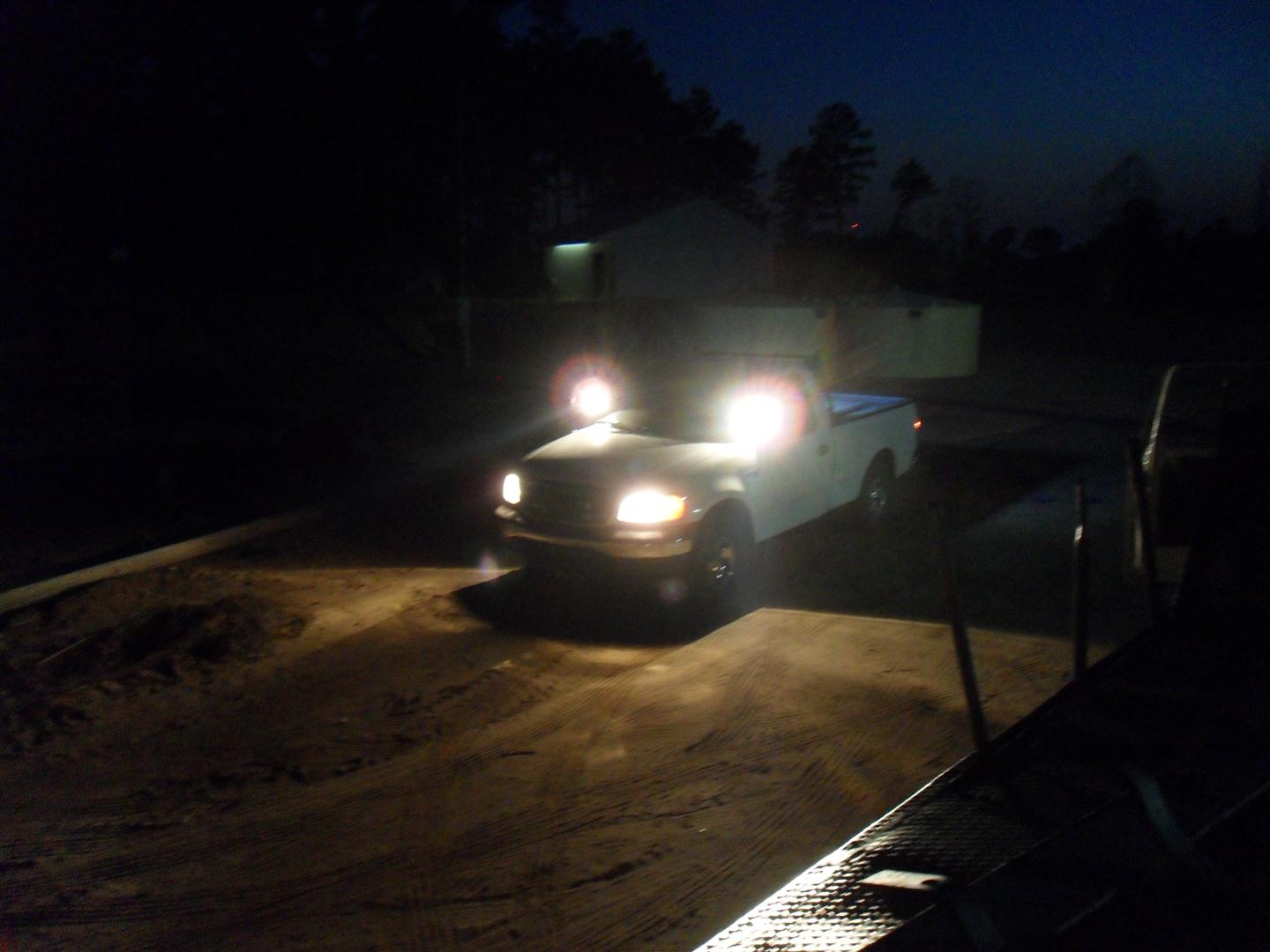
Once the rack was installed, I wired the lights to a toggle switch in the cab and powered the system directly to the battery via a 25 amp circuit breaker. The project turned out great. The lights produce a perfect amount of light for the bed of the truck and for the working area behind the truck.
February 8, 2011

2002 Ford F-150

Filed under: Daily Driver — Nicholas Fluhart @ 9:54 pm

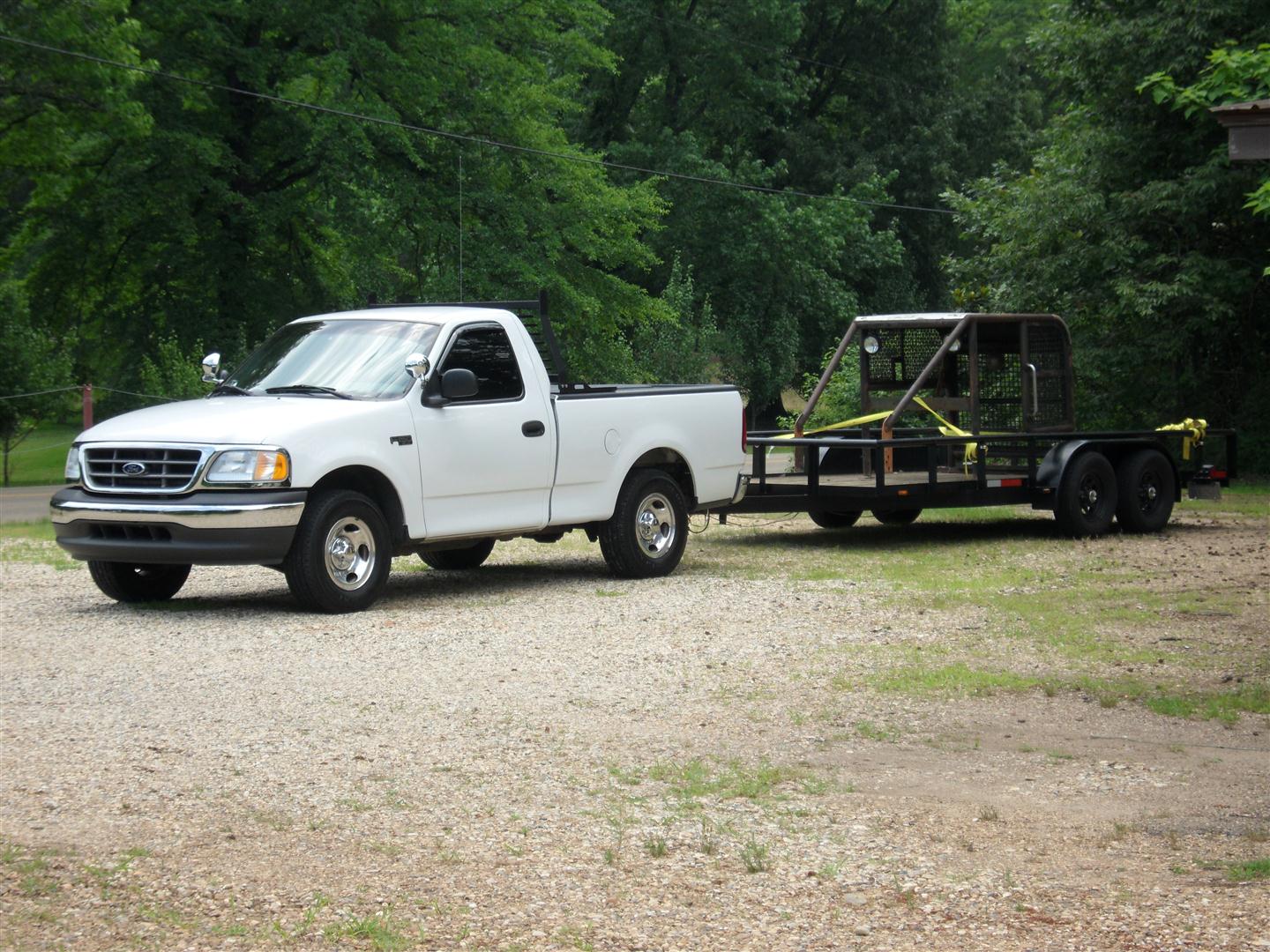
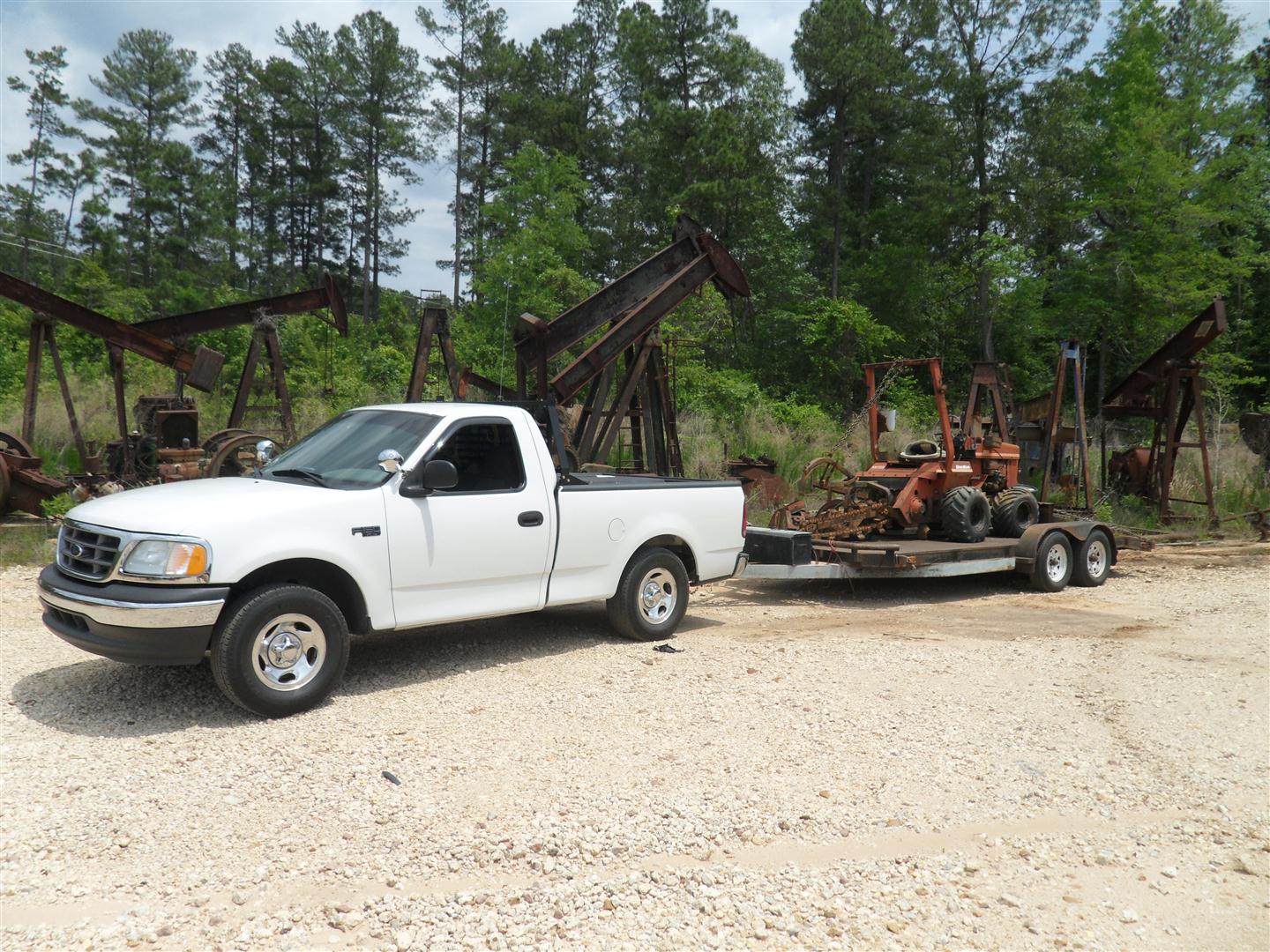
To maintain business on a daily basis, it’s important to have a dependable vehicle. Since I use my primary driver, a 2002 Ford F-150 for more than just basic transportation, I need it to be rigged out with the type of features and equipment that are most convenient for my purposes. When I bought the truck new, I was logging quite a few work-related highway miles and I needed a vehicle that was dependable, fuel efficient, and full-size to haul my tools and pull the occasional trailer. Overall, it has performed very well.

The vitals include a 4.2L engine, which is moderately fuel efficient and surprisingly powerful, coupled to a 5-speed manual transmission. For durability, I’ve left it 100% stock, and since I have owned it, it’s required no major mechanical repairs outside of normal service. I have however, done a number of utility-type upgrades.

I lifted the front suspension 1.5 inches to allow more clearance for the front air dam. Although the truck only sees moderate off-road use, I noticed the front dragging occasionally. The lift was a quick and easy fix. I added coil-over springs in the rear to prevent the truck from squatting when hauling a heavy load or pulling a trailer.  Then I added post-mount spotlights for working after dark, and they have proven to be one of the most convenient features on the truck.  I also installed strobe lights in the headlights and in the reverse lights. This is nice if you have to work around traffic situations, such as loading or escorting heavy equipment. At the rear bumper, I’ve got an aftermarket receiver hitch and two types of trailer light receptacles. In the bed I have a skid resistant, heavy-gauge bed liner, removable tool/cargo boxes, and a commercial grade contractor’s rack (headache rack). I’ve run General Ameritrac tires since the truck was new. I got 70,000 miles out of the first set, so naturally I replaced them with the same. They have a rather aggressive tread pattern for a street radial, so they do decent in mild off-road conditions. I’ve hauled over 2,000 lbs in the bed (twice what the truck is rated to haul) for over a hundred miles in the summer heat, and the General Ameritrac’s did fine.

The interior has vinyl floors (which are easy to clean if you track in mud), a bench seat, cruise, tilt wheel, ice cold A/C, and an aftermarket ultra premium sound system. In the past I had a CB radio, 2-way radio, and a scanner. I now only use my Cobra 29 LTD Classic (talking through a 64″ steel whip) and a 150 channel scanner. I also have provisions for a laptop computer and GPS devises. Tinted windows keep the sun out on those hot summer days.

Future upgrades include a trailer brake controller, 12V auxiliary power at the rear bumper, and a few other odds and ends that I will be posting later.

I’ve been happy with this truck. It has been dependable and has served my purposes well. You will see it in a lot of my posts on this blog.

February 5, 2011

Hunting Trip – Mt Holly, AR 10-2010

Filed under: Trips and Fun — Nicholas Fluhart @ 4:17 pm

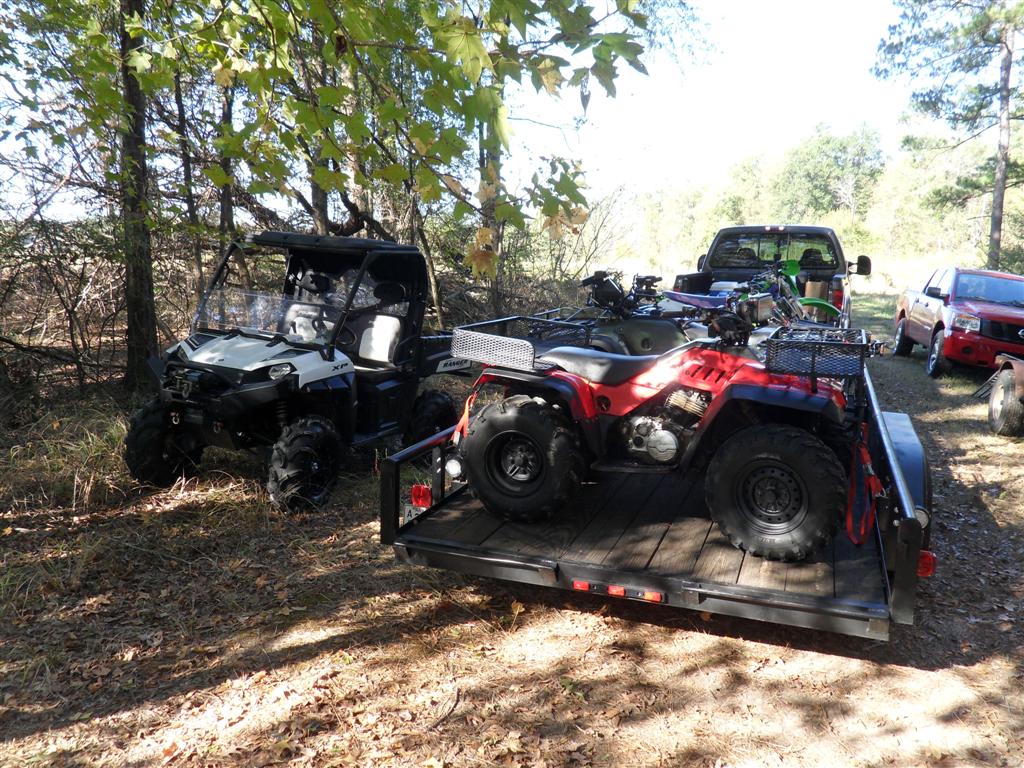
Here’s a few pics from our last group ride. It’s from our annual October hunting trip in Mt Holly, AR. For this trip I took my ’98 475 Foreman, my recently built Kawasaki Bayou 300 4×4 (I’ll be posting the Bayou build project soon), and my 1993 Kawasaki KLX650R dirt bike. Also on my trailer, we hauled my brother’s 1986 Honda 350 FourTrax Foreman. Below you see his Ford F-250 4×4 Diesel Harley Davidson edition pulling my recently refurbished 16ft trailer to the location.

At the camp, the machines present were my above mentioned bikes as well as a nice Polaris Ranger, a Yamaha Kodiak 450 IRS, and a Honda 420 Rancher 2WD.

We hunted up some dinner, and also encountered some non-edible wildlife…

Cleaning Squirrels

Snapping Turtle

Then it was time for the big ride. We hit the trails looking for challenging terrain…

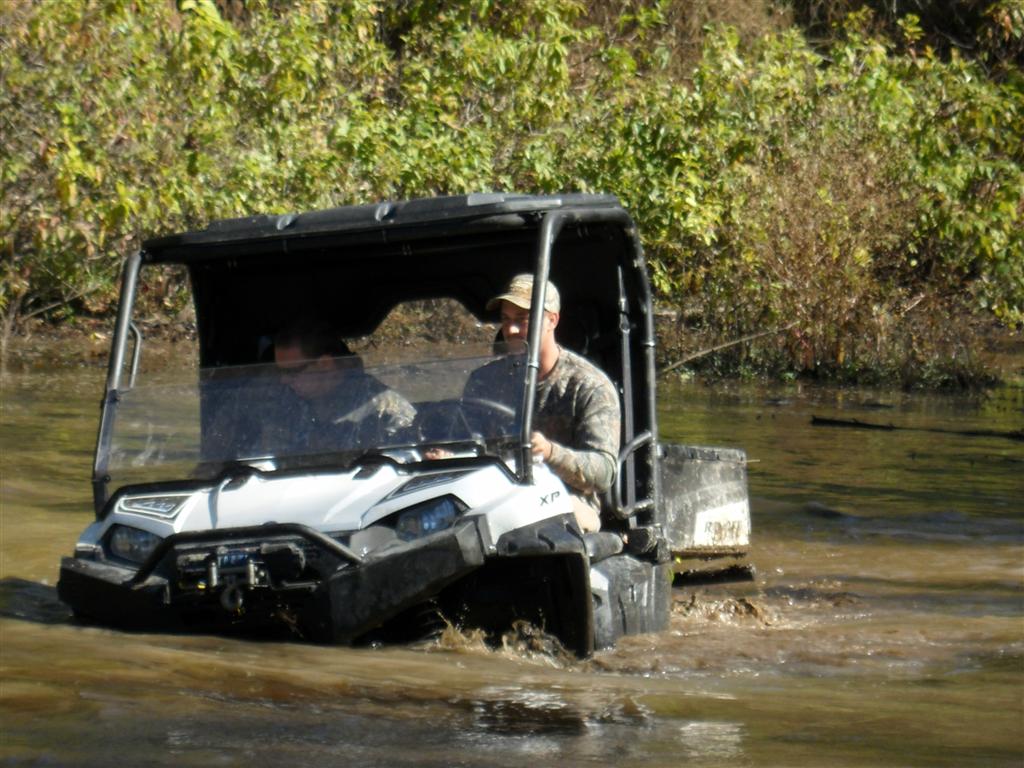
…but we didn’t find much. Due to a long dry spell, most of the trails were a bit dusty so we decided to hit the pond instead. We were unsure of how deep the water was or if there was a bottom to the mud, but one-by-one we pressed on…

As always, it was a fun trip. There was plenty of food, guns, and machines; what more can you ask for? It certainly got us primed for our next trip, the 2nd annual East Camden, AR Expedition coming up in March.

Until next time…

December 26, 2010

Tire Change: 27″ SwampLites on the Foreman

Filed under: Project: 475 Foreman — Nicholas Fluhart @ 9:21 pm
Tags: , , , ,

I recently experimented with a tire change on my Omni Recovery Foreman. As previously discussed in my first Tire Change Post, I’ve been running a set of 26″ Dirt Devil XT’s which are no longer in production. They are essentially the most aggressive of the Dirt Devil family. Overall, I’ve been happy with the Dirt Devils, but there are a couple of areas I’d like to improve in. One, is performance in wet sand such as that found in creek bottoms and on banks. In many cases I have to climb steep, wet creek banks, but I don’t want to compromise too much in mud traction, so finding a balance is difficult. Second, is overall driveablity. My Dirt Devil combo, although superb in mud, is a heavy and rougher riding set. I’d like to try something a little more nimble and smoother riding. I recently got an opportunity to try something different…

I purchased a Foreman to part out, and it happened to have a nice set of 27″ SwampLites on ITP steel wheels. I had to give them a shot on my machine. The rims they were on had gotten a bit rusty, so the first thing I did was strip them down and paint them low-gloss black. Then I installed them on my Foreman.  You can see the difference one inch in tire diameter can make as seen below:

SwampLite on the left, Dirt Devil on the right.

The SwampLite on the left is taller, and the Dirt Devil on the right is wider. I’ll discuss the pros and cons at the end of the post. Here is what the finished product looks like:

Conclusion:

Shortly after installing the new tire combo, I took it on a good night ride and developed some conclusions. In comparison to the Dirt Devils, I found that the SwampLites certainly rode smoother overall, and the larger diameter gave my Foreman a better top cruising speed. Also, I was surprised at how much the additional ground clearance helped. In wet sandy conditions, the improvement was moderate but not as much as I had anticipated. And for the cons… I immediately noticed that the SwampLites didn’t get near the traction on most surfaces that the Dirt Devil XT did. This is due to a combination of the less aggressive tread (in soft terrain) and the more narrow footprint (in all terrain) of the SwampLite. I wouldn’t mind that too much if the combo was lighter than my Dirt Devil setup, but when I compared them, they were both about the same weight so I really didn’t gain anything there. And finally, I learned that 27″ tires, a bit taller than the 26″ (and certainly taller than the stock 25″), proved to be a bit much for the stock suspension geometry. The front tires rubbed the fenders when the suspension flexed heavily, and I could feel some pops and tweaks in the chassis that I didn’t normally notice. My synopsis: I believe the SwampLite is a decent all-around tire, but if I were to run a set, I would downsize to a 26″ and place a wider size on the rear for better traction. I actually think they would be a good combo for my machine. But at the end of the day, the 26″ Dirt Devil XT is a better fit for my machine and riding style than a 27″ of any brand. So that’s what I’ll stick with for now. If I can find a deal on something a little less aggressive but keep the current size, I think we’ll have a winner.

Oh, and I’m still keeping an eye out for a set of factory style aluminum rims…

December 5, 2010

Crossing a Beaver Pond

Filed under: Project: 475 Foreman,Trips and Fun — Nicholas Fluhart @ 9:03 pm

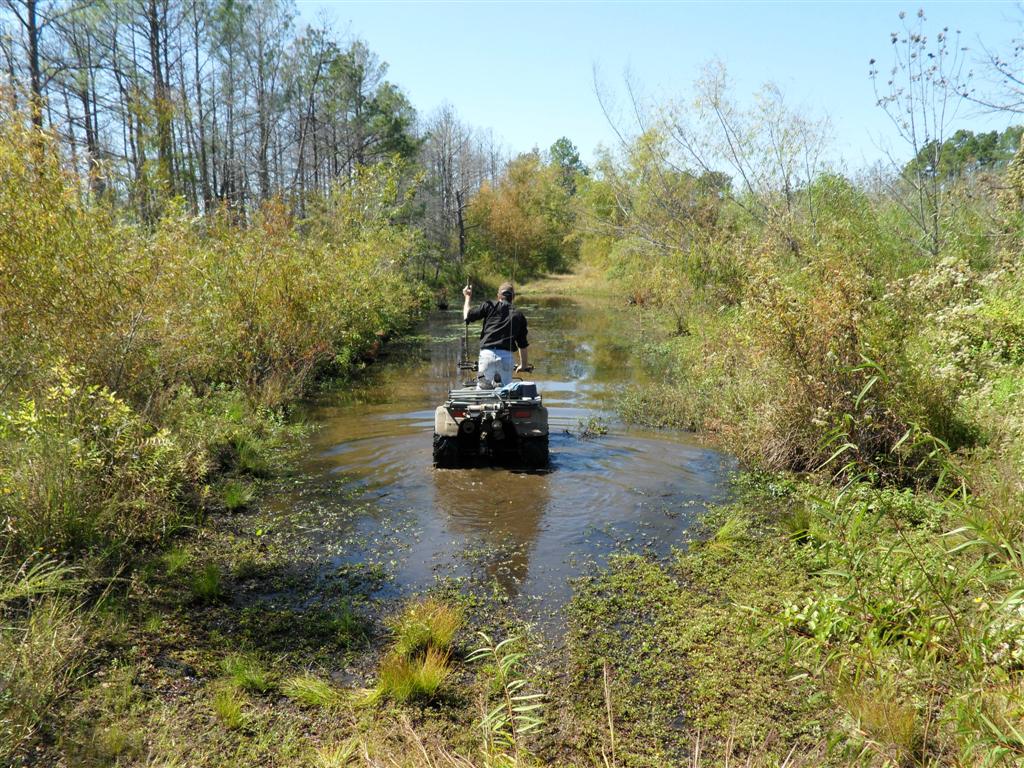
I had a fun outing to my land lease shortly before hunting season. My brother and I were riding our ATVs when we came to a section of the road that flooded a couple of years ago due to beavers damming up a nearby creek. We weren’t far from our destination. To turn back would mean adding another hour and a lot of additional miles to the ride, and it was a hot, dusty day; I really wanted to get into the water. There was a lot of seaweed and lily pads making it impossible to see the bottom and judge the depth. My main concern was a possible under-water trench from a culvert that had washed from under the road and was now floating at the shoulder. There is a swamp to the right of the road and a deep creek with moving water to the left, and water from the creek is now moving across the road into the swamp. Since I cannot see the bottom I could easily drive into a trench, drop out of sight, and loose my quad.

At this point most people would turn back….but I’m not most people. I love a challenge, especially when there’s a little danger involved. I had a plan. I began looking around for a tool that I could use to give me an edge, and then I found it: an old tree branch. I eagerly snatched it up to carry with me across the abyss. I would use the precision instrument to gauge the depth of the water in front of me as I drove along.


Selecting my precision instrument.


And then it begins. I inch my way out into the water. I look ahead to the other side to guesstimate where I need to be in order to keep myself centered on the road. It’s a little more difficult than it looks. As you can see, I don’t have my rubber boots on (at that time it hadn’t rained in two months so I wasn’t expecting mud or water) so I climbed onto the seat of my ATV.

Putting In


It’s relatively easy at first, but then the water starts to get deeper. However, it’s not so much the current depth of the water that gets my blood pumping, it’s the unknown variables. I absolutely cannot see through the murky water. How deep is it in front of me? Where are the shoulders of this narrow old road? If I get too close to the edge, which I cannot see, I could slide off the road into chest-deep water. There’s nothing I enjoy more than this type of riding!

Further into the unknown.


The water is getting deeper, naturally, but I could still turn back before this outing turns into a travesty. ….Not a chance. At this point I’m hooked; the only way I’d go back is via winch-line. I keep moving…


A little seaweed.

Past the point of no return now. As my depth gauge encounters an indigenous life form, I feel some obstacles on the ground beneath me. Probably a log? An old pipe? Who knows what’s down there considering I’m riding in a WWII era munitions depot. I try to correct…


At the edge.

…aarrrgg! Too much! I almost slid off the shoulder of the road. It’s narrow and impossible to see. I slow to a crawl as I use my stick with the value of a life preserver.


The half-way point.

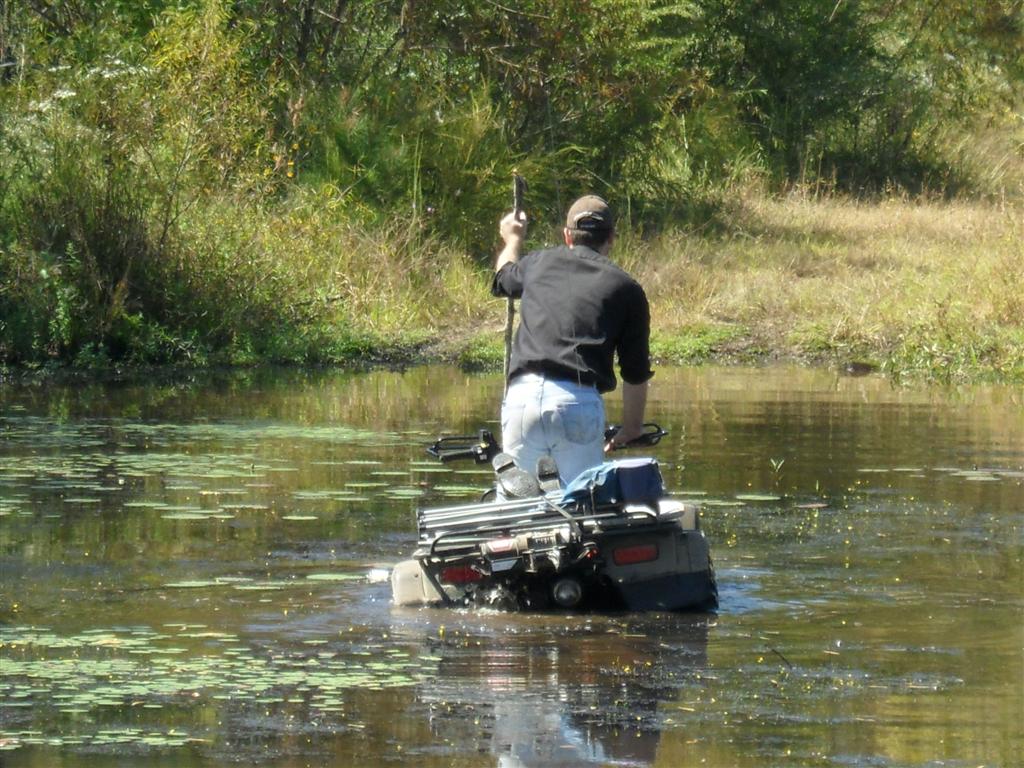
As I reach the half-way point I’m encouraged to continue, however, the deepest section is yet to come. As I pass a flower on a lily pad I notice there is a slight current and I’m approaching the area where I believe the culvert was. With nerves of steel, I press on.


Approaching the deepest part.

With my exhaust pipe soundly under the surface gargling creek water, I realize I’m right in the deepest section where the culvert was. Fortunately there was not a deep trench there, but there was a bit of a dip. I pushed through and the front of the ATV bobbed as the water rolled up on top of the front fenders.


In the deepest section.

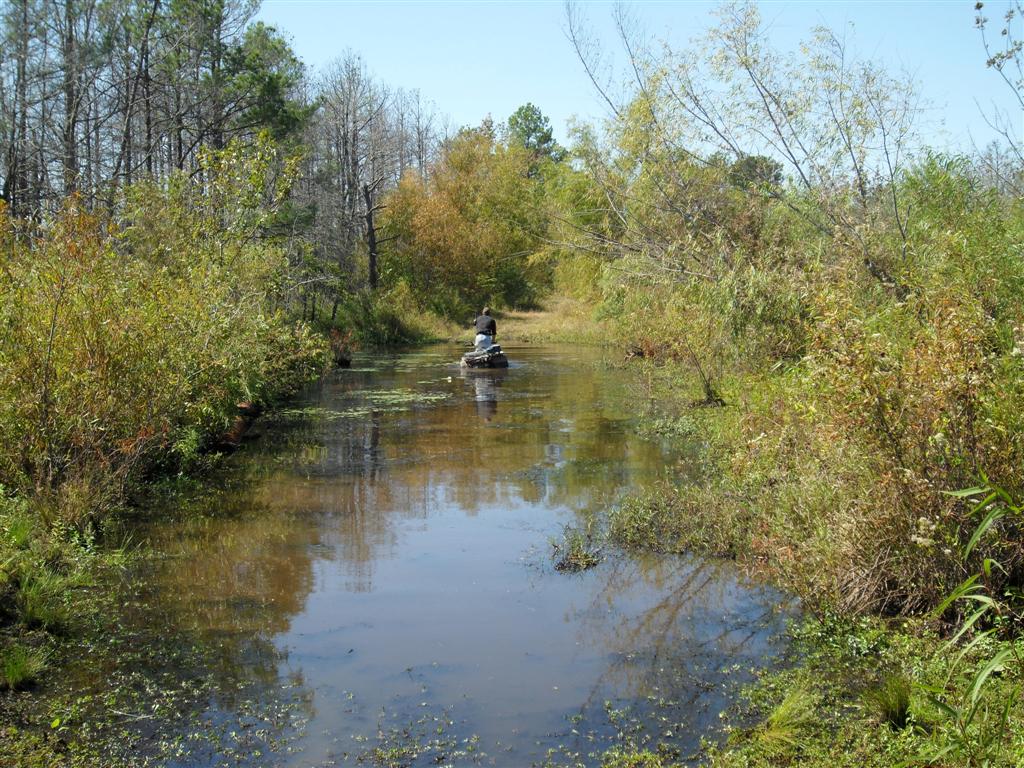
As I traverse through the dip I see light at the end of the tunnel and I know I can make it. At this point in a challenge I tend to get a little excited so I picked up the pace a bit. Before I realize it, the water is getting shallow and I near the bank. Alright! I did it.


Success!


On to the next one…


« Previous PageNext Page »

Create a free website or blog at WordPress.com.