Nicholas Fluhart

October 21, 2012

Ditch Witch R40: First Run

Filed under: Project: Ditch Witch,Trucks & Equipment — Nicholas Fluhart @ 7:51 pm
Tags:

A while back, I posted about the Ditch Witch R40 my friend Philip picked up with the intention of doing a partial restoration. A lot has happened since then, and I decided to give it a spot on my blog. To pick up where I left off, Philip brought the machine to my shop where we would have an endless supply of tools. The first order of business was to get the engine running properly so we could actually operate the machine to see if there were any other issues and proceed with the project. Knowing that there were a couple of stuck valves, Philip proceeded with removing the cylinder heads to assess if the valves were damaged or just stuck with carbon. Upon removal of the heads, he discovered the latter was true. Using penetrating oil he freed the stuck valves, then cleaned the gasket surfaces. That was a fairly easy fix for the valves, however, when removing the rusty head bolts, one of them broke off in the cylinder…and this presented a challenge.

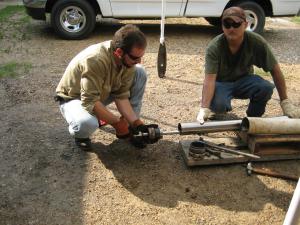
Since there was about 1/4 inch of the bolt sticking out of the cylinder, we had a few options. We started with the easiest solutions, and then worked our way to the more complex. First we tried using a stud extractor, but we couldn’t get enough of the stud into the tool. Second, we tried vice grips and applied heat to the area around the stud. That didn’t work either. The third attempt was to weld a nut onto the end of the stud and use a wrench to remove it. No good. The stud just kept breaking off leaving us with a shorter and shorter area to grip. After much deliberation, it was decided to drill the stud out. Philip flattened the top of the stud with a grinder. Then he reinstalled the cylinder head to use the bolt hole in the head as a guide to center punch the stud in the cylinder. Using a hand drill, it is very difficult to drill completely straight. To counter that challenge, Philip built a tool. Using a lathe from his machine shop, he built a drill bit guide which would fit into the bolt hole on the head and guide the drill bit straight into the stud in the cylinder. This would help ensure not to drill off center and damage the bolt hole in the cylinder. I’ve posted a picture of the guide and bit below.

That did the trick. He drilled the broken stud out of the cylinder and cleaned the threads with a tap. Now it’s just a matter of cleaning everything, fitting the new gaskets he ordered, and reinstalling the heads with new bolts.

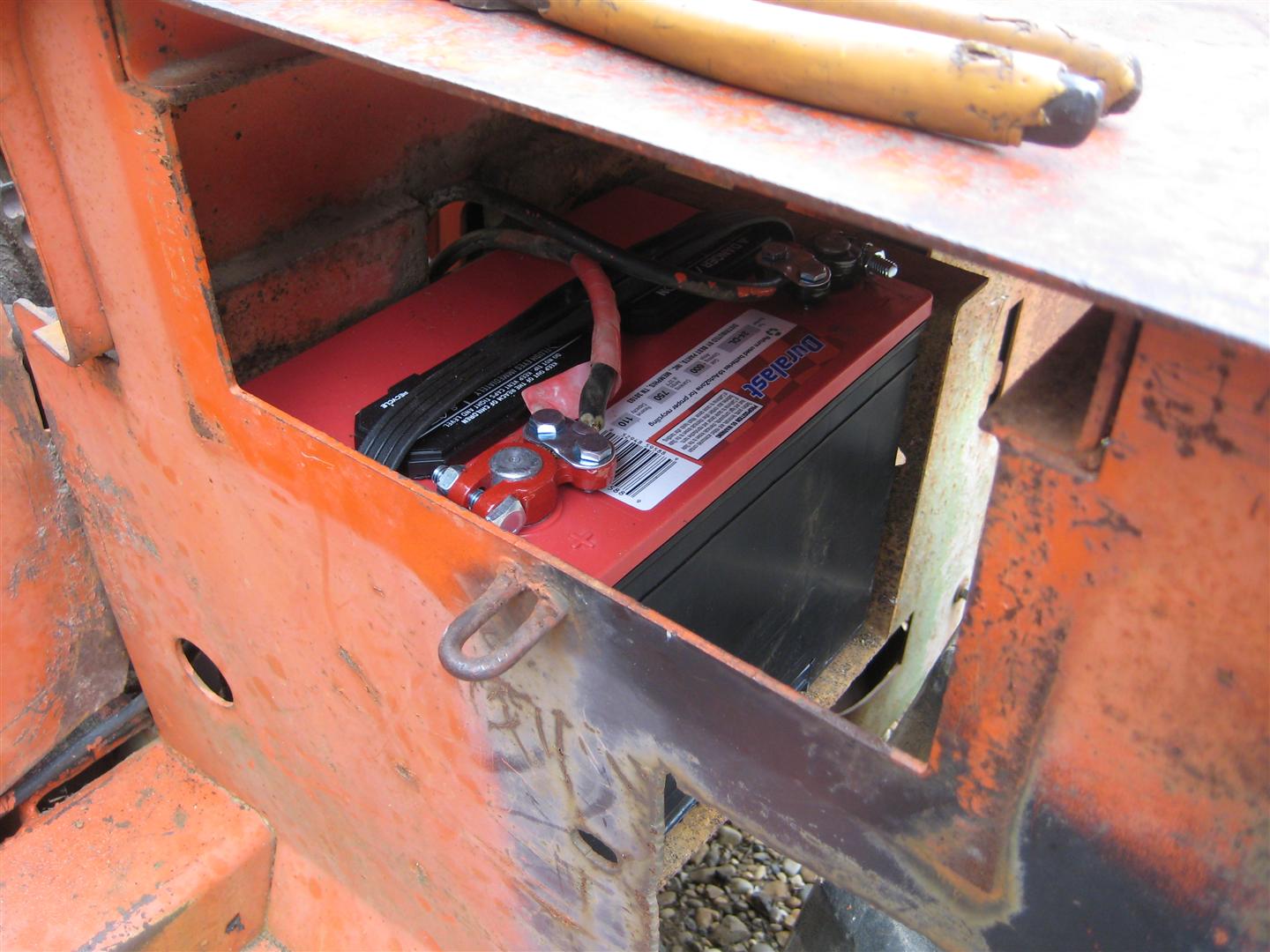
Now it’s time to reinstall the engine air shrouds and covers. The Wisconsin engine is an air cooled unit, and it is important to have all the shrouds installed to maintain proper air flow across the cooling fins. We also install thicker exhaust gaskets as the exhaust manifold has apparent warped slightly. The thicker, crushable gaskets, which are actually some motorcycle exhaust gaskets I had, did the trick nicely. We then checked fluids, installed a new fuel line, battery, and some other odds and ends.

We still have the problem of the broken drive chain which connects the transmission and transfer case and subsequently drives the wheels. However, we can still run and drive the machine by using the crowd control which operates the hydraulic motor on the transfer case. This is used for trenching speed only, so it will be very slow. Nonetheless, it should work fine. And…

Success! The engine fired up, and the hydraulics and trencher work great. Oh course, we couldn’t resist cutting a test trench in my back yard, so Philip jumped on the machine and made a go at trenching and backfilling. Check out the video below:

This was a successful test run. Other than the above noted drive chain and the brake master cylinder, there is nothing else wrong with this machine. It won’t be long and it will be ready for its first official trenching job.

Until then…

UPDATE: Check out the first job here.

March 26, 2012

Retreiving Ditch Witch R40

Filed under: Project: Ditch Witch,Trucks & Equipment — Nicholas Fluhart @ 8:52 pm

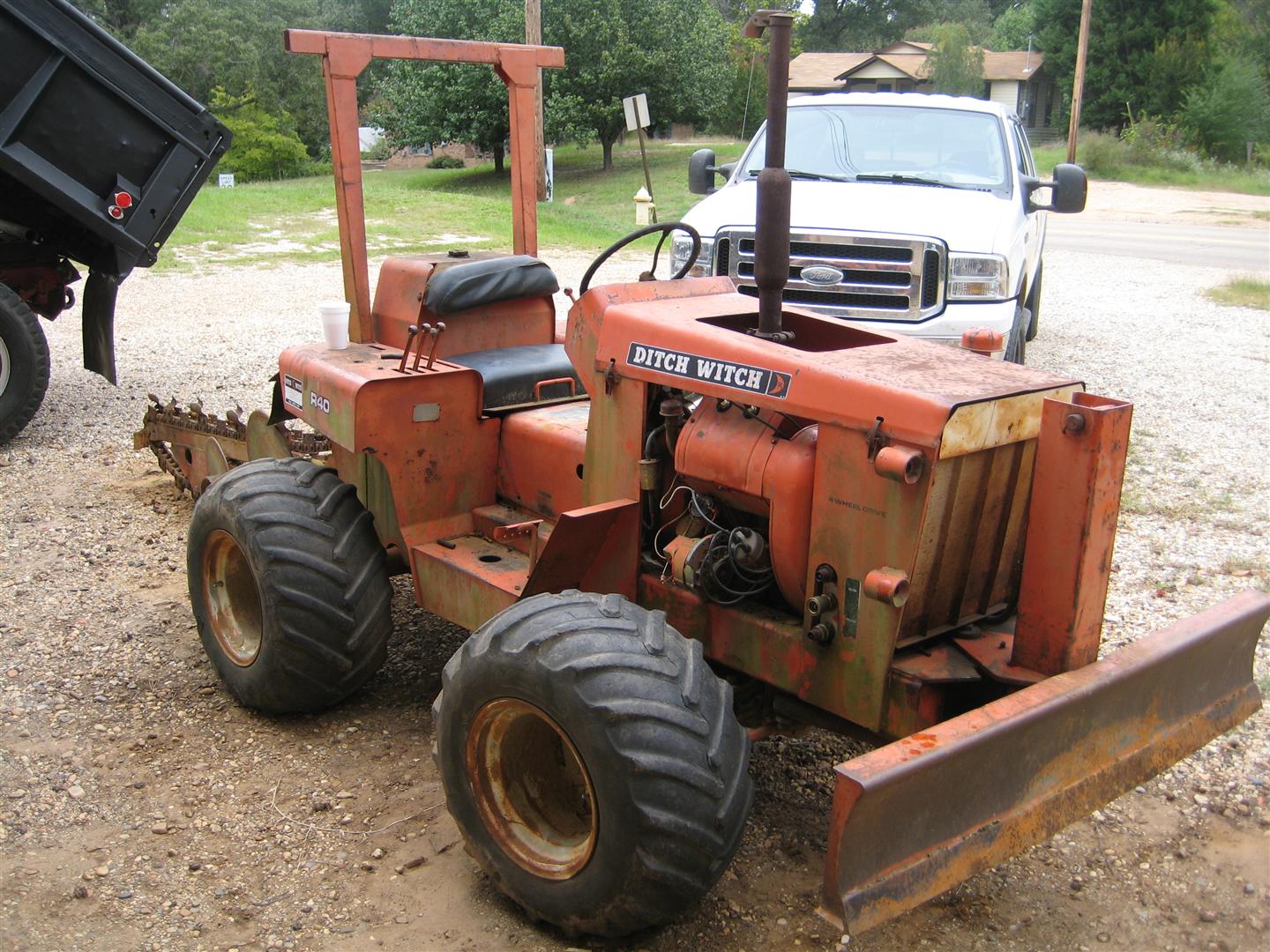
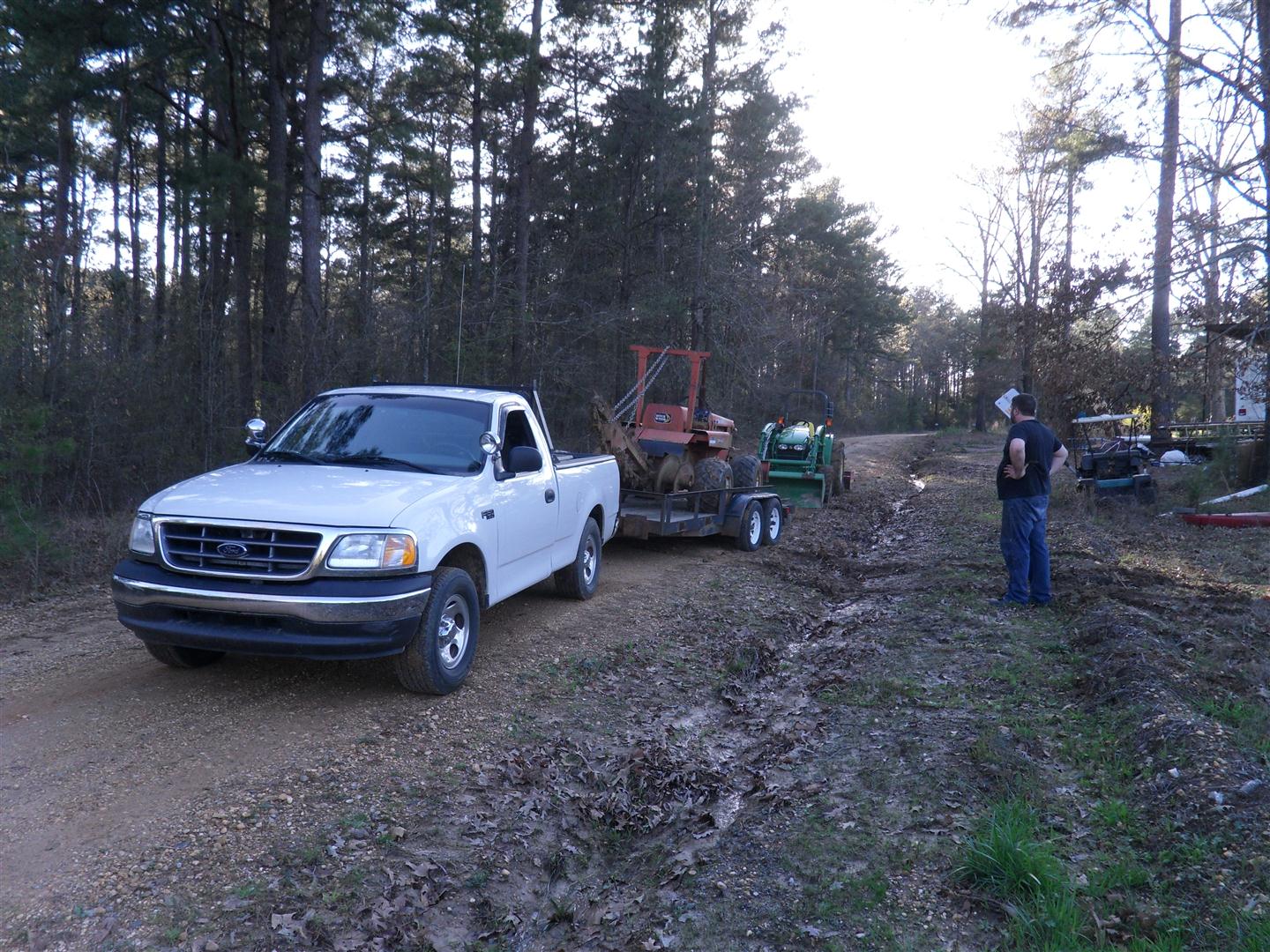
Recently my buddy Philip called and told me he had acquired an old Ditch Witch, and knowing my love for old iron and that I have a similar Ditch Witch, he thought I might come out and help him haul it home. It’s a 1970’s vintage R40 in surprisingly good condition considering it hasn’t run for a few years. I hooked a trailer to my truck and since the machine was close to his house, Philip drove his dad’s new John Deere tractor over to assist with loading.

This R40 is equipped with a rear trencher and a 4-way push blade for back filling. After reviewing the situation, we knew the first order of business was to raise the blade and trencher so we could tow the machine out to the gravel road for loading as the ground was much too soft to back the truck and trailer up to the machine where it sat. We disconnected the hydraulic line to the lift cylinder on the blade and used a come-along to winch it up.

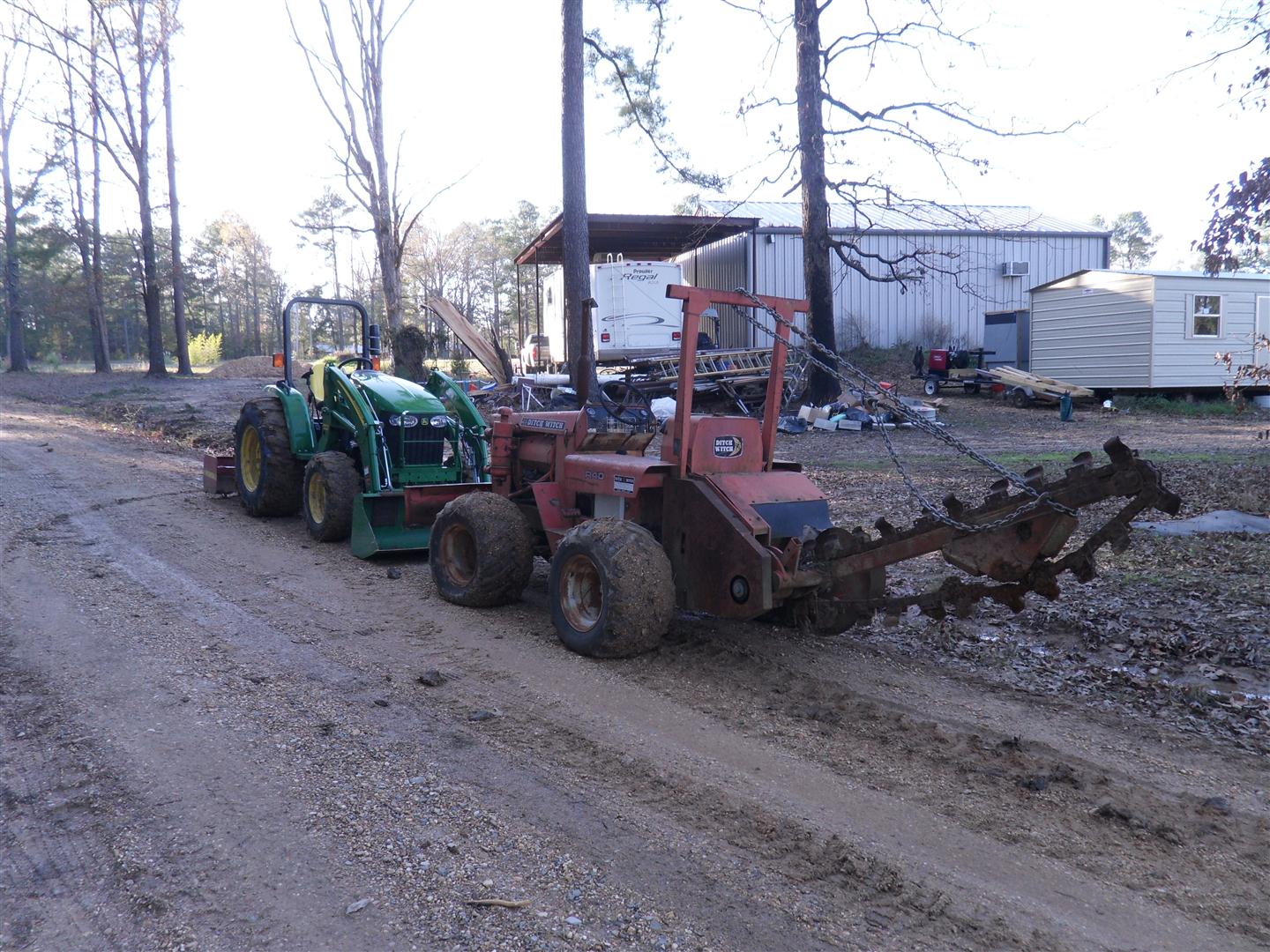
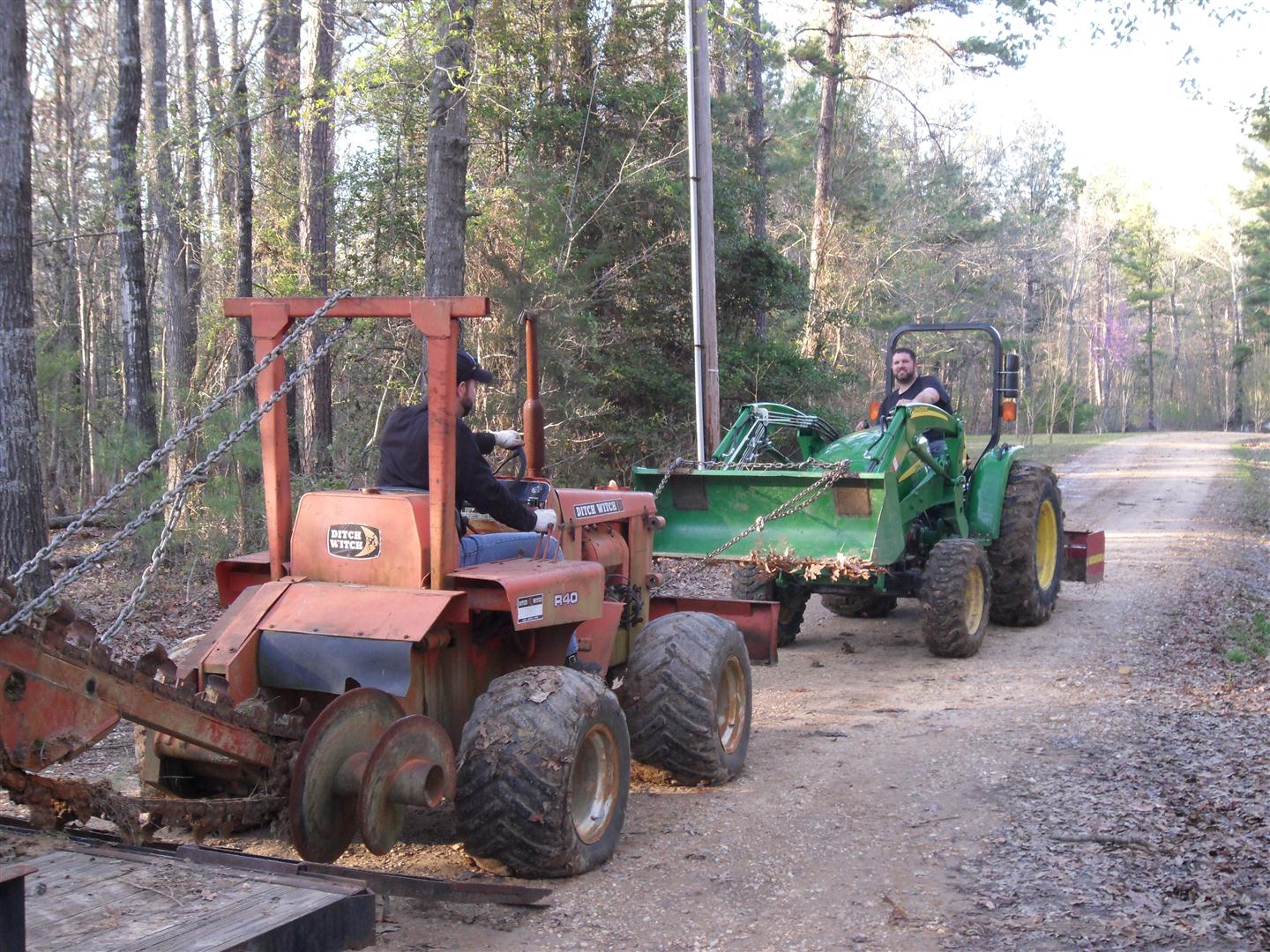
Once the blade was up, we moved back to the trencher. The hydraulic line to the lift cylinder on the trencher had a quick-connect coupler, so it was easy to disconnect the line. I used the front-end loader on the tractor to raise the trencher while Philip held the fitting open so the hydraulic pressure could release. Once raised, we chained it up to the roll bar. Then we hitched the machine to the tractor and Philip towed it onto the road while I steered.

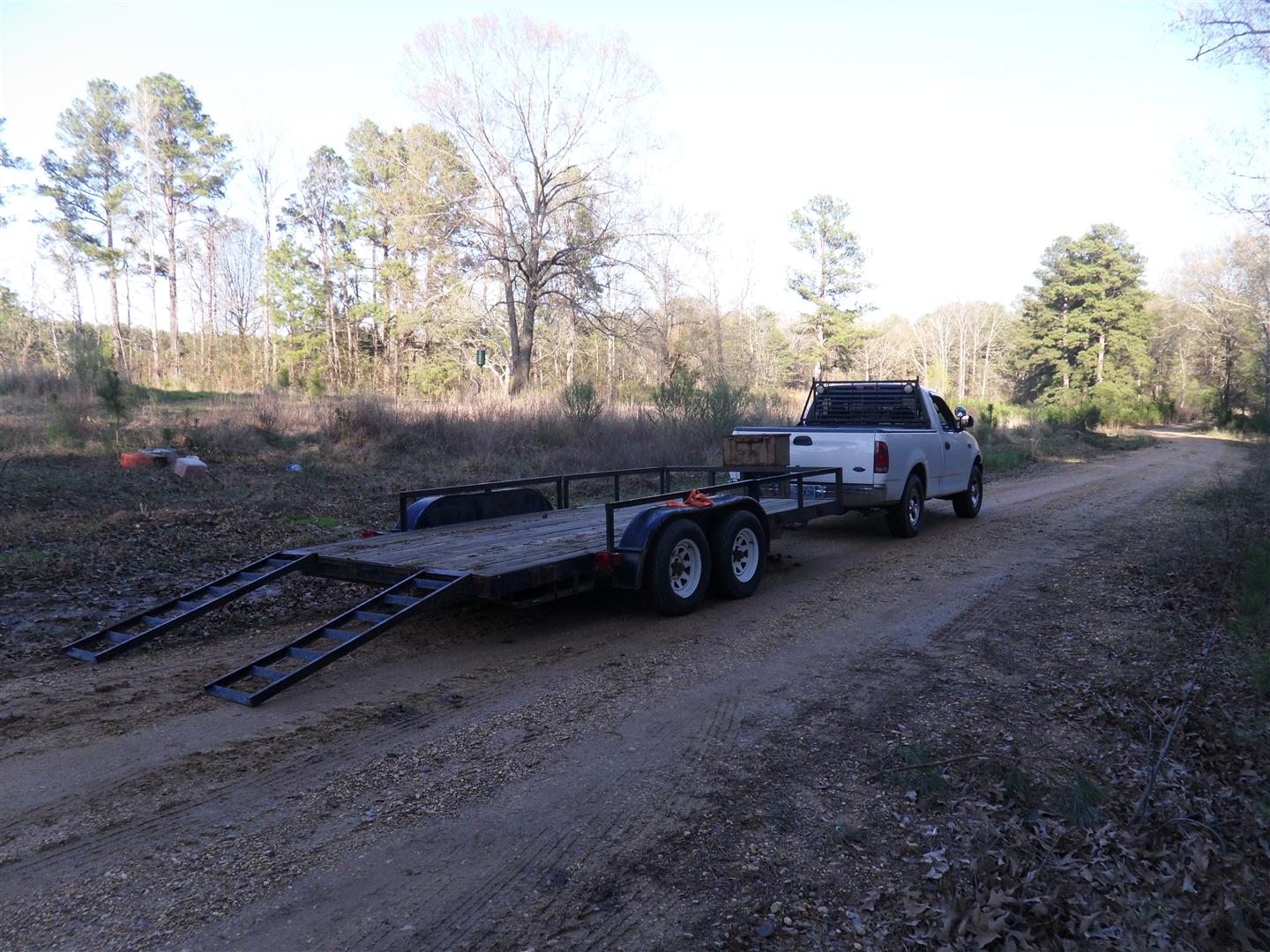
I then positioned my truck so we could load it up. Again, using the tractor, Philip pushed while I steered it up onto the trailer.

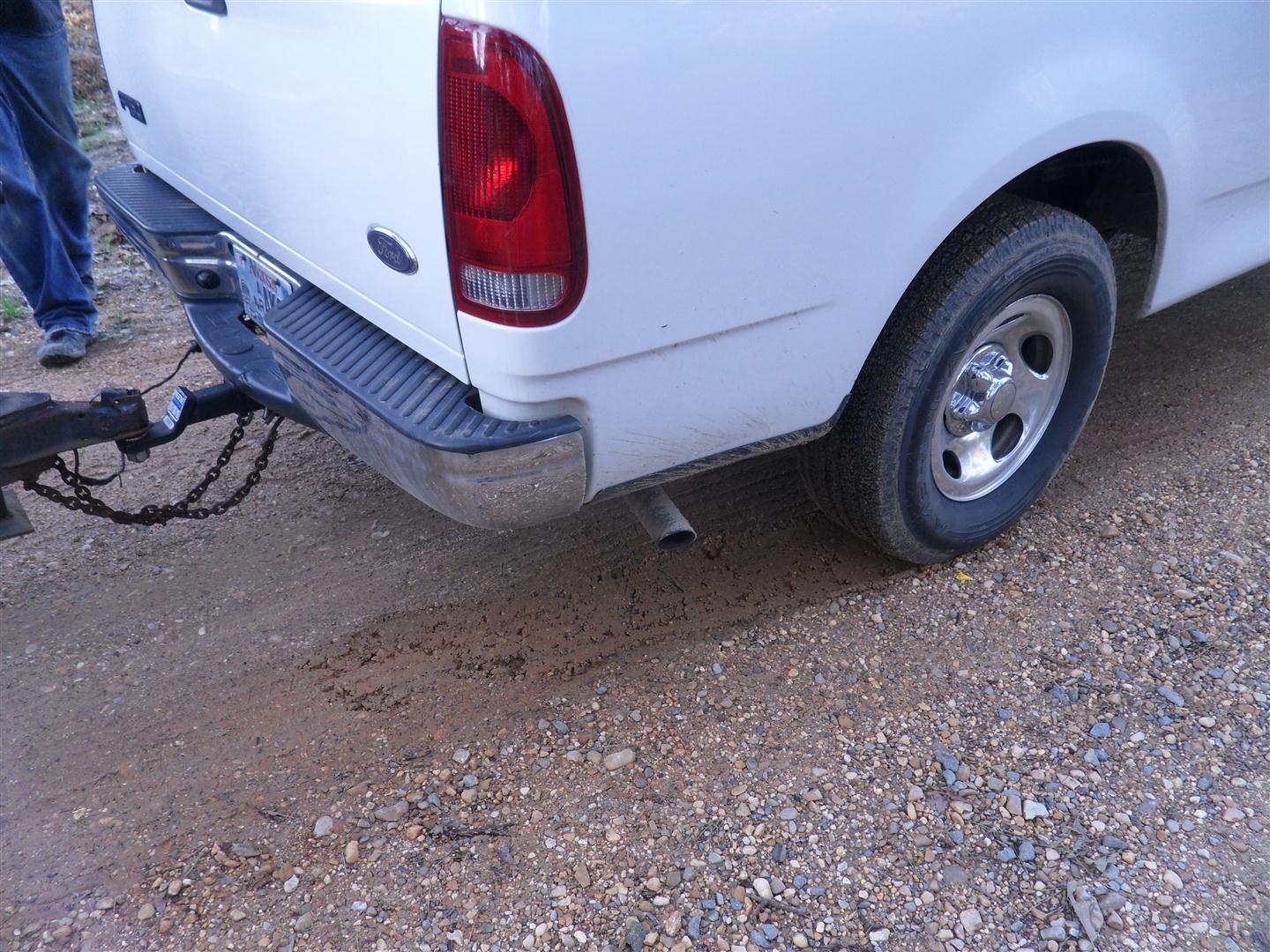
The trailer had a long tail on it, and given the weight of the machine when coming up the ramps, it provided enough leverage to raise the rear of my half-ton truck. Subsequently, the brake on the truck was of no affect and the truck skid a few feet as seen below.

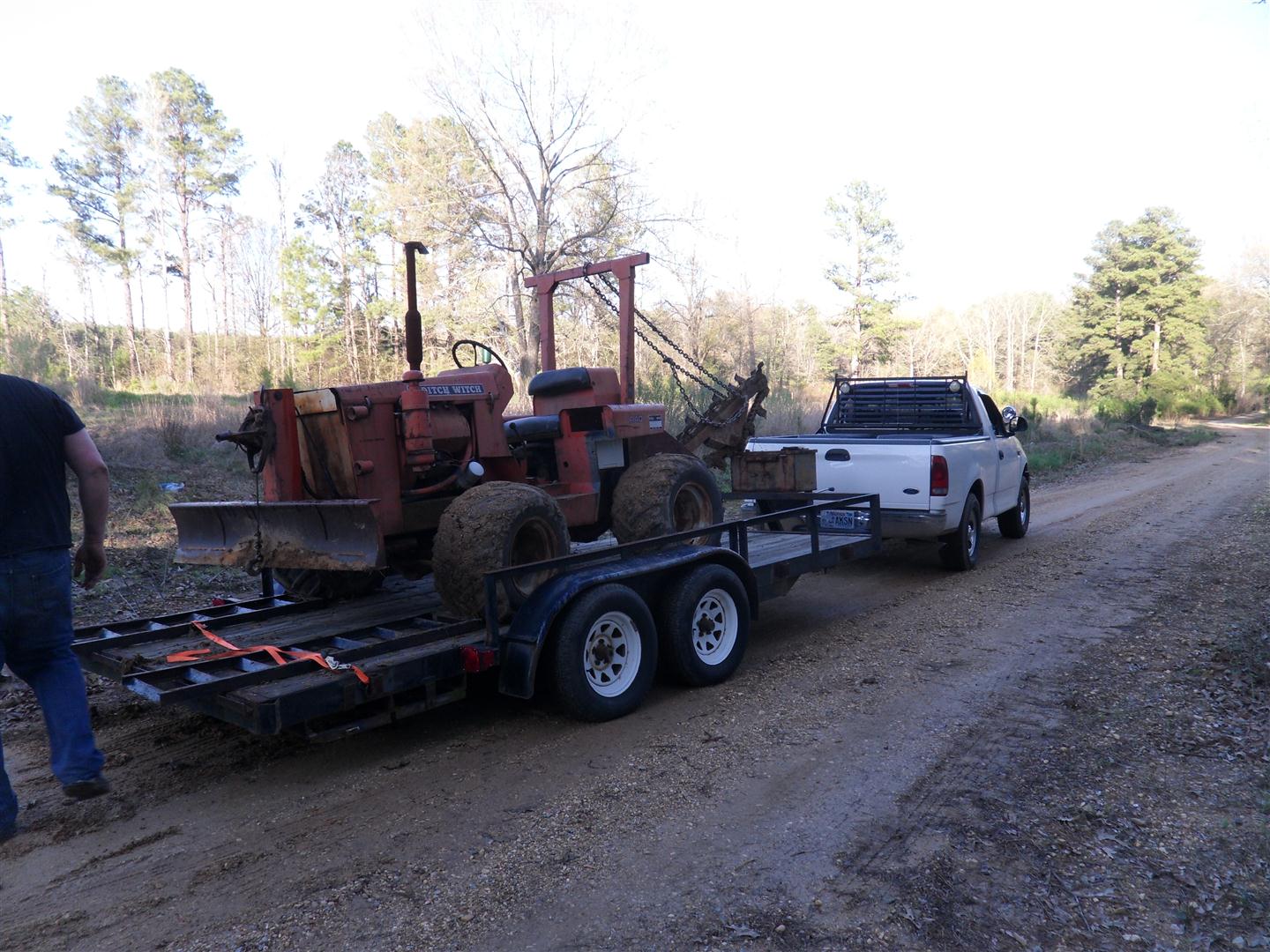
Once secured, I set out on the road with the machine in tow. It was a weighty load for my small truck, but it handled the load just fine. Once we arrived at our destination, Philip used the tractor to pull the Ditch Witch off of the trailer as I steered.

We looked the machine over. First, I checked the normal wear points, such as any pivot pins, sprockets, teeth, etc., and overall, it is very straight and tight. It shows to have fewer than 2k hours, and the hour meter is functional. This seems to support my conclusions on the overall condition. In fact, the only wear I could really find on the machine was the tires, one of which is coming apart. The previous owner indicated that there was a drive problem, which is probably why it hasn’t been used in five or more years. We located a broken drive chain from the transmission to the drive components and rear hydraulic pump. That’s likely to be our drive problem and should be a fairly easy fix given there is nothing more serious that caused the chain to break. We then attempted to run the engine. We did actually get it to fire a few rounds, but only on two cylinders. The engine is the classic Wisconsin four-cylinder air cooled unit. Having set out in the weather for half a decade allowed for some moisture to get into the two rear cylinders and seize the valves. This should also be a relatively easy fix as long as the cylinders are in decent shape. Philip has already begun work on this his first equipment project.

I believe this machine would be a handy addition to a good equipment collection, or a start to one. Typically, you can rent a trencher cheaper than you can own one, but when the price is a bargain, like this one and like mine, it’s a good unit to have. The R40 is a sizable machine, about twice a big as my 2300. It has enough weight to easily handle the trencher, blade, and then some. It has provision on the front for a backhoe attachment, which includes the mounting points and the hydraulic hookups. The machine has hydraulic pump driven off the engine crankshaft, and it has a hydraulic motor on the transfer case that actually drive the wheels when the machine is in trencher mode. I think this is going to be a fun project and a fun machine for him.

Until next time…

UPDATE: See the project post for this machine here.

December 25, 2011

Allis-Chalmers Forklift Cylinder Repair

Filed under: Project: AC Forklift,Trucks & Equipment — Nicholas Fluhart @ 5:30 pm

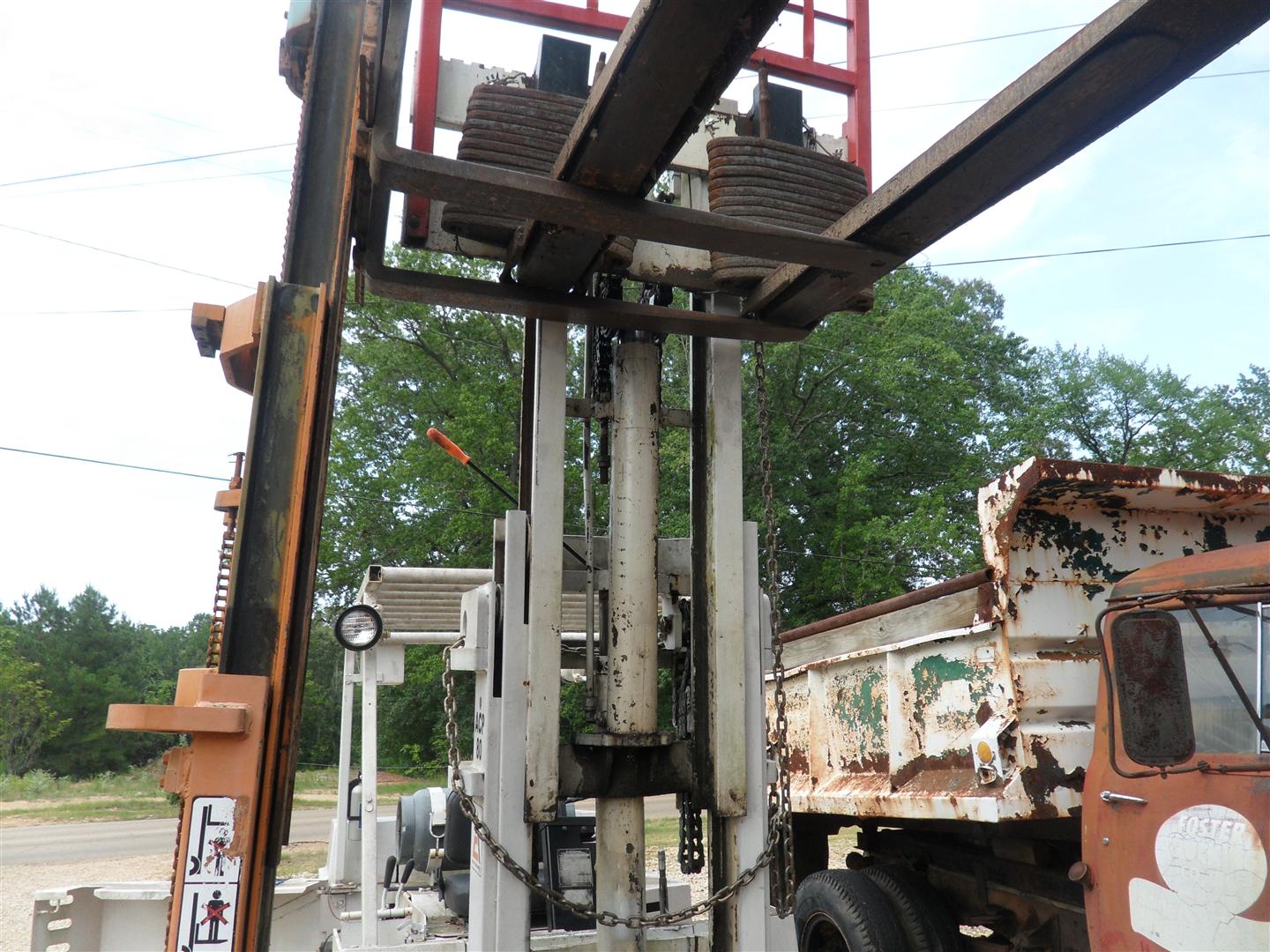
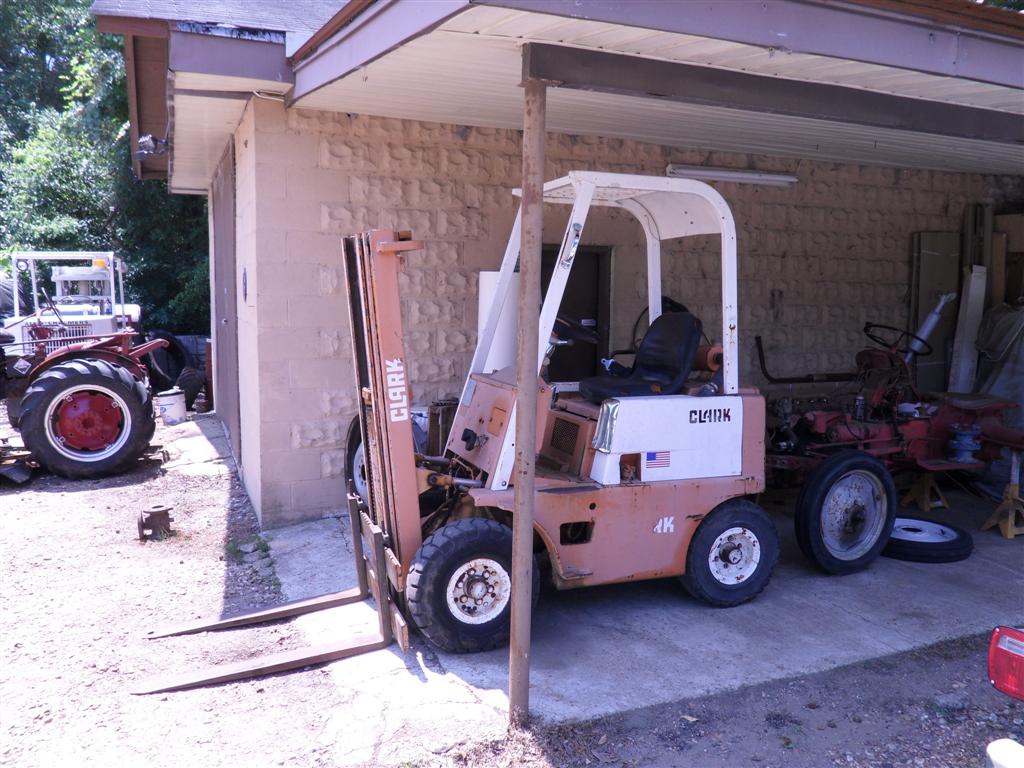
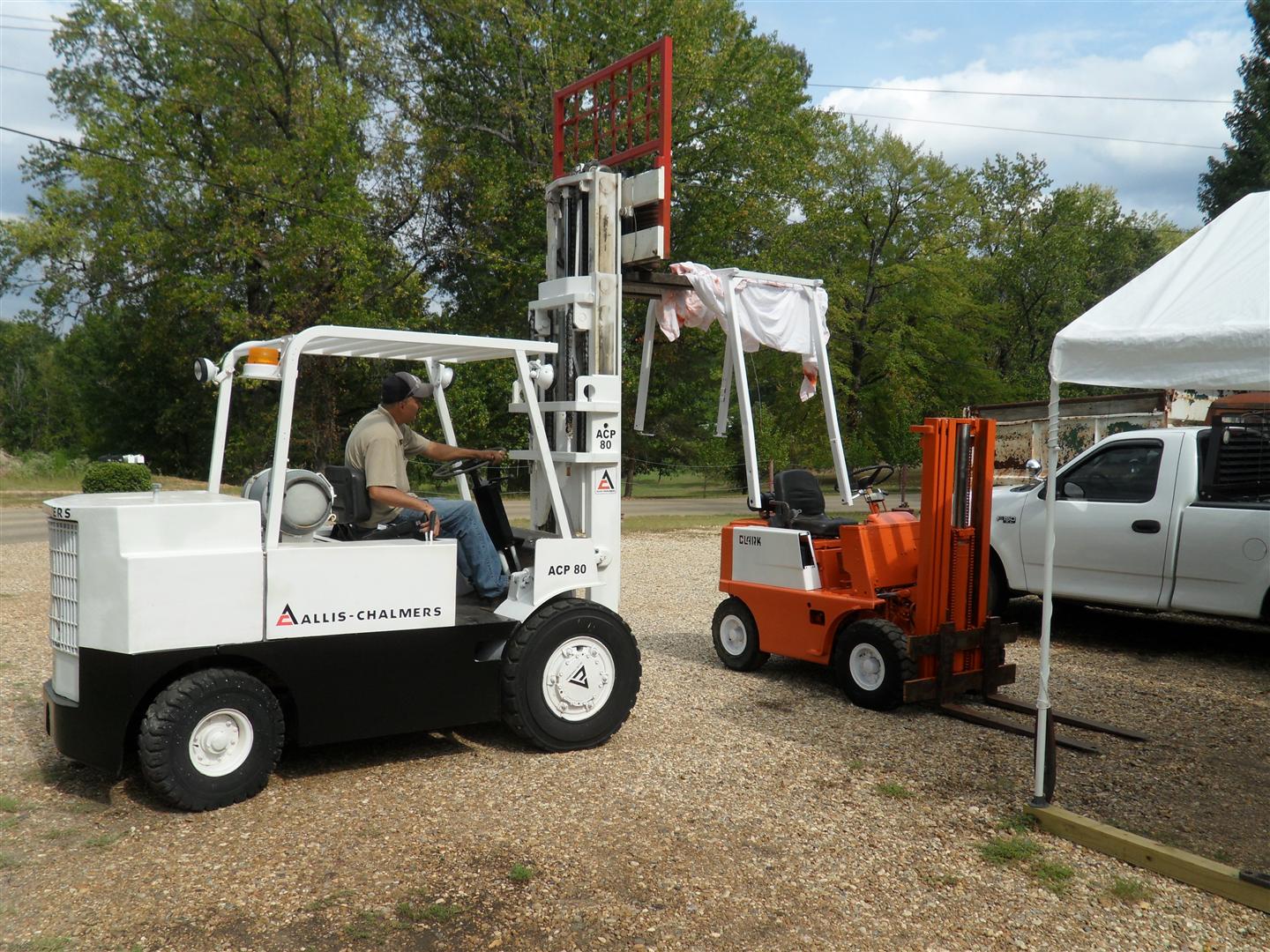
Well, after 30 years of service, age and wear had finally gotten to the hydraulic cylinders on my old Allis lift. You may remember previously I rebuilt the short lift cylinder and one tilt cylinder on the mast. Later, the long lift cylinder and the other tilt cylinder both began hemorrhaging. Bad became worse and soon I was loosing a gallon of fluid at every use. Fortunately, I had recently acquired a little Clark lift which took up most forklift duties around the complex. This bought me a little time for the repairs.

After the local hydraulic shop, in a state of incompetence, screwed up my short lift cylinder, I decided to rebuild this one myself. Rebuilding the long cylinder is no easy task for two reasons. One: Due to its location within the mast (not to mention its weight), it is heck to remove and reinstall. Two: It is also more complex than the short lift cylinder as the long cylinder has a feed tube with all the associated bushings and seals. At first glance, there’s no logical strategy for getting it out, and since my service manuals don’t cover anything to do with the mast, I’m flying purely on what I hope to be at least a moderate level of competence in terms of my skill level. Nevertheless, I endeavored to persevere.

Since I figured the mast would have to be raised at some point during the procedure, I had to work on it outside the shop. I began by removing the hydraulic line attached to the feed tube. Then I removed the nut that fixes the feed tube to the top stage of the mast. You’ll note that I’m using a manual ratchet instead of an air wrench on this because the nut is self locking, and often times if an air wrench is used, it will destroy the threads because of the high rate of speed.
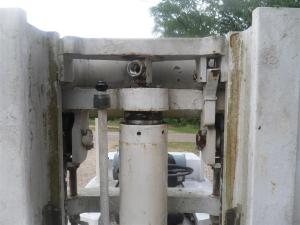
Hydraulic Line Removed from Feed Tube

Removing Feed Tube Nut

Might I add, the humidity level that day, and throughout most of the project, had to have been 200% if that’s even possible, which explains the somewhat foggy photos and my drenched shirts. Moving on… Next, and before loosening anything else fixture-wise, I decided to loosen the gland nut while the cylinder was still firmly in place. I didn’t have a wrench big enough, so the next day I borrowed a large chain wrench which did the job nicely.
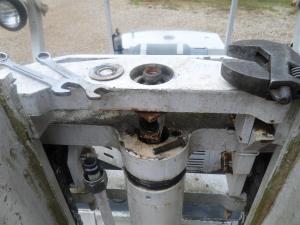
Feed Tube Nut

Loosening Gland Nut

Next, I had to raise the mast so I could lower the junction block at the top of the feed tube through the second stage of the mast. For this I took my Clark lift and raised the carriage on the Allis lift until the second stage of the mast begun to raise. This was NO easy task. The Clark lift would barely handle the weight. To make matters worse, the junction block is slightly offset and refused to go down through the hole in the second stage. Careful not to bend the feed tube, I pried and hammered a bit before logic struck at which time I decided to loosen the bottom mounting nut on the cylinder (exactly like the top nut on the feed tube). This allowed some wiggle room, and alas, it dropped through and the top of the cylinder was now completely free.
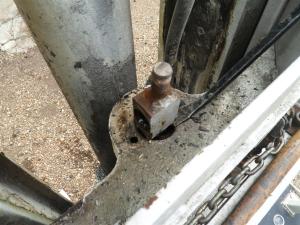
Feed Tube Junction Block

Raising the Mast

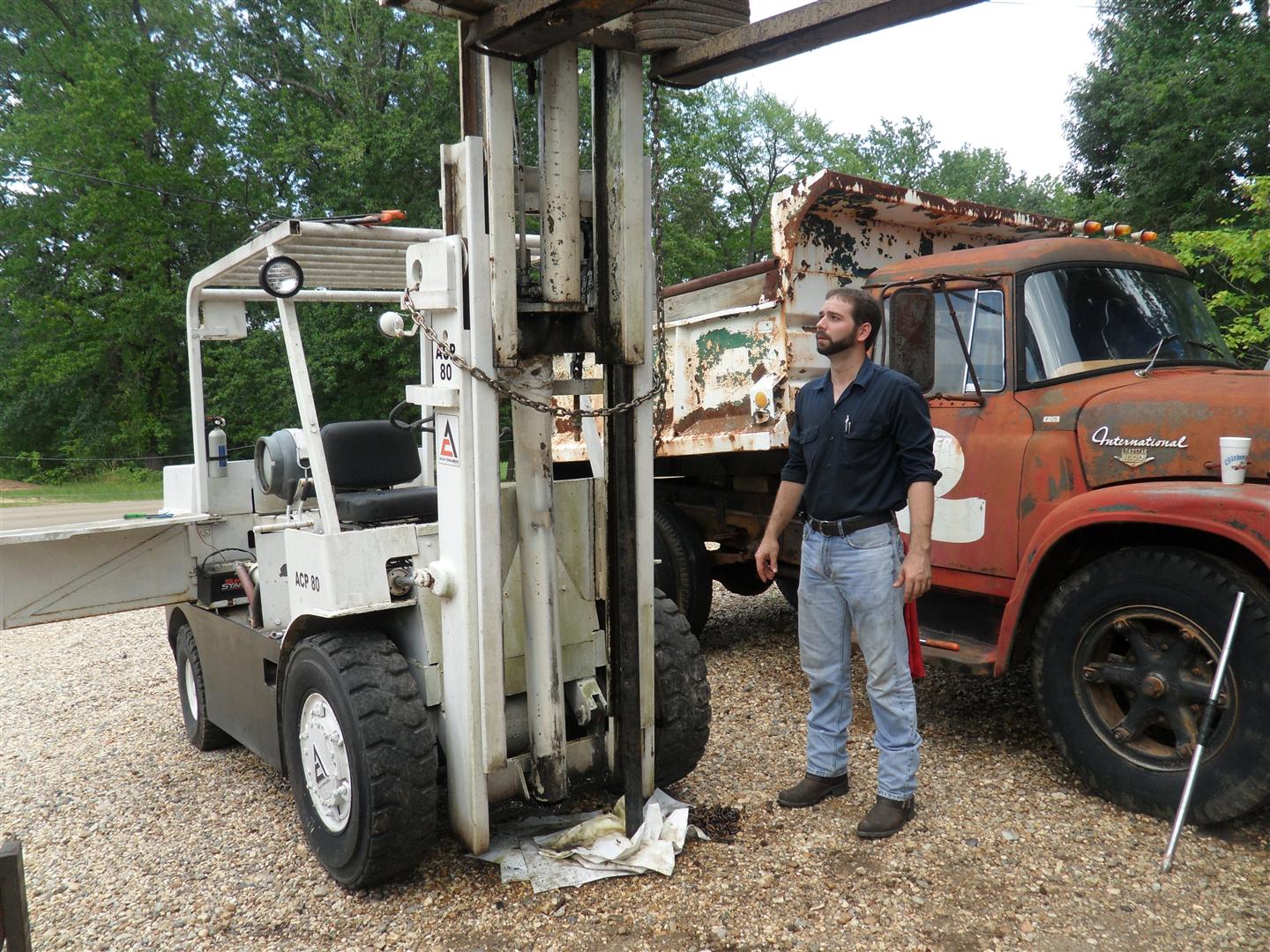
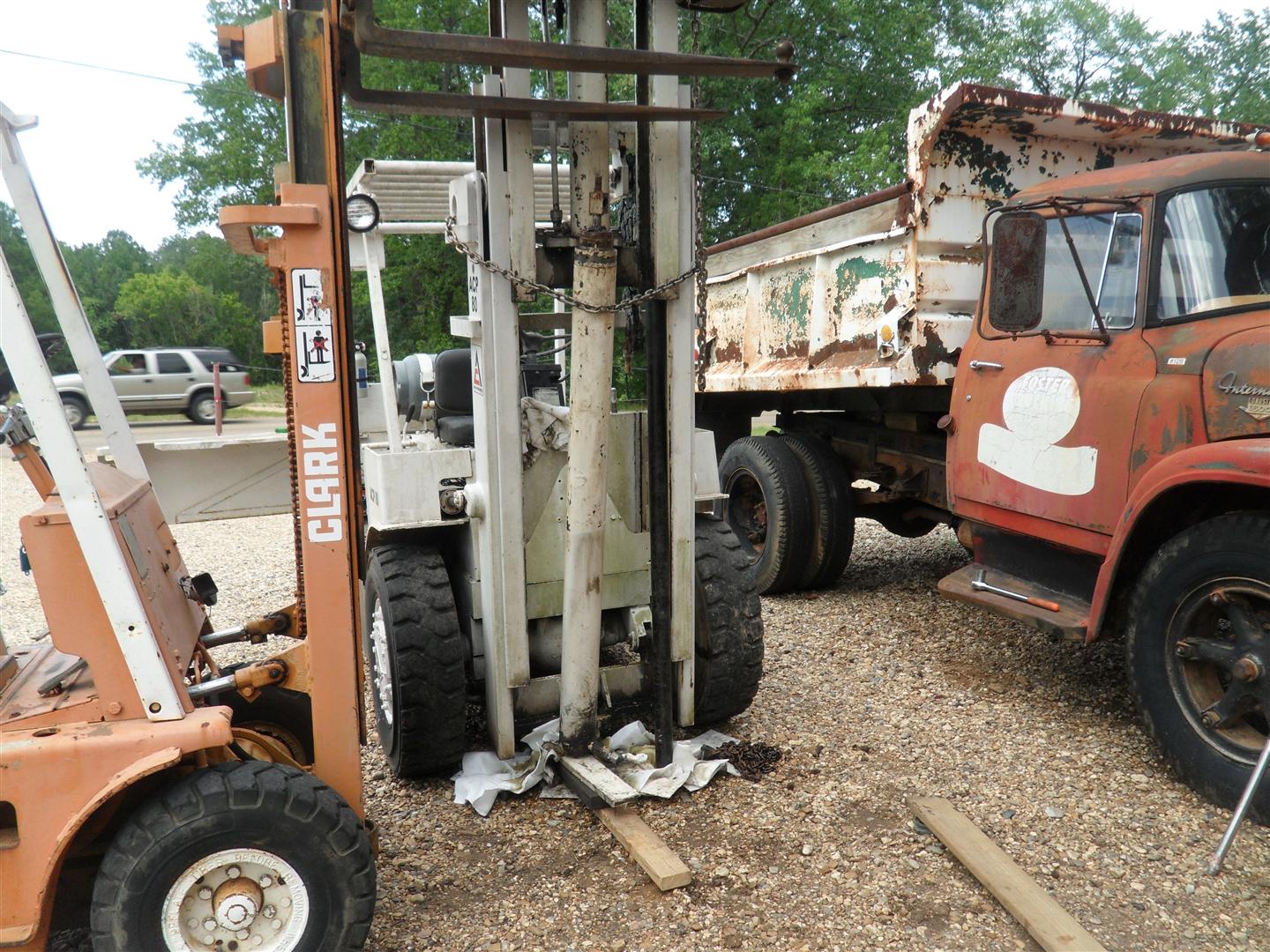
The next step in removing the cylinder was to finish the bottom mount and unhook the bottom hydraulic line, but first I made certain the mast was safely suspended. Don’t let the compact size of this machine and these parts fool you; this stuff is very heavy. The machine weighs about 13,000 lbs, and the mast components are made from very thick and very heavy steel. There is literally a ton of weight hanging above me here, so safety is very important. I used a strong, heavy-gauge pipe to hold the mast up, then I chained the top portion of the mast for a backup safety mechanism. I also had the carriage double chained.
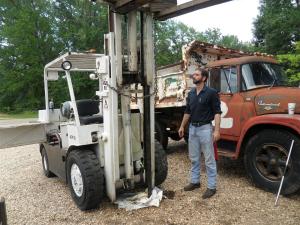
Safety Check

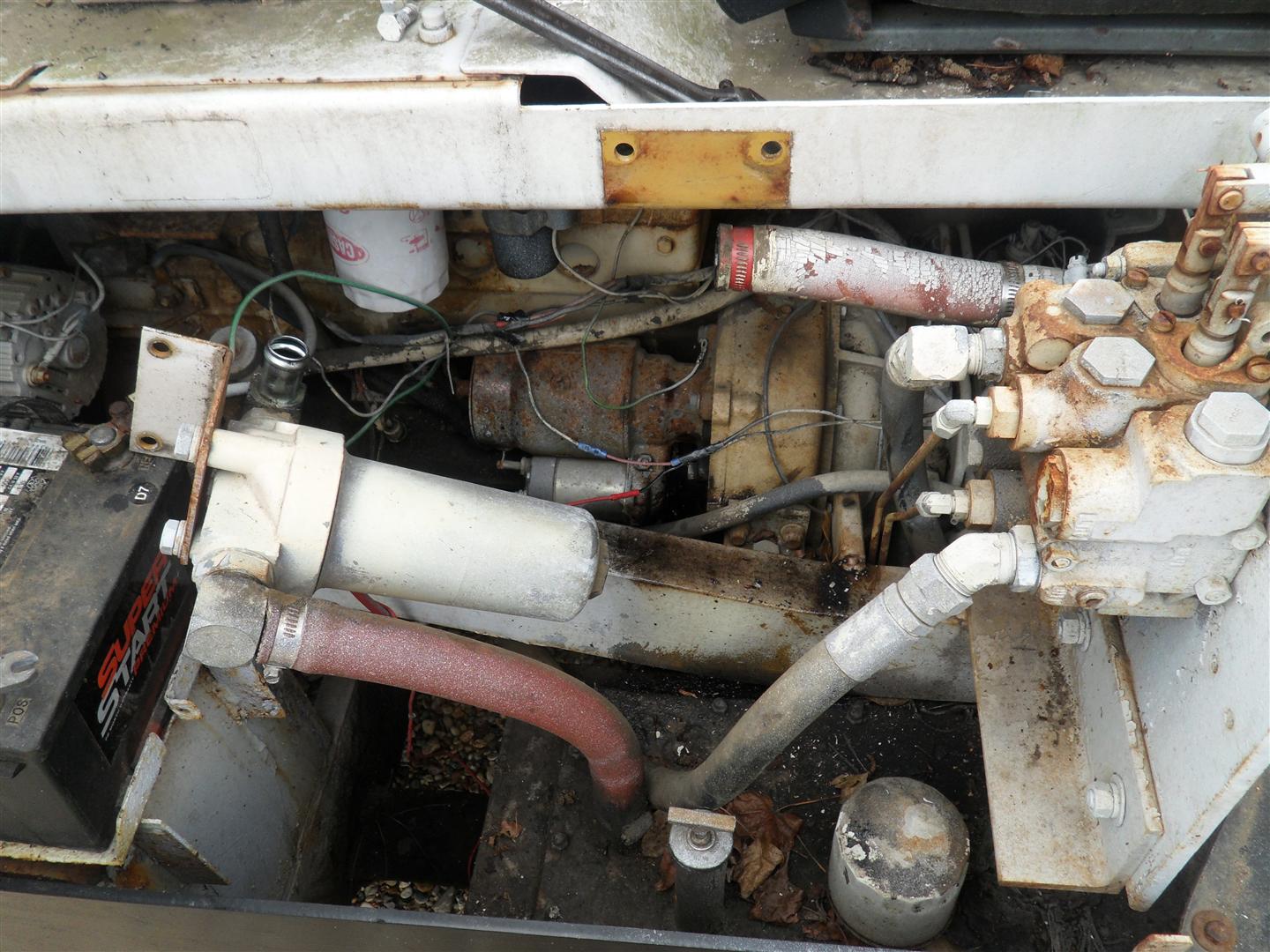
When attempting to unhook the hydraulic line from the base of the cylinder, it became evident that there was not enough room to maneuver the wrench in the tight space. So I decided to unhook the line back at the hydraulic valve. This would give me slack enough so when I removed the cylinder I could pull the base out far enough to use the wrench to remove the line from the base of the cylinder. Back at the valve, I also had to unhook and move the hydraulic filter to have enough room to work at the valve.

Filter Moved Back from the Valve

Disconnecting the Bottom Hydraulic Line

Finally, the heavy cylinder was ready to come out.

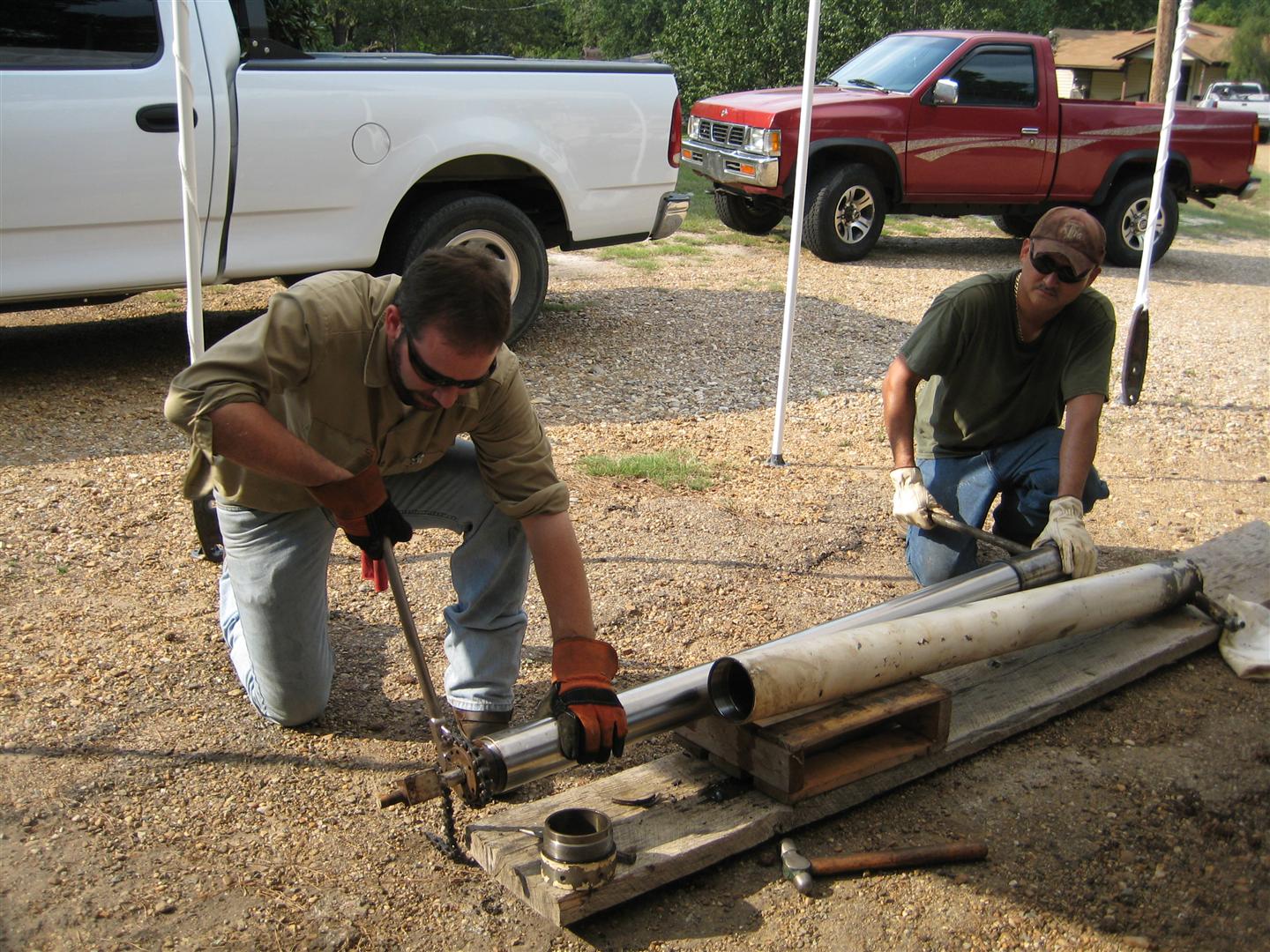
Now that the cylinder is removed, it is time to disassemble the components for inspection at which time we can also take measurements which will be needed to order the new parts. We place the cylinder down where we can easily work on it and remove the main gland nut, and then the main ram easily pulls out of the bore. Then, using the same chain wrench, we remove the feed tube gland from the ram, and the feed tube pulls out. Then, although it’s not pictured, we removed the feed tube gland which proved to be extremely stubborn to slide off the tube, but a long pipe and a sledge hammer did the trick.
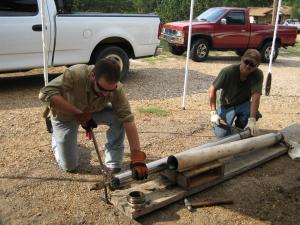
Loosening Feed Tube Gland

Removing Feed Tube from Ram

Once everything is apart I can begin measuring the components to place an order for new packing. I couldn’t simply measure the old seals because they had completely disintegrated. This explains the hemorrhaging, and it also explains how rainwater was entering the hydraulic system. Nevertheless, I took measure and proceeded into the office to do what the incompetent local hydraulic shop said was impossible: find new seals. After approximately one Google search and three minutes of viewing an online catalog, I easily found the parts I needed and placed the order. Since my application has a feed tube involved, it required the most expensive packing kit. This is largely due to the addition of bronze bushings and extra seals. However, it was still much cheaper than anything the local guys could have ever came up with and I was happy to find the parts. Now, on to the business of reassembling the cylinder…

First we took the feed tube gland and knocked out the old plastic bushings and replaced them with the new bronze bushings that came in the kit. We used the hydraulic press to install the new bushings:

Installing Bronze Bushings

Reinstalling the gland back on the feed tube proved almost as difficult as removing it. We used a brake cylinder hone to reach precisely the correct inside diameter of the bronze bushings, then we used a buffing wheel on a Dremel tool to polish off any scars on the chrome feed tube. After that, we were able to slide the gland back on the tube with moderate pressure. Then we installed the feed tube back into the ram, and after installing the new wear ring / guide band,  we reinstalled the ram back into the cylinder. Once completed the final step was to install the new oil seal and dust seal into the main gland nut.
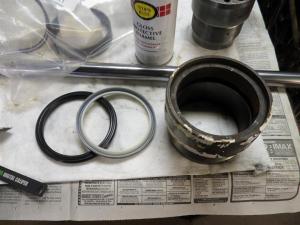
New Oil & Dust Seals for Gland Nut

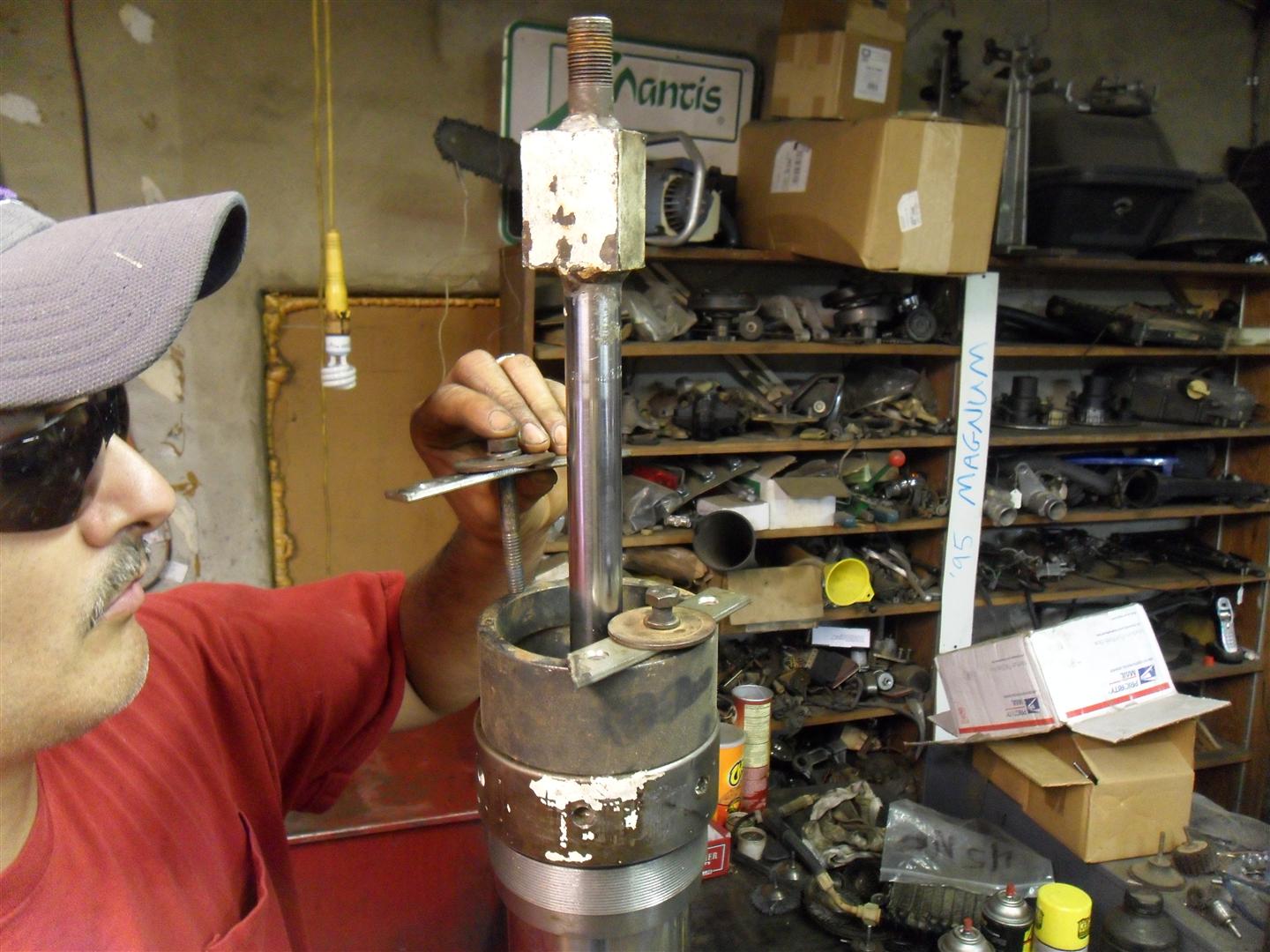
With new oil and dust seals in the gland nut, it’s time to install the nut back onto the cylinder, and it is a tight fit over the feed tube gland and ram. To keep from destroying the new seals, we placed a spacer on top of the gland nut and then used two bolts through two flat bars and threaded them into the top of the feed tube gland. This slowly pressed the gland nut onto the ram without damaging the seals. And that concludes the assembly of the cylinder.
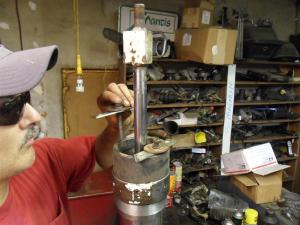
Installing Gland Nut

Cylinder Assembled

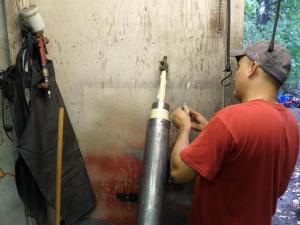
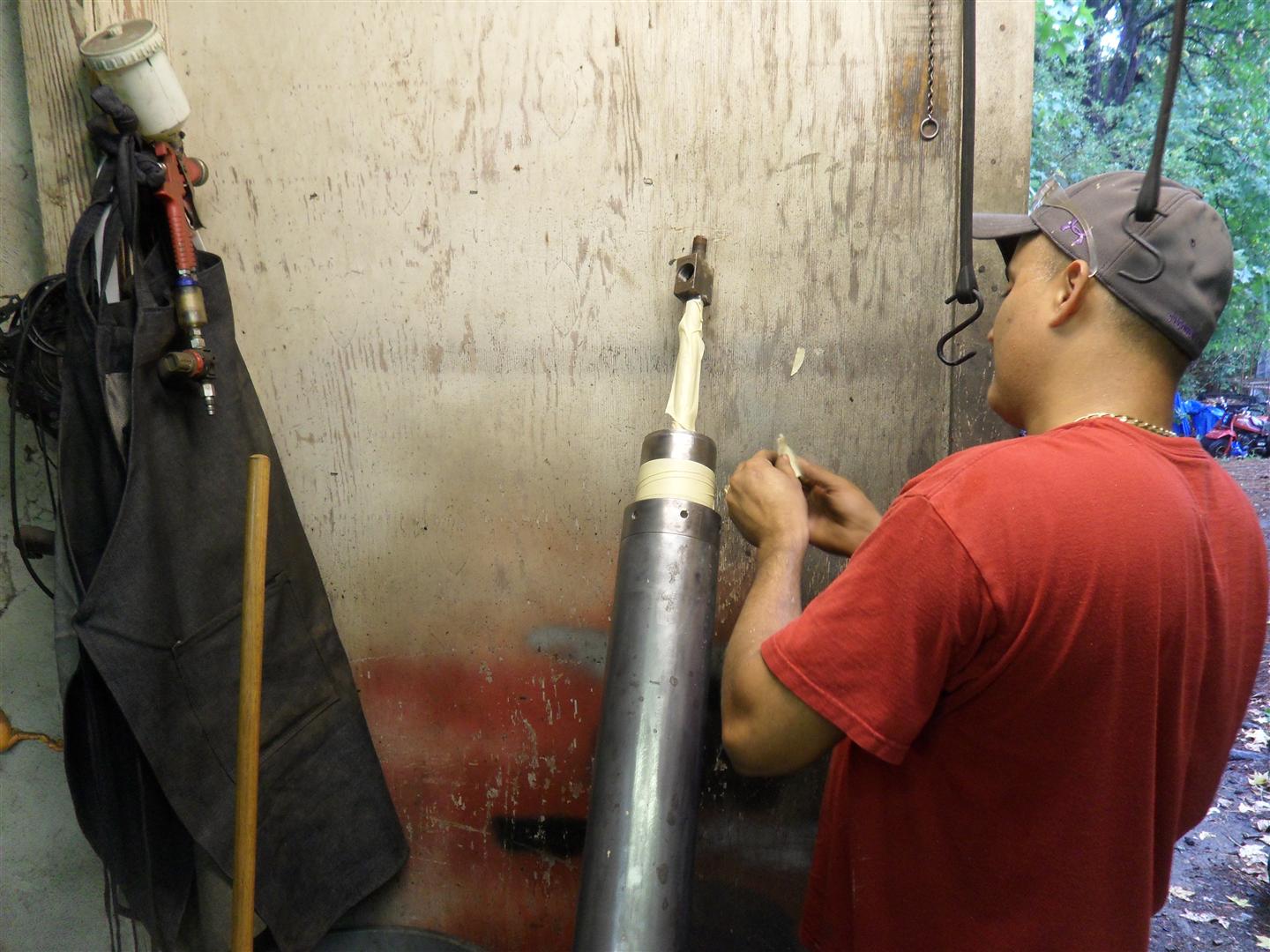
Now, before reinstalling the cylinder onto the forklift, we needed to paint it. Jose uses a wire brush to strip all the old paint off. Then he masks off the chrome before applying primer.
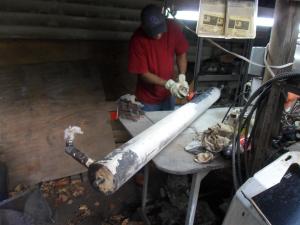
Stripping the Old Paint

Applying Masking Tape

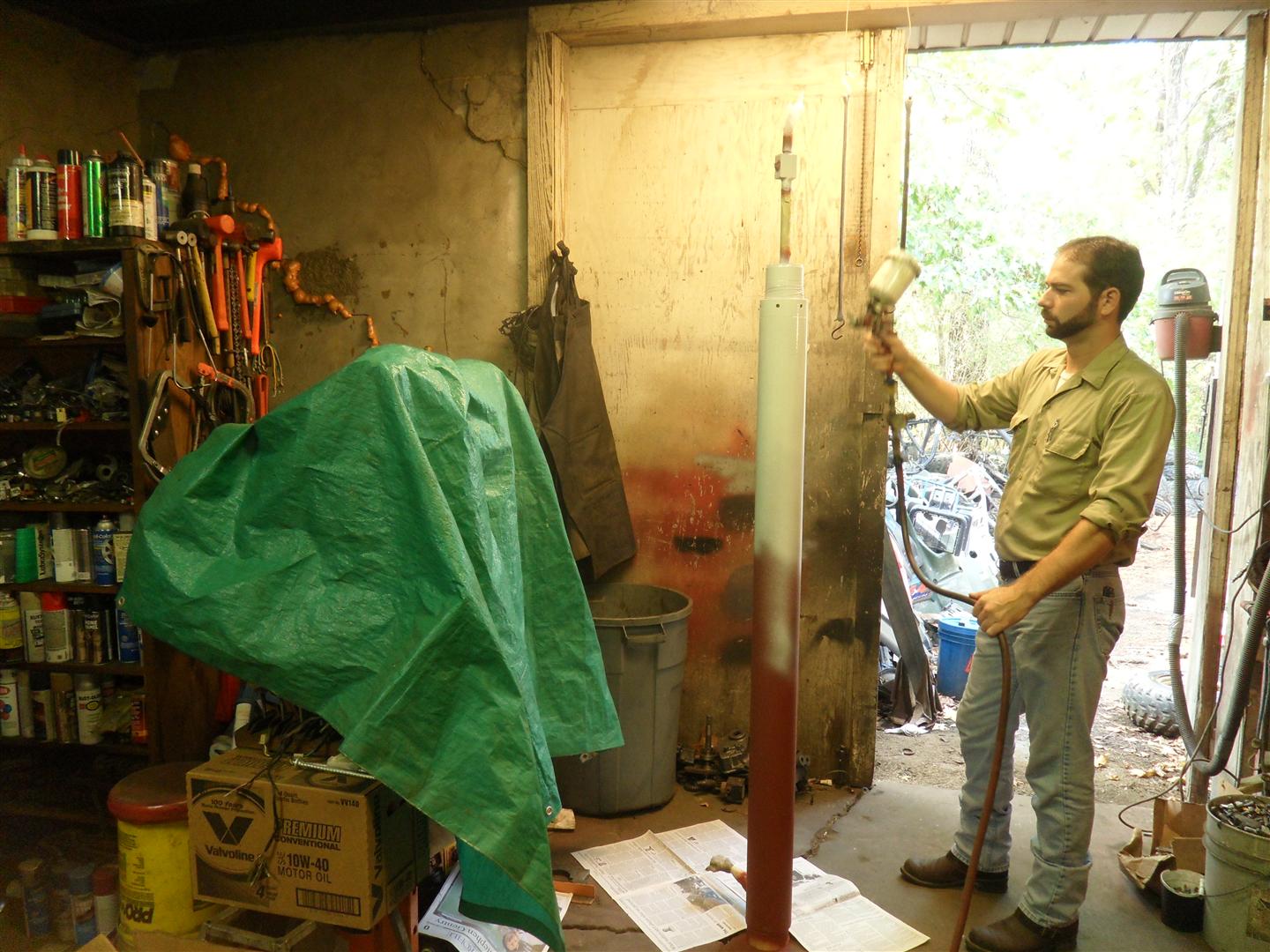
To conclude, I come in behind him with a new coat of gloss white industrial enamel. We then reinstall the cylinder in the same sequence used to remove it. The final step was to refill and bleed the hydraulic system and give the machine a good scrub and wash.
Applying a Coat of Industrial Enamel

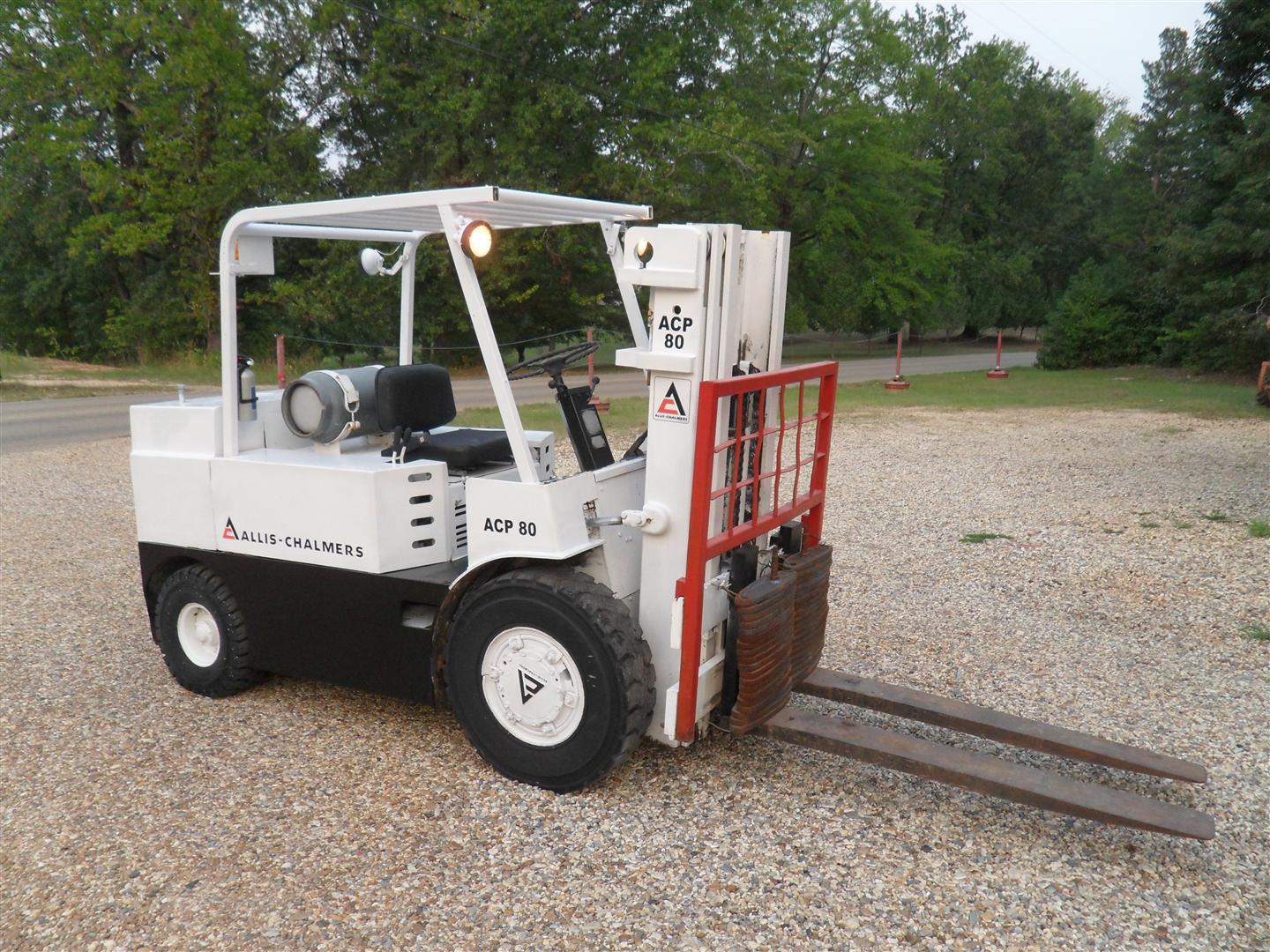
Finished and Back in Service!

Everything worked out great bringing us to the conclusion of this project. My Allis-Chalmers ACP 80 is back to work and running great.

Until next time…

November 14, 2011

1969 Mack R611ST Oil Field Winch Truck

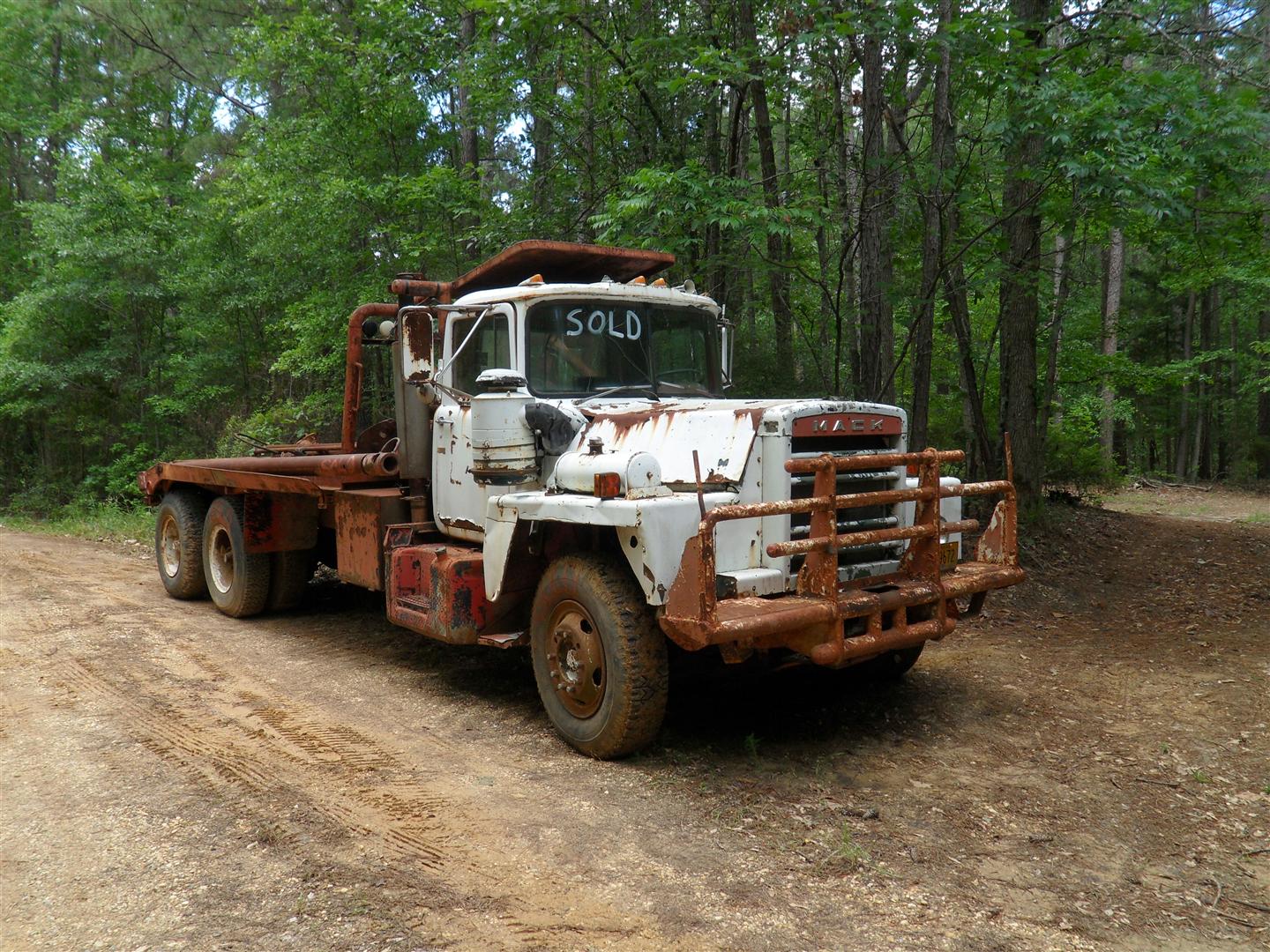
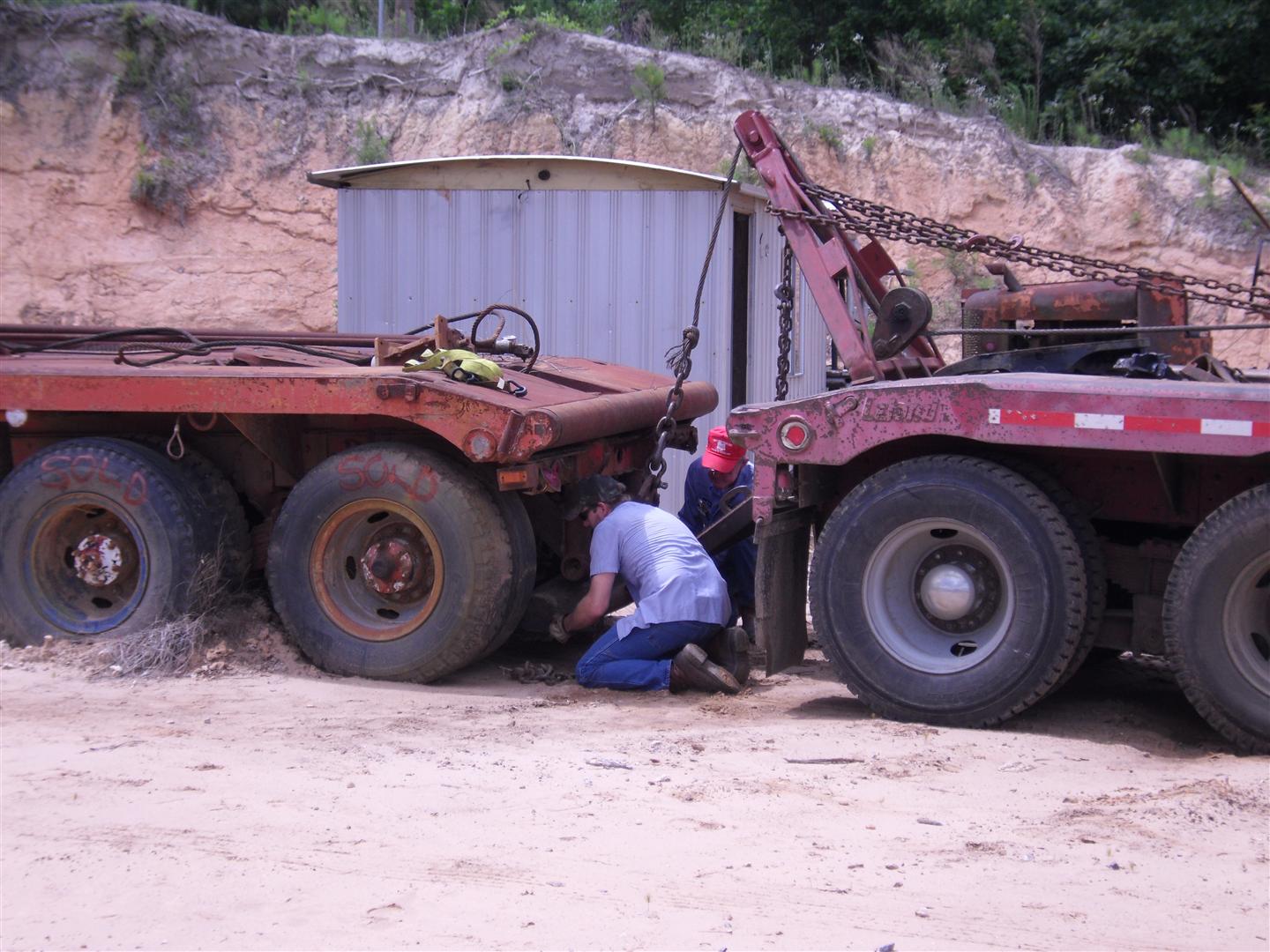
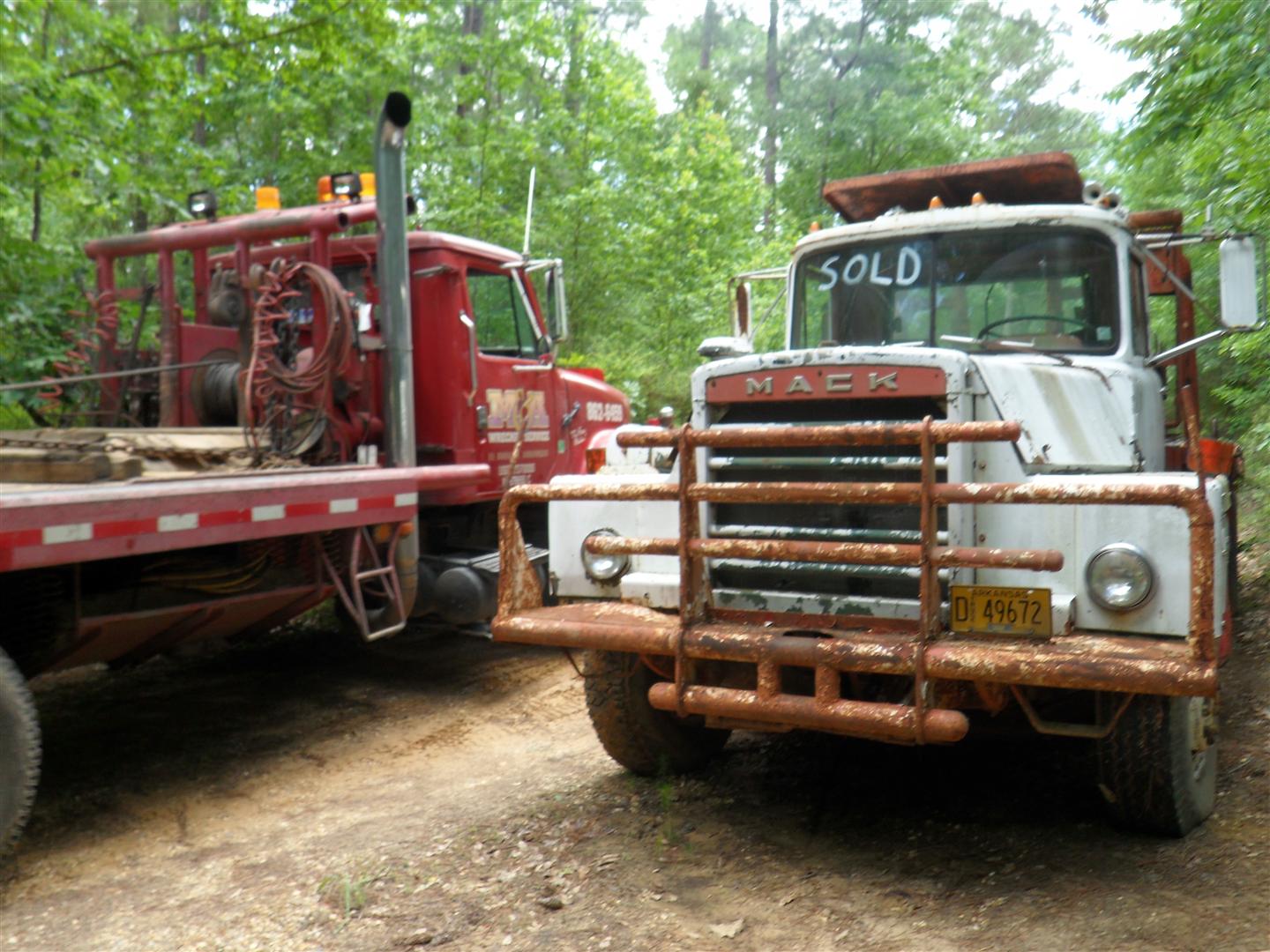
Here’s a cool old truck I bought last summer. I love old trucks! It’s a 1969 Mack R611ST with a fully rigged oil field winch bed utilizing two massive winches (one Tulsa and one Braden), rolling tail board, power assist poles, and a fifth wheel. I’d love to hear from some Mack guys on this truck, because I know very little about Mack’s. Although I haven’t done extensive research on it yet (that will come when I get the truck to my shop), I haven’t seen much in terms of history or specs on the R611ST.

This truck has been setting up for a few years and obviously needs some work to return it to roadworthy status. I’ve always wanted a winch truck for loading heavy equipment, and this one is larger than anything I imagined owning (you can see a much smaller version of winch truck that I also bought last summer here), but the price was right and the bed is in good shape for its age. Very cool old rig.

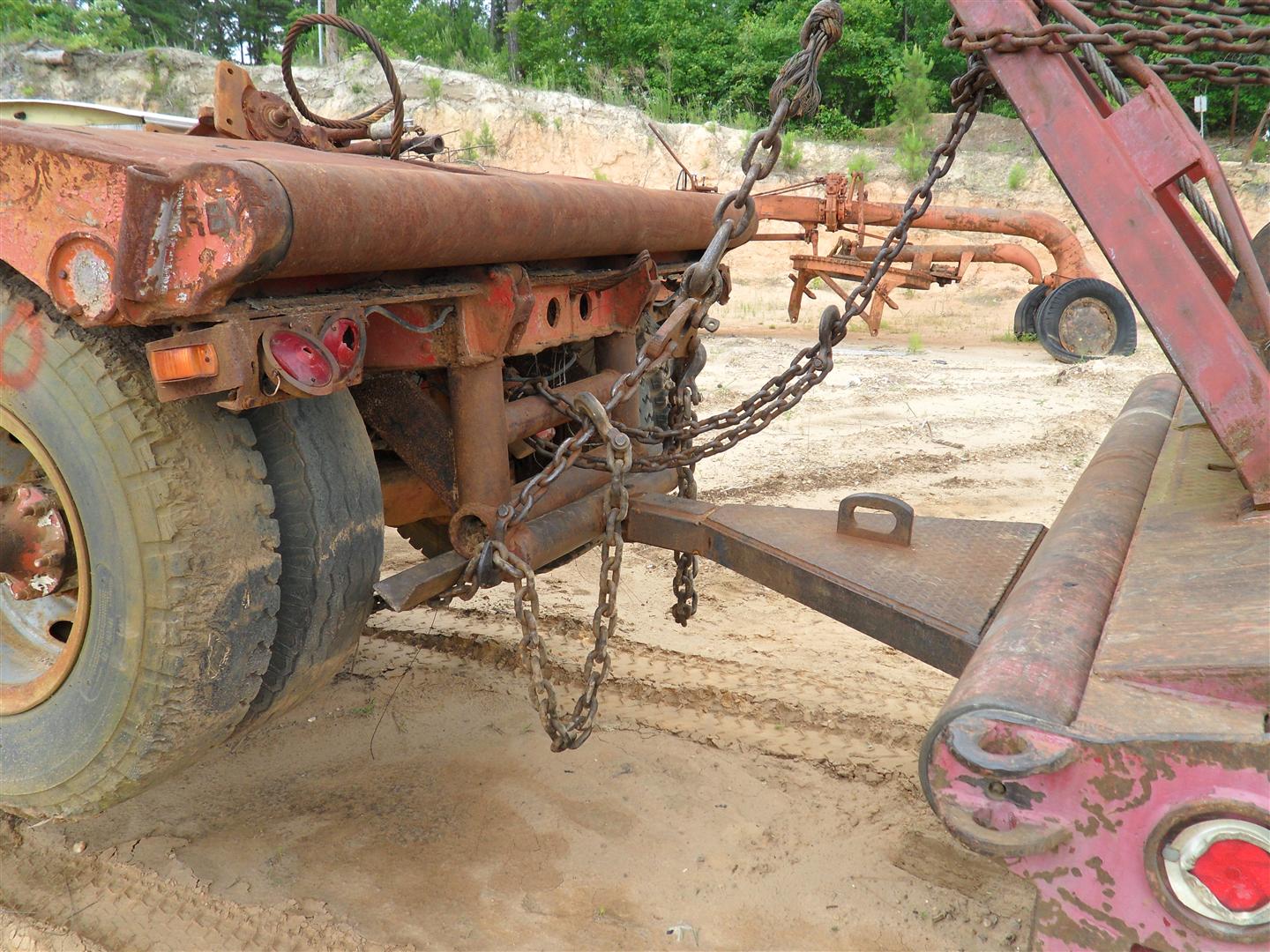
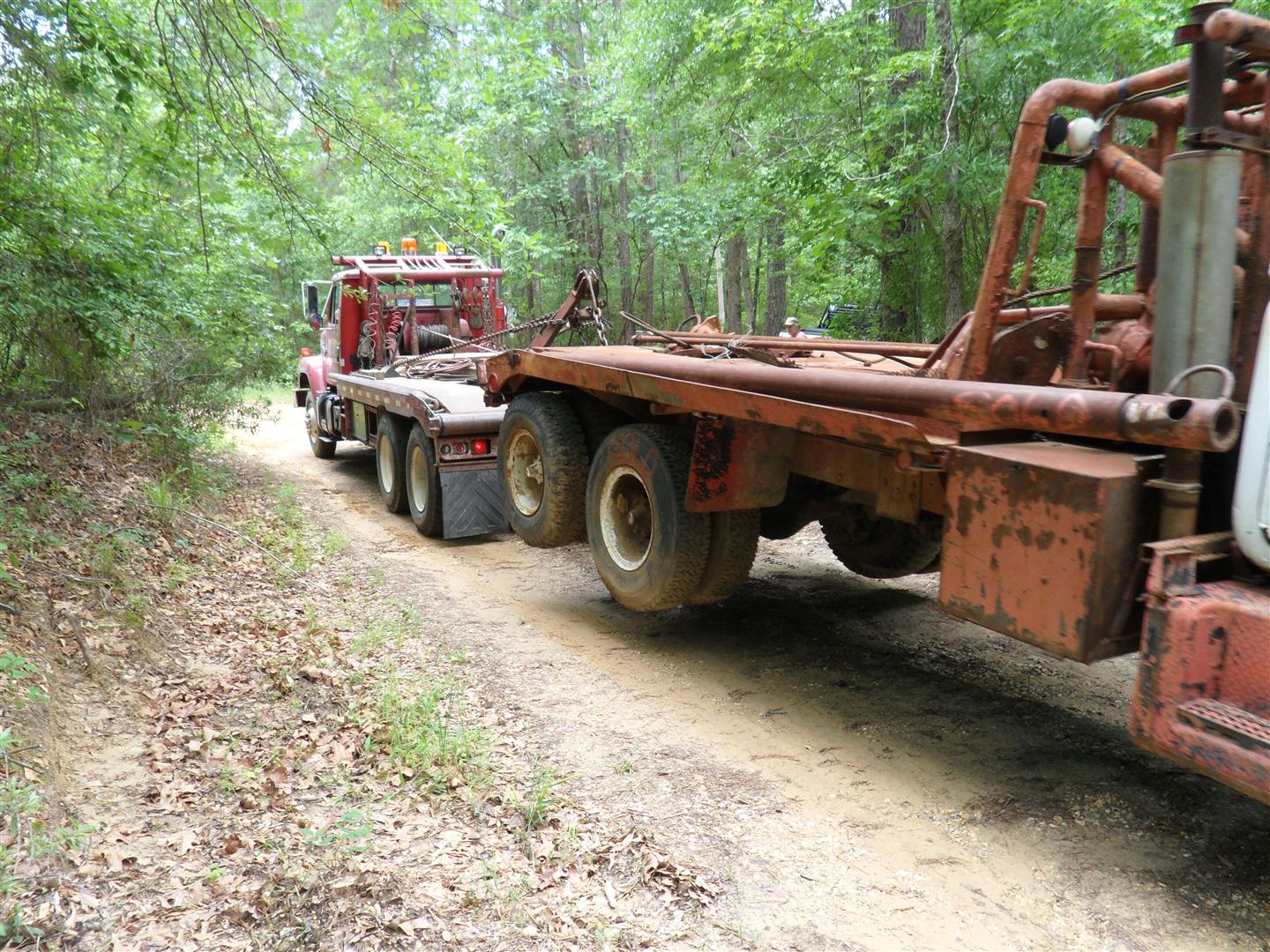
So once purchased, the first order of business was moving this monster. At first, I checked into getting it running and driving it home. However, upon close inspection I found the brakes, as well as other components, had taken a beating from the weather and it would take more time than I had to get it going. I thought about hauling it, but I didn’t have access to the type of trailer that would likely be required. The most viable solution was to have it towed. I called a local towing company and we immediately got to work. Concerned that the rear brakes may be stuck, we opted to tow it from the rear…

Once we got it rigged up, we hit the road. Since the yard at my shop isn’t quite big enough to have much non-running equipment present, I decided to have it towed to my friend’s property until I have time to get started on it. We had to get it into some tight places to reach its final parking place.

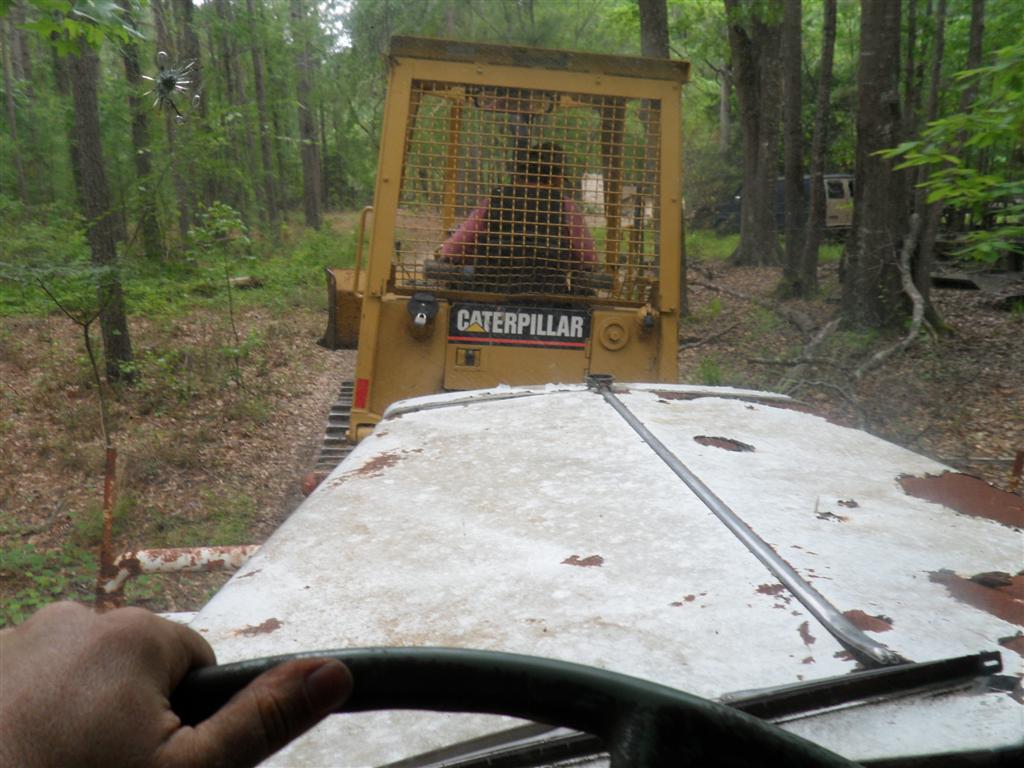
It was a tight squeeze for the wrecker to back out of the road we dropped the Mack on, but he got it done. Once the wrecker let it down, we used a 2006 Caterpillar D3 to move the truck into place. I jumped up into the cab of the Mack to steer. Below you’ll see some pics and a video clip of the process.

There are a few projects on the list before the old Mack, but once I thin some of those out, we’ll move it to my shop and get started. Until then….

November 5, 2011

Project: 1971 Clark CY20B Forklift

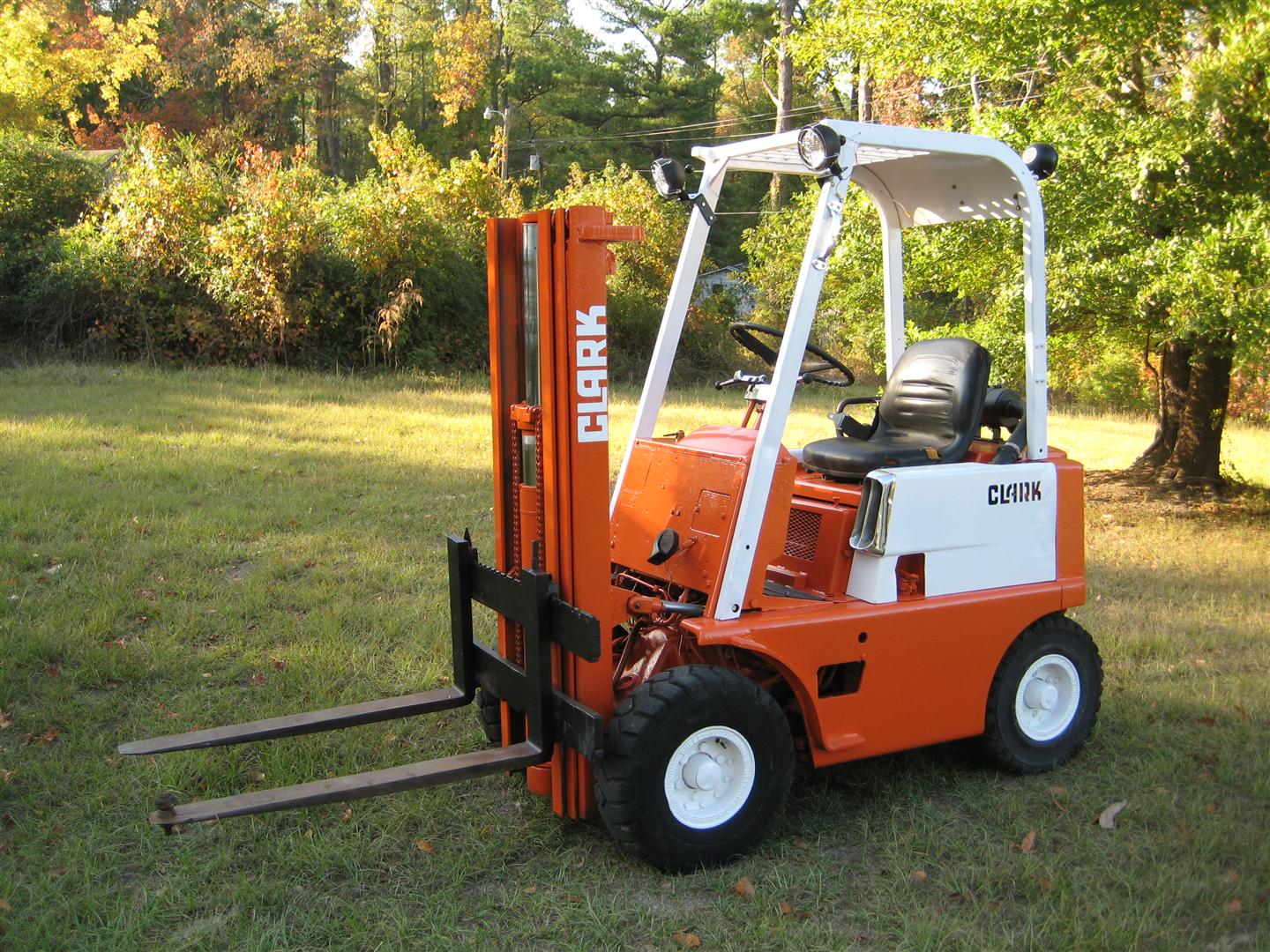
I promised a project post from my recent forklift purchase, so here it is. This has turned out to be one of the most handy machines I have owned. I’m not sure how I got along without a compact forklift for as long as I did, and with it being an all-terrain unit, it has been perfect for my application.

Before

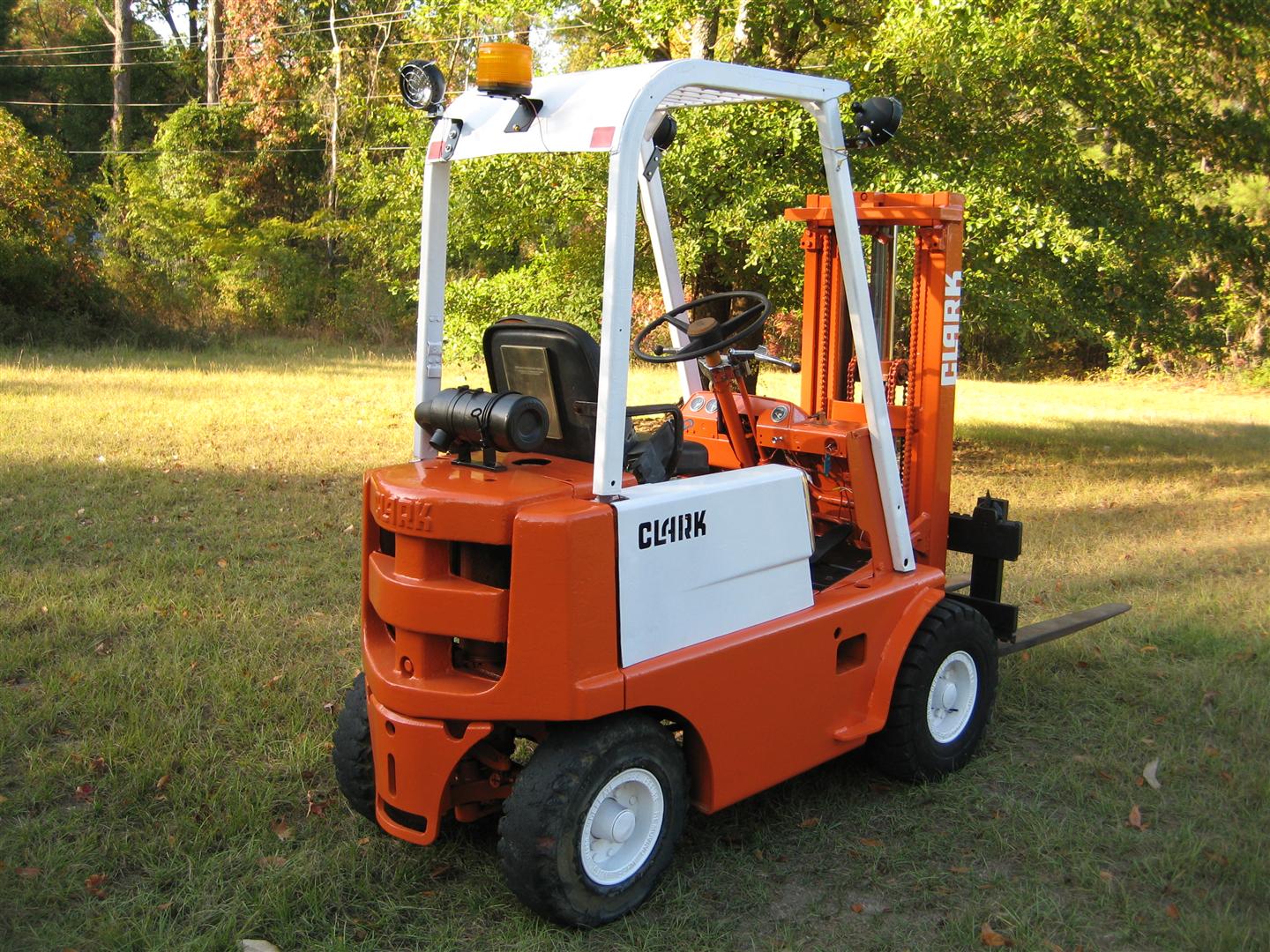
After

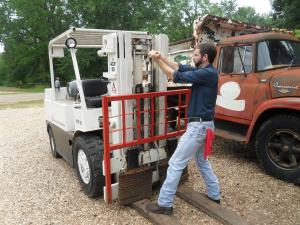
When I got this lift, it ran OK and was overall functional, but I knew it needed service so I began planning the project.When we finally got some down time, my new mechanic Jose and I pulled it up into the shop and got started….

Getting Started

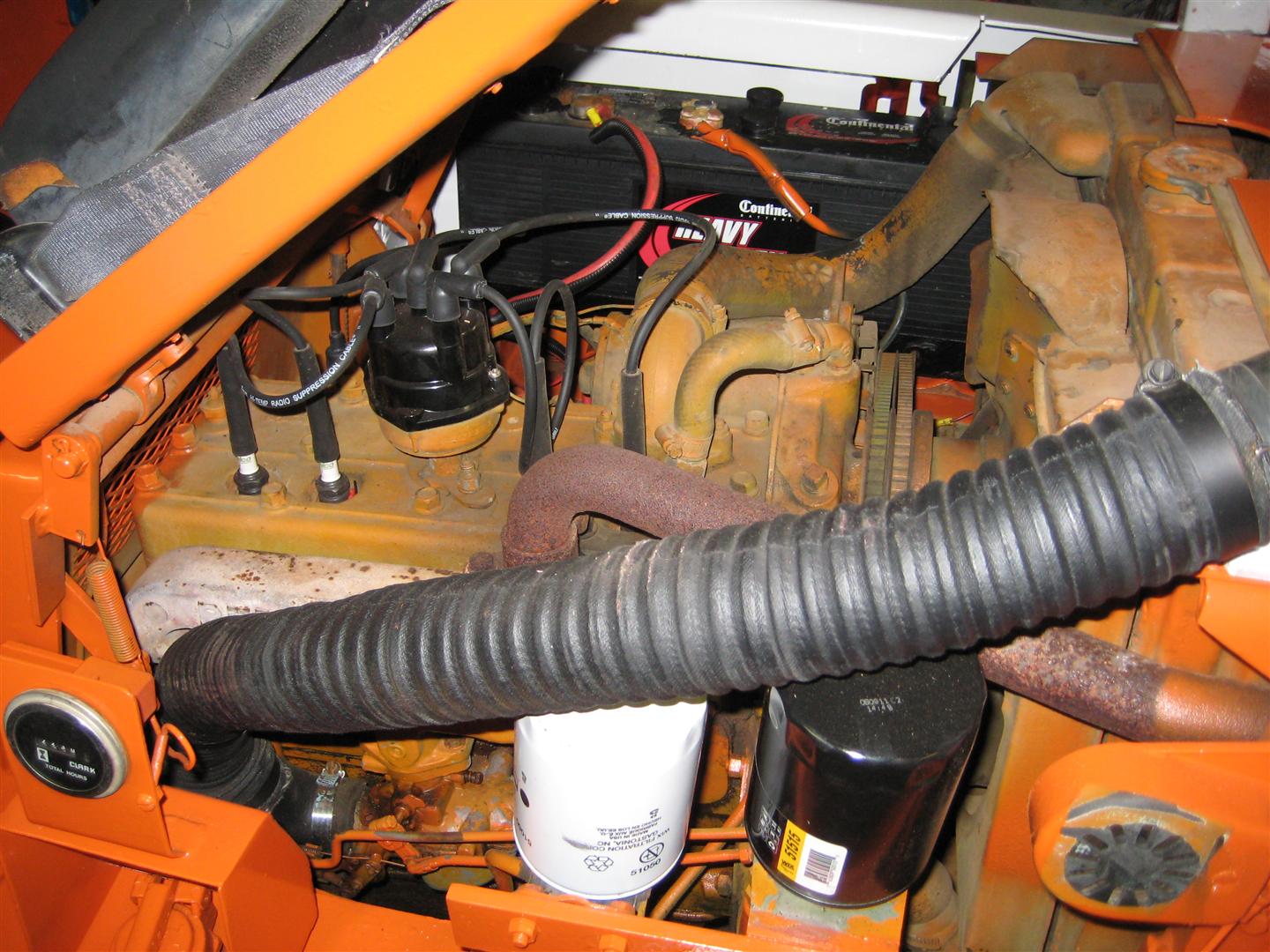
The first order of business was a general tune-up and service. The engine in this Clark CY20 is a very small, 4-cylinder, gasoline Red Seal. Since I don’t have a manual on this unit, we pretty much had to go on skill. The ignition points were fried, so we replaced them along with the condenser, distributor cap, and rotor. We also installed a new set of plugs and wires, wrapping up the ignition system.

Next, we changed the fluids starting with the engine oil and then the transmission fluid. Forklifts are usually compact and difficult to work on, but fortunately the engineers at Clark had a little foresight and placed the filters in an easily accessible area (see the engine oil and transmission oil filters below). While changing the transmission fluid, we found something troubling. Metal shavings? No, not quite that bad, but still troubling: There was a large amount of water in the transmission. The fluid looked like strawberry milk. My first thought was the transmission oil cooler which is in the radiator. I was prepared to mount an external cooler if necessary, but upon further testing we determined that the water did not get in through the cooler. So how the heck did it get in there? We never fully solved the mystery but surmised that it must have been due to the machine having set out in the weather for an extended period of time before I purchased it….either that or someone ran it off into some deep water? Whatever the case, I had to flush at least five gallons of costly transmission fluid through it and change the filter twice to get the water out. I’ve run it several hours since, and no sign of water so I’m calling it resolved.

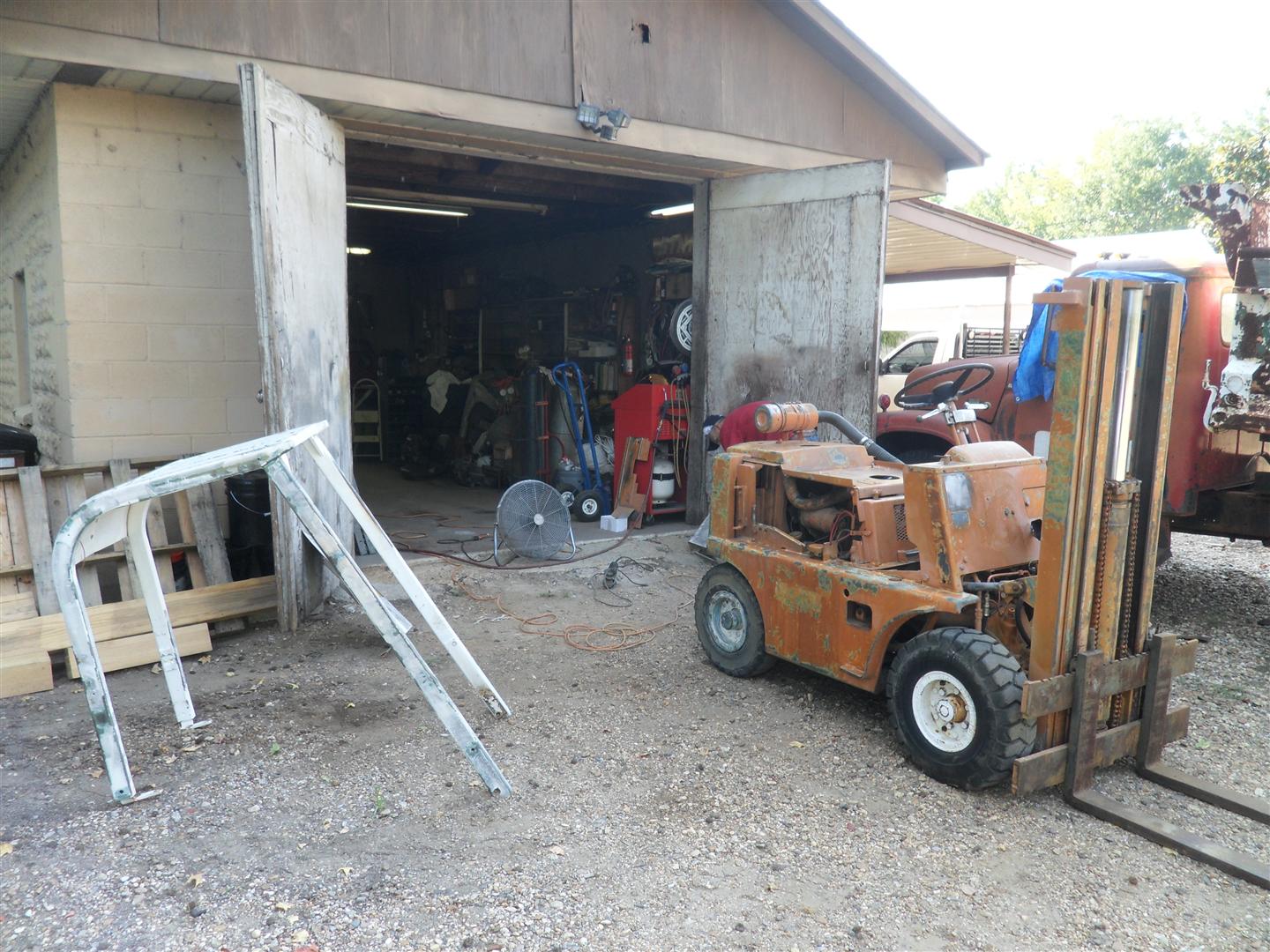
We decided to wait on hitting all the grease points until last because the next step was to put a shinny new coat of paint on her, and I didn’t want to fool with washing a bunch of grease off before painting. We pulled it outside the shop and begun stripping it down. As I point out on this page, my general goal is not to pursue a show-quality finish. The aim here is to have a good, solid finish without the unfeasible cost of completely disassembling the machine and stripping all parts to bare metal. So we went over it with cup brushes and various abrasives to remove any loose paint and most of the faded paint.

Then it was time to remove the side panels, seat, and roll cage to deal with them separately.

Once everything was adequately sanded, we began the priming process.

Next, we began the final painting process. Like most Clark forklifts, this unit was originally green. However, at some point in its life it was painted orange and white. So rather than trying to go back to the original color, which would have meant painting the entire engine compartment, transmission, and running gear that was all now orange, I opted to keep it orange. In fact, I painted it one of my favorite equipment colors: Allis-Chalmers Orange. LOL Below you’ll see Jose mixing up the paint and applying the first coat. We used a tractor/implement paint and added hardener for a durable finish.

We painted the wheels, side panels, and roll cage white, and once dry, we removed all of the masking and began reassembling the machine.

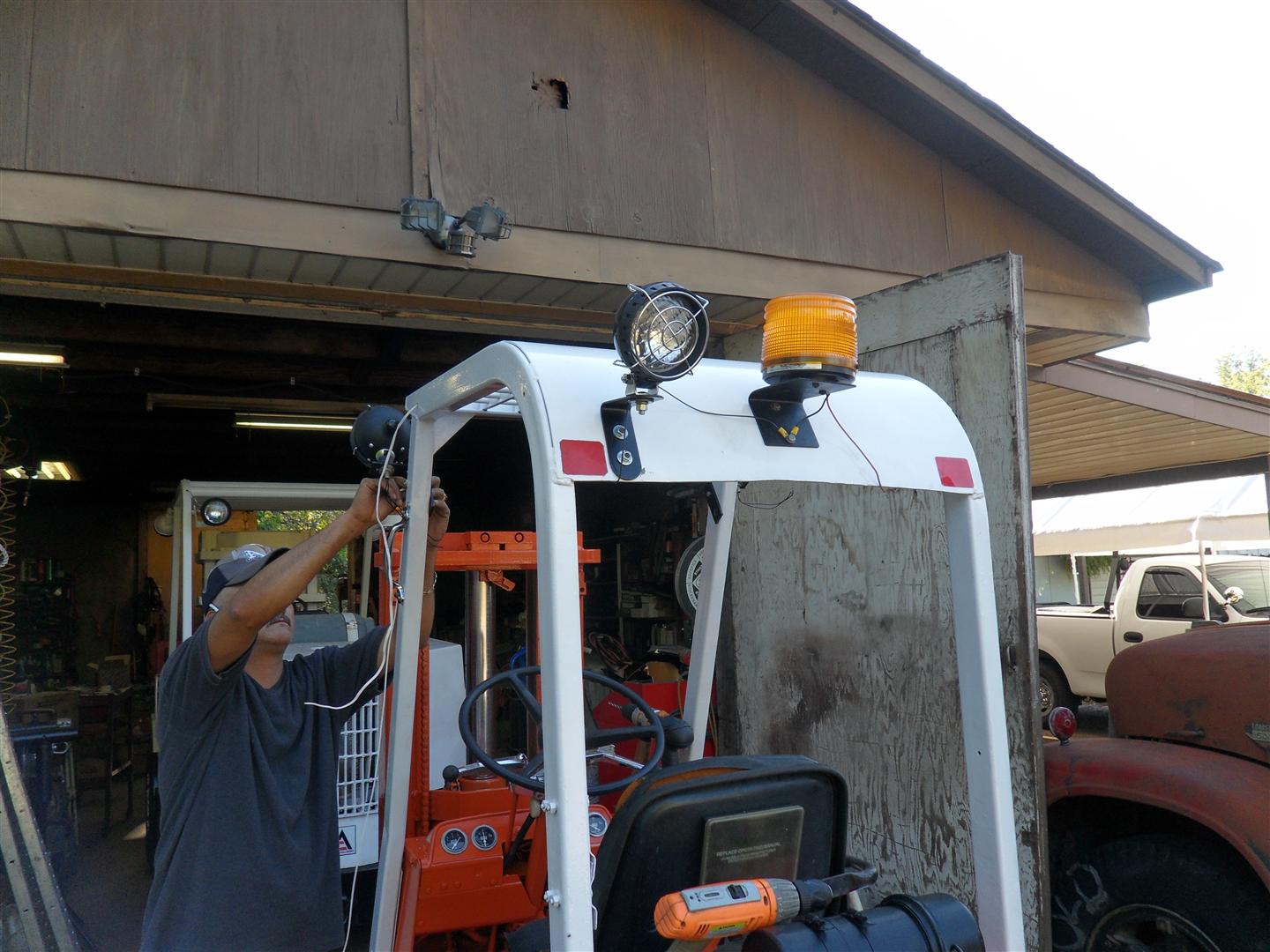
In keeping with my lighting policy (notable in several other posts) the final step was to add lights and of course decals. We fixed the strobe light on the roll cage and added front and rear work lights wired to a switch on the dash. The front lights are such that the operator can adjust them by hand if needed. The rear light is similar, but without the adjustment. I purchased “Clark” decals to go on the mast.

And now for the finished product…

And that pretty much sums it up. Many more projects like this to come…
« Previous PageNext Page »

Blog at WordPress.com.